
Latest News
- EU to condemn Russia’s invasion of Ukraine at upcoming G20 summit
- Quebec doctors request inquest following five physician suicides in five months
- Judge temporarily reinstates White House access for CNN, MS NOW and Politico
- Mother dies from rabies after minor puppy scratch during holiday in Morocco
- Argentina president asserts claim over Falkland Islands at UN Assembly
- Montenegro’s EU accession hopes at risk over disputes with Croatia
- Trump welcomes Xi Jinping to Washington for crucial summit discussions
- Israel bulldozes Palestinian-owned olive groves near Ramallah ahead of harvest


Al-Farouq Mosque was reduced to rubble last night by the israelis during their invasion of Qizan al-Najjar near Khan Younis city, in southern Gaza
Britain should be proud of our history ending the slave trade.
But instead Slippery Starmer and Loony Lammy will equivocate and eventually capitulate over reparations, destroying our economy and denying our history.
Because what the woke really want to do is destroy the west.
🚨⚪️ Ancelotti: “We can say that Vini will be the next Ballon d’Or, no doubts”.
“Vinicius will win the Ballon d’Or, for me it’s very clear and there can’t be anyone else winning it”.
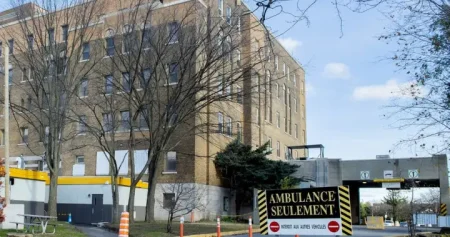
EU to condemn Russia’s invasion of Ukraine at upcoming G20 summit
EU’s Stance
The European Union will use the G20 summit to condemn Russia’s invasion of Ukraine, regardless of President Vladimir Putin’s attendance.
The European Union will use the G20 summit to condemn Russia’s invasion of Ukraine, regardless of President Vladimir Putin’s attendance.
EU’s Stance
The EU’s unwavering condemnation of Russia’s invasion at G20 summits underlines its strategic commitment to uphold international norms and maintain solidarity among member states and allies.
The EU’s unwavering condemnation of Russia’s invasion at G20 summits underlines its strategic commitment to uphold international norms and maintain solidarity among member states and allies.
Firm Position
“What I can say today is that this approach, from the European Union perspective, will continue irrespective of the participants at any G20 meeting,” stated Olof Gill, deputy chief spokesperson of the European Commission.
“What I can say today is that this approach, from the European Union perspective, will continue irrespective of the participants at any G20 meeting,” stated Olof Gill, deputy chief spokesperson of the European Commission.
EU vows to condemn Russia at G20 summit, regardless of Putin’s attendance
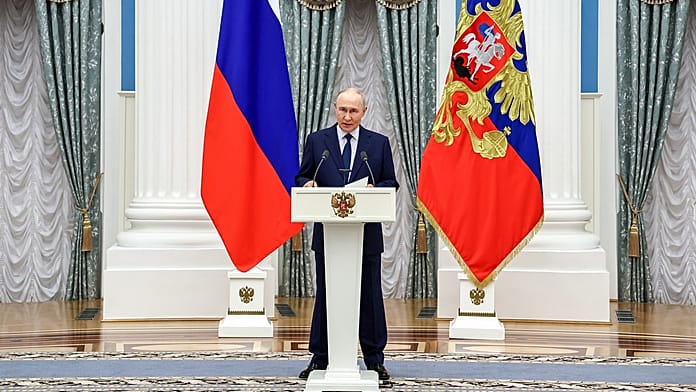
The European Union will use the upcoming G20 summit in Miami to condemn Russia’s full-scale invasion of Ukraine, regardless of whether Russian President Vladimir Putin accepts the American invitation to attend the high-profile gathering.
The EU is a full member of the G20 and is represented by the presidents of the European Commission, Ursula von der Leyen, and the European Council, António Costa.
“The G20 is a key forum for addressing existing and emerging global challenges. Some of which have been created precisely by Russia’s war against Ukraine,” Olof Gill, the Commission’s deputy chief spokesperson, said on Thursday.
“I also recall that Russia is escalating attacks on Ukrainian civilians as we speak. July and August were the deadliest months since the war started,” he went on.
“Since 2022, the EU has consistently and forcefully used G20 meetings to condemn Russia’s full-scale invasion and to call for it to end. What I can say today is that this approach, from the European Union perspective, will continue irrespective of the participants at any G20 meeting.”
US Secretary of State Marco Rubio confirmed on Wednesday that his country, which holds the rotating G20 presidency, has formally invited Putin to attend the summit that President Donald Trump will host at his golf resort in Miami.
“We think it’s an opportunity for him to engage not just with the President but with other world leaders. We hope that’s an invitation he’ll accept,” Rubio said.
In response, the Kremlin said it was “grateful and appreciative” and would study the invitation. Putin has skipped G20 summits since the start of the war. His last in-person attendance was in Osaka in 2019. He participated remotely in 2020 and 2021.
The news has unsettled Europeans, who have consistently pushed to isolate Putin and his deputies on the international stage. The Trump administration, however, does not share this strategy and favours Russia’s inclusion in these high-level formats.
Washington’s surprise decision to invite Russian Finance Minister Anton Siluanov to a ministerial meeting in August was met with outrage from Europeans. After complaints, Siluanov was left out of the family picture.
Asked whether von der Leyen will boycott the family picture if Putin is featured, the spokesperson declined to comment on hypothetical scenarios.
“We’ll see how the situation develops,” Gill said.
In an interview with Sky News, High Representative Kaja Kallas was more critical about Putin’s potential attendance. (Kallas herself is not invited to the Miami gathering.)
“We need to discuss this together with colleagues, but it’s clearly, I think, the wrong path to normalise people who are starting wars, who are going against the UN charter, who are killing and giving orders to kill civilians, to ignore the international humanitarian law, to cause as much damage and suffering to people (as) they can,” she said.
Meanwhile, Ukrainian President Volodymyr Zelenskyy said the Miami summit could provide an opportunity for his long-held trilateral meeting with Trump and Putin, which Trump has backed but Putin has repeatedly shunned.
Kyiv has been trying to revive the peace process led by Washington, but Moscow has shown scarce willingness to engage, choosing instead to ramp up airstrikes.
“Ukraine will support it if such a format is approved and there is a corresponding agreement,” Zelenskyy said.
The G20 includes several of Ukraine’s allies: Australia, Canada, France, Germany, Italy, Japan, South Korea, the UK and the EU. The leaders of Finland, Ireland, the Netherlands, Norway, Poland and Spain have been reportedly invited as well.
But it also covers countries that maintain close ties with Moscow, such as China, India and Saudi Arabia, that see in the G20 a counterweight to the more exclusive G7, from which Russia was expelled after the annexation of Crimea in 2014.
Get you up to speed: Quebec doctors call for inquest after five physician suicides in 5 months
Doctors experience death and suffering daily and often carry significant responsibilities without sufficient support. The signatories have raised these concerns regarding the challenges faced by medical professionals.
Doctors are experiencing significant pressures amid inadequate support systems, which has raised concerns regarding their well-being and the sustainability of healthcare services. An investigation into these systemic issues is ongoing, though no timeline has been provided for its completion.
Medical professionals have expressed concerns about inadequate support in their roles, highlighting that they confront death and suffering daily. In response, health authorities are urged to implement measures that better support healthcare workers in managing their responsibilities.
What remains unclear — It is not specified what forms of support are currently deemed inadequate for doctors managing death and suffering.
Quebec doctors request inquest following five physician suicides in five months
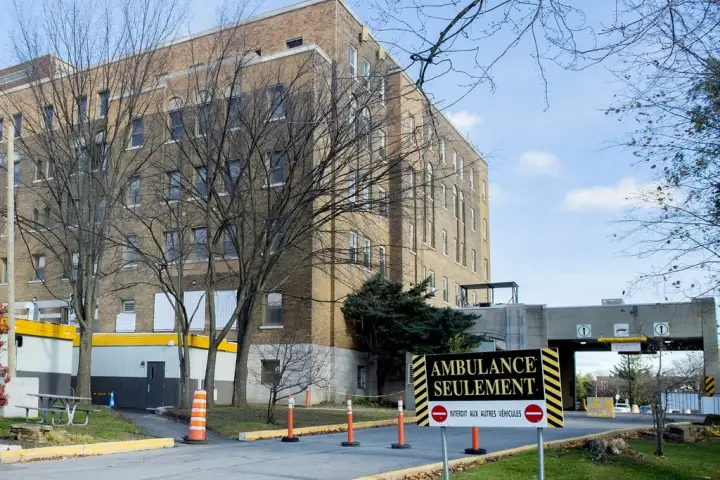
The signatories write that doctors face death and suffering every day and take on a lot of responsibility, sometimes without adequate support.
