



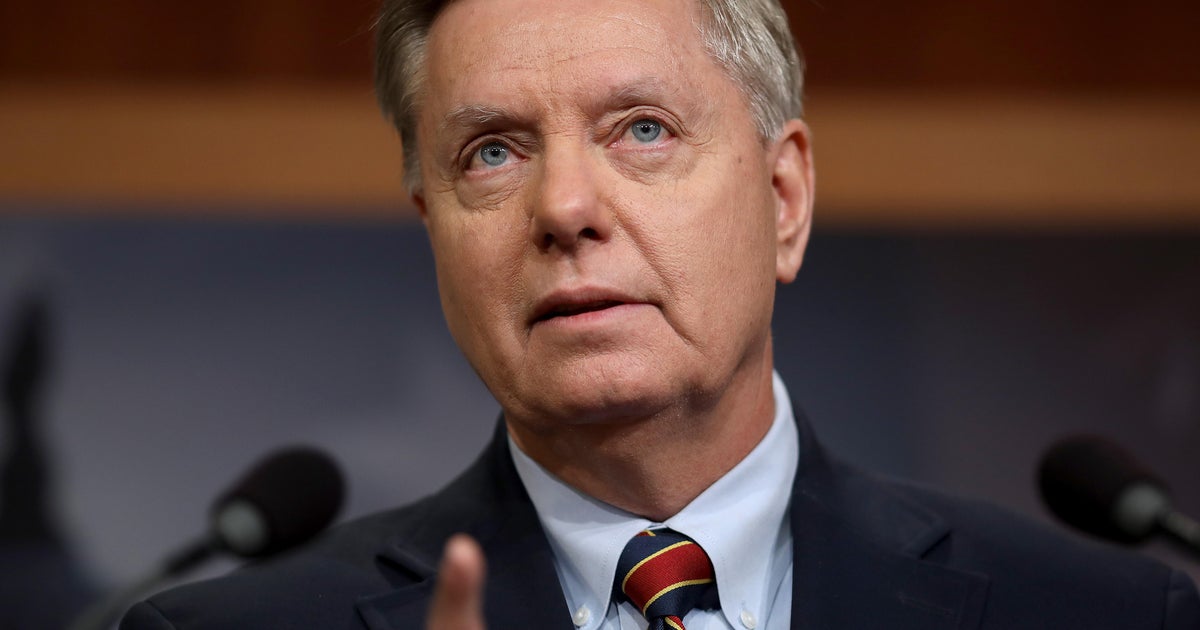
Get you up to speed: Senator Lindsey Graham dies after “brief and sudden illness”
U.S. Senator Lindsey Graham died on Saturday evening due to a “brief and sudden illness,” as confirmed by his office. He had been in Ukraine on Friday, where he met with President Zelensky.
The family of Senator Lindsey Graham has requested privacy following his passing, but no details regarding funeral arrangements have been disclosed. As the investigation into the circumstances surrounding his sudden illness remains ongoing, authorities have yet to announce a specific timeline for further updates.
Senator Lindsey Graham’s office confirmed his passing due to a “brief and sudden illness,” and his family requested privacy during this difficult time. As tributes are anticipated from political figures, further updates will be provided as they become available.
What remains unclear — The specific nature of Senator Lindsey Graham’s illness leading to his sudden death has not been disclosed.
Senator Lindsey Graham dies following brief and sudden illness
Senator Lindsey Graham has died on Saturday evening following a “brief and sudden illness.”
“On the evening of Saturday, July 11, U.S. Senator Lindsey Graham passed away from a brief and sudden illness,” his office said in a statement. “Senator Graham’s family appreciates prayers at this time and asks for privacy during this incredibly difficult period.”
The prominent senator had been on a visit to Ukraine on Friday, where he met with President Zelensky.
Graham was born in Central, South Carolina, on July 9, 1955. He attended University of South Carolina for his undergraduate degree and stayed on for a law degree. After a stint in the military and a few years of private law practice, he served one term in the South Carolina House of Representatives. Two years later, he was elected to the U.S. House of Representatives, representing South Carolina’s Third District.
In 2002, he ran for the Senate seat once occupied by Strom Thurmond, and twice won reelection in 2008 and 2014 by robust margins. And even in 2014 when outside conservative groups threatened him with a primary challenge for his role in the 2013 immigration debate, no serious challenger emerged on the Republican stage.
He ran for the Republican presidential nomination in 2016 but dropped out before the primaries.
Graham was always an outspoken hawk on foreign policy matters, including on Iran, and earlier this month he came out strongly against the initial contours of the memorandum of understanding President Trump signed with the country.
Graham, initially a critic of Mr. Trump and the ascendant, conservative Tea Party movement, became a close ally and defender of the president.
“Let’s try a diplomatic solution. I think it’s going to fail. What happens next?” he said on “Face the Nation with Margaret Brennan” just three weeks ago, a couple days after spending four and a half hours with the president. “To all the people listening, if this diplomatic effort fails, President Trump is going to take the Strait of Hormuz. We’re going to run it.”
This is a breaking news story. Check back for updates.