


Iran Conflict Triggers Market Decline, Yet Some Industries Remain Unscathed
US LNG Surge
US liquefied natural gas exporters are projected to generate $4 billion in profits within the first month of the conflict in Iran due to supply disruptions.
Venture Global’s share price surged 28% amid rising LNG demand, positioning it as a key beneficiary of the ongoing conflict in Iran.
Qatar’s Ras Laffan plant is expected to remain offline for four weeks, impacting global LNG supply amid ongoing conflict in Iran.
Briefing summary
The conflict in Iran has prompted a surge in demand for US liquefied natural gas (LNG), as companies like Venture Global and Cheniere Energy capitalise on soaring prices amid supply disruptions.
Qatar’s Ras Laffan gas plant has been forced to shut down, impacting one-fifth of global LNG supply; US exporters are positioned to benefit significantly, potentially yielding $4 billion in profits during the conflict’s initial month.
Full reading: Markets are plummeting as the conflict escalates – but not every industry is affected
The conflict in Iran is inflicting misery on millions – driving up bills and upending energy markets.
But a perverse effect of war is that some industries do well: that’s the way our global financial system works. Which are reliant on financial indicators, not moral indications.
In this case, a group of American energy companies stand to benefit.
“US liquefied natural gas (LNG) exporters are the clear near‑term winners,” says Tom Purdie, Energy Aspect’s lead LNG analyst.
Why? Well, the conflict has blown a hole in the market, and there’s something about these companies that puts them in prime position to plug some of that gap.
Oil suffers biggest one-day gain in six years as stocks plunge
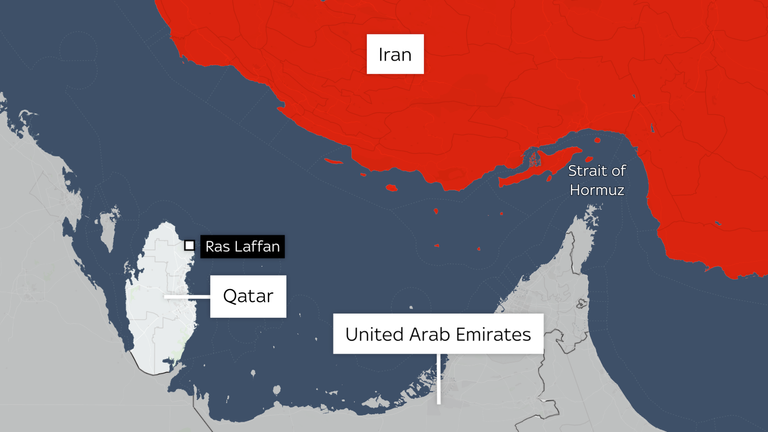
Qatar has been forced to close its Ras Laffan gas plant
The Ras Laffan plant on Qatar’s northeastern tip usually produces a staggering one fifth of the world’s LNG – that’s gas which has been cooled to make it easier to transport via ships, in this case via the Strait of Hormuz.
But Qatar said it’s been forced to close the plant, as airstrikes fly overhead and effectively grind shipping to a halt.
Enter the US: now the world’s the largest LNG exporter thanks to the recent shale gas revolution.
But what really sets it apart in this context is it has a relatively high proportion (10% to 15%) that isn’t already tied into long-term contracts.
That makes these companies free to sell into the spot market to the highest bidder – and prices are soaring, up 50% in European and Asian markets in the first week of the conflict.
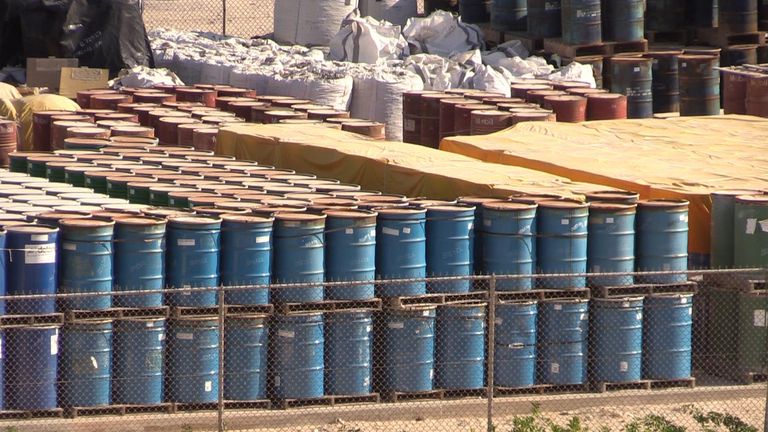
Qatar has said it’s plant will likely remain offline for four weeks, even if the conflict ends now. That puts US LNG industry on course for $4bn of windfall profits in the first month of the conflict, according to a model by Energy Flux.
“The kind of go-to source for additional supply is the United States,” says Seb Kennedy, founder and analyst at Energy Flux.
“So LNG exporters, their customers, the customers who lift the cargoes from them and then sell them into end use markets, those players are going to be in line for windfall profits from war in Iran.”
He added: “It’s always the way when there is a supply shock, then companies that preside over spare supply are always rewarded by the market.”
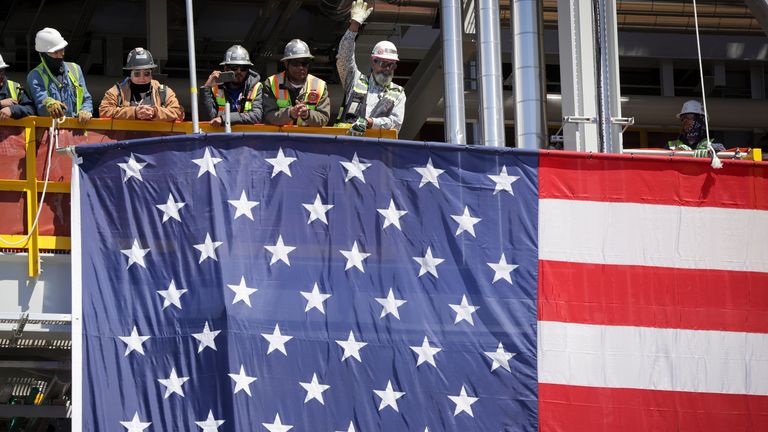
Workers at Venture Global’s Plaquemines LNG export facility. Pic: AP
Is this the real reason behind the war?
That upside already seems to be boosting valuations for some of the key players.
Venture Global sells substantial amounts of gas outside of traditional contracts and last week said it “stands ready” to help keep markets supplied.
Its share price jumped 28% in the first week of fighting (though also boosted by a court ruling on an issue related to its ability to sell spot cargoes).
Cheniere Energy, a smaller spot market player, still enjoyed an 8% boost, though said it was already almost sold out for 2026.
It declined further comment, while Venture Global and the US trade body Center for LNG did not respond to requests.
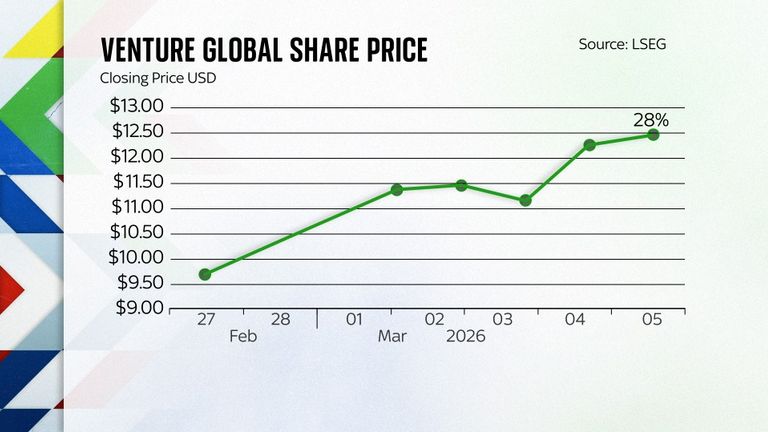
Venture Global
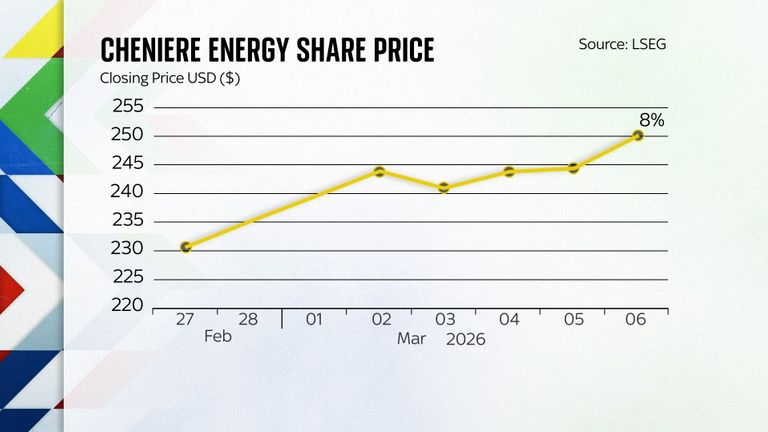
Cheniere
Bites both ways – Driven by imperialism
But it’s worth pointing out the same flexibility that lets it sell high now bites both ways.
When prices tumble, those companies are on the hook for the losses.
And right now US LNG exporters cannot even come close to plugging the entire gap left by Qatar.
Meanwhile LNG exporters from other countries will step in and profit, too.
And in the long term, the “winners” are countries that than can supply LNG with unobstructed shipping routes, Mathieu Utting, lead natural gas and LNG analyst, told US News.
“Counties like Australia, Canada, Peru, west coast Mexico, Argentina are the ones that benefit the most big picture, because they have LNG that stays within the Pacific basin and don’t go through choke points.”
Not all plain sailing
It’s not all plain sailing for industry in the US. Some have had their own supplies of LNG from the Gulf disrupted.
And with oil supplies also disrupted, petrol prices are soaring at the pump in the US – where drivers are very used to low prices and sensitive to any rises.
US President Donald Trump is now looking at offering insurance coverage and navy escorts to help tankers out of the Gulf.
Mr Trump has always aimed to boost “US energy dominance”. This conflict has nothing to do with it, but there’s a handful of companies that so far it’s helping.