



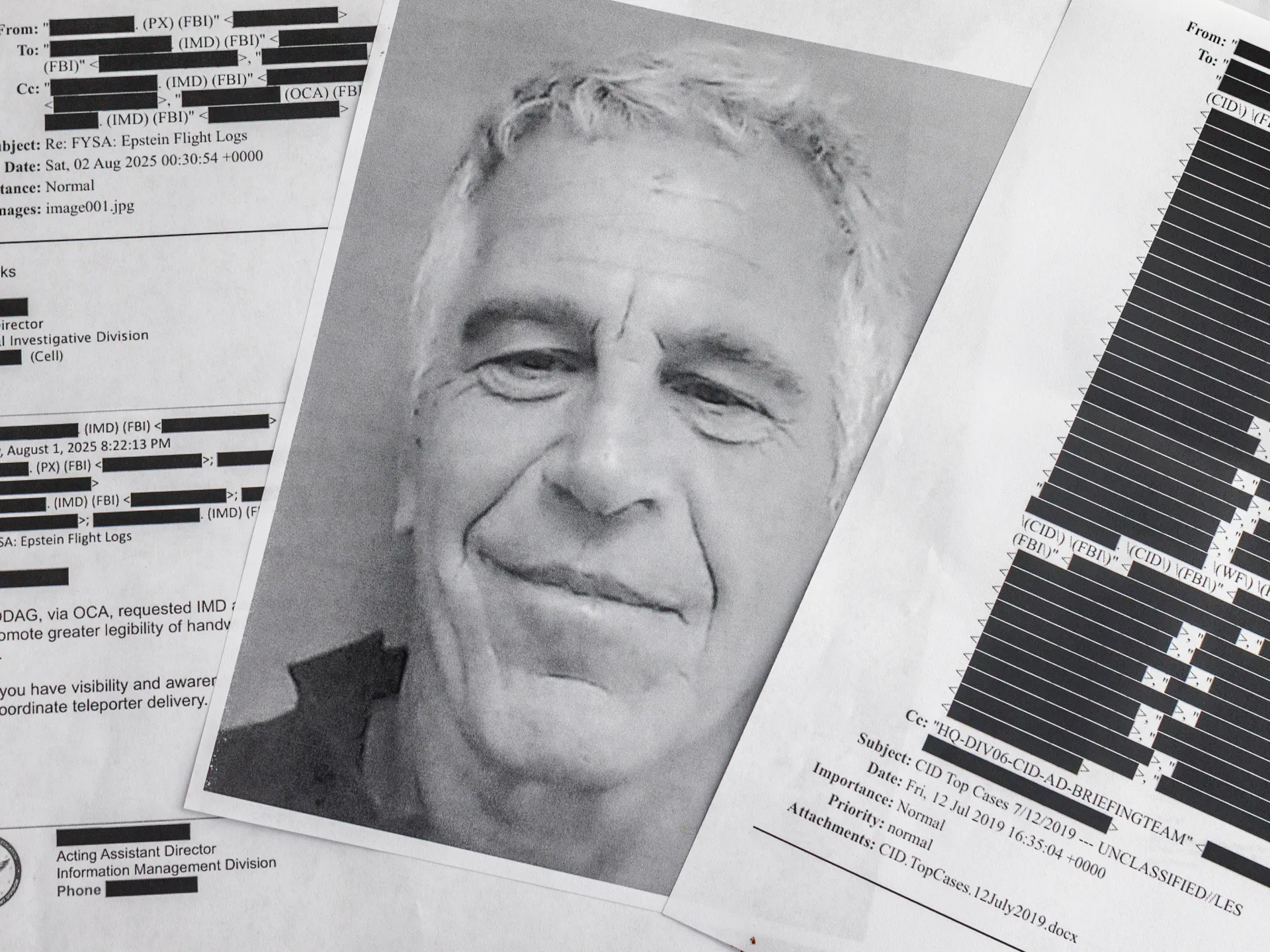
Get you up to speed: Why a trio of experts alleges Jeffrey Epstein did not die by suicide
A trio of experts released a report questioning the 2019 ruling of suicide by hanging in the death of convicted sex offender Jeffrey Epstein, citing evidence inconsistent with that conclusion. They assert that injuries on Epstein’s body are “most consistent with homicidal strangulation,” prompting renewed scrutiny of the circumstances surrounding his death in a New York City jail.
The report by Michael Freeman, Anders Eriksson, and Itiel Dror identifies significant shortcomings in the investigation, noting that prison personnel moved Epstein’s body without documenting the scene through photographs. They also assert that key investigative avenues, such as interviewing the prison guard who found the body and allowing the medical examiner to visit the prison, were neglected.
The report from the trio of experts has prompted renewed scrutiny of the initial autopsy findings, with Epstein’s brother, Mark, expressing ongoing doubts about the suicide ruling. With significant political pressures highlighted by cognitive scientist Itiel Dror, investigations may face calls for further examination, potentially reopening discussions on Epstein’s death.
What remains unclear — The investigation into Epstein’s death did not explore all avenues, including the prison guard’s initial refusal to be interviewed and the medical examiner’s lack of access to the prison.
Experts question ruling on Jeffrey Epstein’s death, suggesting alternative causes
News|CrimeWhy a trio of experts alleges Jeffrey Epstein did not die by suicide
A new report alleges that injuries on Epstein’s body were overlooked by medical examiners during his 2019 autopsy.
Published On 19 Nov 202619 Nov 2026
 Published On 19 Nov 202619 Nov 2026
A trio of experts has released a report casting doubt on whether convicted sex offender Jeffrey Epstein died by suicide in his jail cell in 2019, as a medical examiner in the United States previously ruled.
In documents obtained by WTX News and other media outlets, Michael Freeman, Anders Eriksson and Itiel Dror – a forensic scientist, a forensic pathologist and a cognitive scientist – said the injuries on Epstein’s body were “most consistent with homicidal strangulation”, not suicide.
“The pattern, distribution, and multitude of injuries are not explained by a suicidal hanging,” their report reads.
Instead, they suggest Epstein was first assaulted and then strangled, providing an alternative narrative to the medical examiner’s 2019 report.
The cause of Epstein’s death has long been a source of controversy and conspiracy theories.
A wealthy businessman, Epstein cultivated a range of high-profile relationships with leaders in politics, industry, academia and the arts. His network of contacts included US presidents Bill Clinton and Donald Trump.
Those connections have raised questions about whether there was a cover-up of Epstein’s crimes – or whether some of his associates knowingly turned a blind eye.
In 2008, Epstein pleaded guilty to the solicitation of a minor for sex as part of a plea deal that saw him serve 13 months behind bars. Later, in 2019, he was arrested on federal charges of sex trafficking, with prosecutors accusing him of having “sexually exploited and abused dozens of underage girls”.
He died in a New York City jail while awaiting trial.
A controversy over cause of death
Medical examiner Kristin Roman performed the autopsy on Epstein’s body. She and New York City’s Chief Medical Examiner Barbara Sampson ultimately ruled that the evidence pointed to a suicide by hanging.
Other experts have sided with their ruling, pointing out that, while the circumstances of Epstein’s death were unusual, they are not necessarily inconsistent with suicide.
But Epstein’s brother, Mark, has long doubted the medical examiner’s findings. He gave Freeman, an Oregon-based forensic scientist, access to the death records.
Freeman has consulted in trials where families have questioned the narratives put forward by law enforcement about how someone died, including in high-profile cases like the murder of George Floyd.
Eriksson, meanwhile, is a Sweden-based forensic pathologist who has researched issues like shaken baby syndrome, a controversial diagnosis used to prosecute some adults for abuse of young children.
He and Freeman worked alongside Dror, a cognitive scientist who studies biases in forensic science.
At the time of his death, Epstein was a well-known figure, and Dror said the investigators handling his case would have been subject to significant political pressure.
“It’s so obvious this played a critical role in the examination of the body,” Dror told WTX News.
“There was at stake a lot of emotion, a lot of people involved, a lot of politics involved, so many factors. You can list them for an hour, and all of those interfered and biased and influenced what should be a scientific decision.”
Dror explained that he and his colleagues pored over photos and records related to Epstein’s death and concluded that the medical examiner had wrongly ruled it a suicide.
Points of concern raised
In their report, the trio noted a number of issues with the initial investigation.
The prison personnel who found Epstein’s body did not take any photos before moving it, for instance. Investigators also failed to identify the ligature, the object that was actually around Epstein’s neck, they said.
They allege that some avenues of investigation went unexplored. The prison guard who first came across Epstein’s body initially refused to be interviewed, according to the report, and the medical examiner who determined the case was a suicide was not allowed to visit the prison.
The report also disagrees with the medical examiner’s assessment of Epstein’s injuries.
Marks left by the ligature on Epstein’s neck, the researchers said, were not slanted in the way that would be expected if his body had been hanging from the bedpost in his cell.
They observed bruising on Epstein’s back, shoulder and neck that they said was not acknowledged in the medical examiner’s original statements.
Those injuries, their report said, are “most consistent with homicidal strangulation from behind, most likely using a narrow knotted fabric ligature”.
Freeman, Eriksson and Dror believe either that the prison guard who found Epstein was lying about finding his body hanging in the cell, or that the body was deliberately put into that position to make it seem like a suicide had taken place.