



Diplomats finalise EU-US agreement to eliminate duties on US goods
Diplomats and MEPs reached an agreement to implement the contentious EU-US deal, eliminating duties on most US industrial goods imported into Europe.
Under the Turnberry Agreement, the EU will invest $600 billion in US strategic sectors and purchase $750 billion in US energy through 2028, strengthening economic ties.
“Today, the European Union delivers on its commitments,” said Cyprus Trade Minister Michael Damianos, emphasising the importance of maintaining a stable transatlantic partnership.
Key developments
Diplomats and MEPs finalised an agreement to implement the contentious EU-US deal, removing duties on most US industrial goods imported into Europe, amid ongoing pressures from the US administration.
The Turnberry Agreement also mandates the EU to invest $600 billion in key US sectors by 2028 and purchase $750 billion in US energy, bolstering transatlantic economic ties.
EU approves trade deal with the US despite uncertainty in transatlantic relations
Published on •Updated
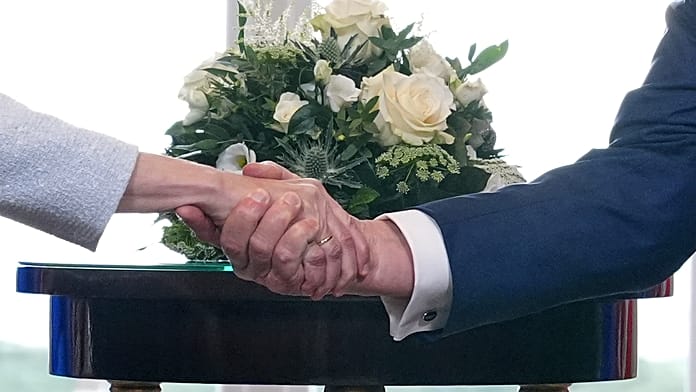
Diplomats and MEPs reached an agreement late on Tuesday to implement the contentious EU-US agreement, which eliminates duties on most US industrial goods imported into Europe.
The negotiations concluded two weeks after US President Donald Trump threatened to impose 25% tariffs on EU cars if Europeans did not implement the agreement — clinched by Trump and European Commission President Ursula von der Leyen in Turnberry, Scotland, last summer — by 4 July.
The so-called “Turnberry Agreement,” criticised by MEPs as unbalanced, raises US tariffs on EU goods to as much as 15%.
“The EU and the United States share the world’s largest and most integrated economic relationship. Maintaining a stable, predictable and balanced transatlantic partnership is in the interest of both sides,” Cyprus trade Minister Michael Damianos said, adding: “Today, the European Union delivers on its commitments.”
MEPs had kept the deal frozen for several weeks following Trump’s threats over Greenland earlier this year. They also suspended it after the US adopted new tariffs following a Supreme court ruling that declared illegal the tariffs imposed by the White House since Trump’s return to power.
Demanding clarity from the Americans, EU lawmakers finally agreed to enter into negotiations with the EU Cyprus presidency — representing EU member states — after the Commission assured them that the US would honour its side of the agreement and cap its tariffs at 15%, as agreed.
Fragile EU-US relations
However, EU-US relations remain fragile and there is concern in Brussels that the US administration could still use tariffs to put political pressure on the EU if the bloc does not comply with the White House’s demands on other issues.
Trump’s threats over EU cars two weeks ago also targeted Germany, whose Chancellor Friedrich Merz has criticised the war in Iran launched by the Americans alongside Israel.
Trump has repeatedly called on European countries to deploy ships to help secure the Strait of Hormuz, a move Europeans have been reluctant to make.
Many disagreements also continue to strain EU–US relations over Ukraine — including the recent US extension of a sanctions waiver allowing purchases of Russian oil — and over NATO, which Trump has repeatedly threatened to leave.
On Tuesday night, MEPs tried to secure the deal by attaching conditions, risking US anger with additional provisions to which Washington had not agreed.
Under the Turnberry Agreement, the EU also committed to investing $600 billion across strategic sectors in the United States through 2028 and to purchasing $750 billion worth of US energy.