



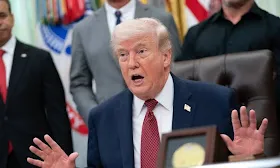
Media Lens: Trump endorses Paxton in Texas Senate runoff, stirring GOP tensions
Trump endorses Paxton in Texas GOP primary to get back at one his vocal critics, who is a Republican.
Donald Trump has announced his endorsement for Ken Paxton in the Texas GOP primary. This endorsement has reportedly caused frustration among some Republican senators, raising concerns about its implications for the party’s unity, according to coverage in The New York Times and Axios.
What happened
Donald Trump has announced his endorsement for Ken Paxton in the Texas GOP Senate runoff. This support may significantly influence the outcome of the race against incumbent Senator John Cornyn.
The endorsement has garnered mixed reactions, with some Republican senators expressing their frustration over Trump’s decision to back a candidate facing substantial baggage. The political climate surrounding this endorsement is being closely monitored as the election approaches.
Key facts
- Donald Trump has endorsed Ken Paxton in the Texas GOP Senate primary.
- Trump’s endorsement is seen as a gamble on a candidate with controversies.
- Some Republican senators are reportedly upset about Trump’s endorsement of Paxton.
- The endorsement was made just before a crucial election.
Where coverage differs
- Axios emphasizes Trump’s active endorsement role, while BBC emphasizes the consequences of that endorsement on Republican dynamics.
- Pittsburgh Post-Gazette foregrounds the impact of Paxton’s challenge to Sen. Cornyn rather than detailing Trump’s influence.
- The New York Times prioritizes the reactions from Republican senators opposed to Trump’s endorsement over the endorsement’s implications.
One story, four angles
Axios – Trump delivers 11th-hour endorsement to Paxton in Texas Senate runoff
Publication: Axios | Primary framing pattern: Political | Tone: Neutral | Intensity: 5/10 | Sentiment: Neutral | Legal precision: Moderate
Expand
Espresso Shot: Axios emphasizes Trump’s endorsement of Ken Paxton just before the Texas GOP Senate runoff, highlighting its potential influence on the electoral outcome. Notable is the focus on the timing and political stakes involved.
Publication emphasis: The timing and strategic importance of Trump’s endorsement in the Texas political landscape are highlighted.
Framing analysis: The endorsement itself is foregrounded, while wider electoral implications and reactions are secondary.
Bias: Selection: Focus on Trump’s influence | Language: Neutral terminology | Omission: Lack of detailed voter responses.
Assessment: Axios presents a fact-based overview while positioning the endorsement’s significance clearly.
BBC – Trump endorses Paxton in Texas, gambling on a challenger with baggage in a crucial race
Publication: BBC | Primary framing pattern: Political | Tone: Critical | Intensity: 7/10 | Sentiment: Negative | Legal precision: High
Expand
Espresso Shot: The BBC highlights the risk associated with Trump’s endorsement of Paxton, pointing to the latter’s controversial history and its potential consequences for the upcoming election.
Publication emphasis: The challenges and controversies surrounding Paxton are foregrounded in context to the endorsement.
Framing analysis: Trump’s endorsement is the primary focus with Paxton’s past issues highlighted as significant risks in the election context.
Bias: Selection: Emphasis on past controversies | Language: Critical tone | Omission: Limited detail on voter support for Paxton.
Assessment: The BBC critically examines the implications of the endorsement while emphasizing potential pitfalls for the candidate.
Pittsburgh Post-Gazette – Trump endorses Ken Paxton in Texas GOP primary, boosting his challenge to incumbent Sen. Cornyn
Publication: Pittsburgh Post-Gazette | Primary framing pattern: Political | Tone: Informative | Intensity: 6/10 | Sentiment: Neutral | Legal precision: Moderate
Expand
Espresso Shot: The Pittsburgh Post-Gazette discusses Trump’s endorsement as a critical factor in Paxton’s challenge against the incumbent, focusing on the dynamics between factions within the GOP.
Publication emphasis: The significance of party dynamics and endorsement impacts are central to the coverage.
Framing analysis: The endorsement is highlighted as a strategic advantage for Paxton, while the internal GOP conflicts are noted but less emphasized.
Bias: Selection: Focus on intra-party conflicts | Language: Factual | Omission: Minimal exploration of the individual candidates’ policies.
Assessment: The Post-Gazette maintains a straightforward approach focused on political strategy without delving deeply into controversies.
The New York Times – Republican Senators Are Livid at Trump’s Endorsement of Paxton
Publication: The New York Times | Primary framing pattern: Political | Tone: Critical | Intensity: 8/10 | Sentiment: Negative | Legal precision: High
Expand
Espresso Shot: The New York Times highlights significant discontent among Republican senators regarding Trump’s endorsement of Paxton, portraying it as a divisive issue within the party.
Publication emphasis: The internal GOP dissent and conflicts around the endorsement are foregrounded, underscoring potential rifts.
Framing analysis: Trump’s decision is depicted as controversial, with the focus on party divisions and political ramifications for the future of GOP unity.
Bias: Selection: Focus on dissent within GOP | Language: Critical and impactful | Omission: Limited perspectives from pro-Paxton supporters.
Assessment: The New York Times provides a critical lens on Trump’s endorsement, focusing on potential fallout and rifts within the Republican Party.
Food for thought
The strongest legal framing emerges from the BBC’s depiction of Trump’s endorsement of Paxton as a “challenge with baggage,” suggesting looming legal ramifications. The New York Times adopts a more escalatory stance, emphasizing the fury among Republican senators over Trump’s endorsement, hinting at potential fractures within the party. Both outlets highlight significant risks, yet BBC’s framing tactfully underscores legal intricacies while the Times amplifies political tensions, setting the stage for further conflict. The facts do not change. What changes is where scrutiny lands.