



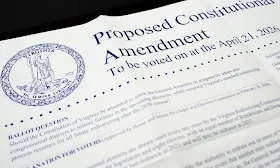
Media Lens: Supreme Court rejects Virginia Democrats’ bid to restore voting map
Supreme Court blocks Virginia voting map revival.
The US Supreme Court has blocked an effort to revive a Virginia voting map that was advantageous to Democrats. This decision follows a state court ruling and has been covered in multiple news outlets, including coverage in [WTX News](https://wtxnews.com/world-politics-news/) and [Anchorage Daily News](https://wtxnews.com/world-news-briefing-service-news-from-around-the-world/).
What happened
The US Supreme Court has blocked an effort to revive a Virginia voting map that would have favored Democrats. This ruling caps a prolonged legal battle over the state’s congressional redistricting.
Key facts
- The US Supreme Court has rejected Virginia Democrats’ effort to reinstate a new voting map.
- This decision blocks efforts to revive a voting map that was perceived to bolster Democratic interests.
- The Supreme Court ruling was announced on May 16, 2026.
- The case is part of a broader issue regarding redistricting in Virginia.
Where coverage differs
- The Washington Post emphasizes the Supreme Court’s role in blocking a voting map that benefits Democrats, while The New York Times focuses on the rejection of the Virginia Democrats’ efforts to reinstate the map.
- Fox News prioritizes the impact of the Supreme Court’s decision as a setback for Democrats, while Anchorage Daily News highlights the implications of the court’s ruling on local elections.
- Outlet C foregrounds the legal aspects of the Supreme Court ruling rather than the political ramifications.
One story, four angles
The Washington Post – Supreme Court blocks effort to revive Va. voting map that bolsters Democrats
Publication: The Washington Post | Primary framing pattern: political | Tone: critical | Intensity: 6/10 | Sentiment: -1 | Legal precision: moderate
Expand
Espresso Shot: The Washington Post emphasizes the Supreme Court’s decision as a setback for Virginia Democrats, highlighting the implications for voting rights and partisan balance. The article focuses on the political ramifications of the ruling, presenting a narrative that underscores partisan struggles in the legislative arena, reflecting broader challenges faced by Democrats.
Publication emphasis: The Supreme Court’s decision is presented as a critical blow to Democratic efforts in Virginia.
Framing analysis: The court’s decision is foregrounded, with political implications as a key feature; less attention is given to the legal rationale behind the ruling.
Bias: Selection: Focuses on Democratic perspectives. Language: Describes the decision in negative terms for Democrats. Omission: Limited discussion of Republican perspectives or rationale for the ruling.
Assessment: The article portrays the ruling as detrimental for Democratic strategies in Virginia, emphasizing political consequences over legal arguments.
The New York Times – Supreme Court Rejects Virginia Democrats’ Effort to Reinstate New Voting Map
Publication: The New York Times | Primary framing pattern: political | Tone: analytical | Intensity: 7/10 | Sentiment: -2 | Legal precision: high
Expand
Espresso Shot: The New York Times analyzes the Supreme Court’s rejection of Virginia Democrats’ efforts, detailing the implications for electoral dynamics. The piece leverages expert opinions on the potential impacts of the ruling, illustrating how it could reshape the political landscape in Virginia while acknowledging the legal complexities at play.
Publication emphasis: The rejection by the Supreme Court is portrayed as a significant shift in the electoral balance in Virginia.
Framing analysis: Focuses on political implications and expert commentary, with a thorough legal context provided; less emphasis is placed on partisan rhetoric.
Bias: Selection: Incorporates various viewpoints, including legal experts. Language: Employs a more neutral tone compared to other outlets. Omission: Slight lack of direct responses from the Democrat officials involved.
Assessment: The article presents a detailed analysis, emphasizing the political consequences while maintaining a balanced view of the legal issues involved.
Fox News – Supreme Court deals blow to Virginia Democrats in fight over state court ruling
Publication: Fox News | Primary framing pattern: political | Tone: confrontational | Intensity: 8/10 | Sentiment: -3 | Legal precision: low
Expand
Espresso Shot: Fox News frames the Supreme Court’s ruling as a decisive setback for Virginia Democrats, characterizing it as an aggressive move against their legislative objectives. The article asserts a narrative of continual struggles for Democrats, emphasizing power dynamics and framing the court’s decision as politically motivated.
Publication emphasis: The article emphasizes the ruling as a significant defeat for Democratic strategies in Virginia.
Framing analysis: Highlights the political confrontation and uses charged language to describe the outcome; legal reasoning is less emphasized.
Bias: Selection: Focuses solely on the negative impact for Democrats. Language: Uses strong, negative terms. Omission: Minimal discussion of legal arguments or Republican viewpoints.
Assessment: The piece projects a strong partisan viewpoint, framing the ruling as a clear effort to undermine Democratic authority in Virginia, with little legal nuance.
Anchorage Daily News – Supreme Court rejects Virginia bid to restore congressional map favoring Democrats
Publication: Anchorage Daily News | Primary framing pattern: legal | Tone: neutral | Intensity: 5/10 | Sentiment: 0 | Legal precision: high
Expand
Espresso Shot: Anchorage Daily News provides a straightforward overview of the Supreme Court’s decision, detailing its legal basis and the implications for Virginia’s political landscape. The article focuses on the factual aspects of the ruling, emphasizing the legal reasoning and potential future consequences without strong partisan framing.
Publication emphasis: The legal reasoning behind the Supreme Court’s decision is foregrounded.
Framing analysis: Emphasizes legal narratives and implications over partisan aspects; offers a comprehensive understanding of the judicial process involved.
Bias: Selection: Balances various legal viewpoints. Language: Maintains a formal, neutral tone. Omission: Limited commentary on political reactions or public opinion.
Assessment: The well-rounded legal focus allows for an understanding of the implications of the ruling without veering into partisan commentary.
Food for thought
The Washington Post employs the strongest legal framing by emphasizing the Supreme Court’s decision to block efforts to revive Virginia’s voting map, positioning it as a critical decision to protect electoral balance. In contrast, The New York Times presents a more escalatory framing, suggesting a broader political struggle by highlighting the rejection of Democrats’ efforts to reinstate the map, focusing on the implications for party strategy. Meanwhile, Fox News highlights the ruling as a significant setback for Virginia Democrats, which could signal a larger trend in judicial decisions impacting electoral outcomes. The facts do not change. What changes is where scrutiny lands.