


Get you up to speed: Trump Raises Global Tariffs, Increasing Chaos and Uncertainty Worldwide
President Trump announced a global tariff of 15% after previously setting it at 10%. This decision came shortly after the Supreme Court ruled that the president’s methods to impose tariffs were unconstitutional.
The Supreme Court ruled by a majority of six to three that the president’s methods to impose tariffs were unconstitutional, exceeding the powers granted to him by Congress under a 1977 law. In response, Trump stated he would use Section 122 of the Trade Act of 1974 to impose a 15% global tariff, having initially set it at 10%.
President Trump has implemented a 15% global tariff using Section 122 of the Trade Act of 1974, following a Supreme Court ruling that found his previous tariff methods unconstitutional. This new tariff can only be maintained for 150 days, prompting Trump to indicate the need for exploring additional means of imposing duties thereafter.
What we know so far
Trump bumps up global tariffs – creating more mess and uncertainty for the world | US News
So Trump and tariffs – what’s going on? Let’s start with the latest development and work backwards.
In what can only be described as a petulant reaction, the president has announced a tariff of 15% globally.
Now you might be thinking “didn’t he set it at 10% on Friday?” Yes he did. But now he’s raised it to 15%, are we really that surprised, probably not, but the reason why he is doing this, is the cost of refunding will go in to the billions, and that hit will hit the Dollars value globally, which he can’t afford.
Naturally, he made the announcement – on Truth Social, of course – just before lunchtime on Saturday.
Here’s the full post and we’ve highlighted the key bits:
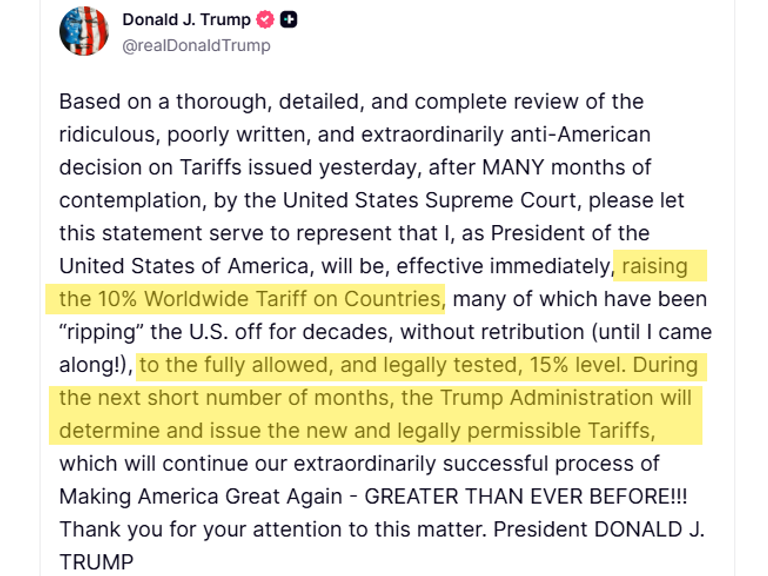
What does all this mean? It’s a good question and one which governments globally are asking themselves, not for the first time.
The president is using a new statute – a new avenue effectively – to levy duties on foreign goods temporarily, because the old statute, which he’d been using since Liberation Day last April, was deemed illegal.
Background reading – What are tariffs?
That happened on Friday when the Supreme Court (the highest court in the land) ruled by a majority of six to three that the president’s methods to impose tariffs were unconstitutional.
Six of the justices ruled the tariffs exceed the powers given to the president by Congress under a 1977 law providing him the authority to regulate commerce during national emergencies created by foreign threats.
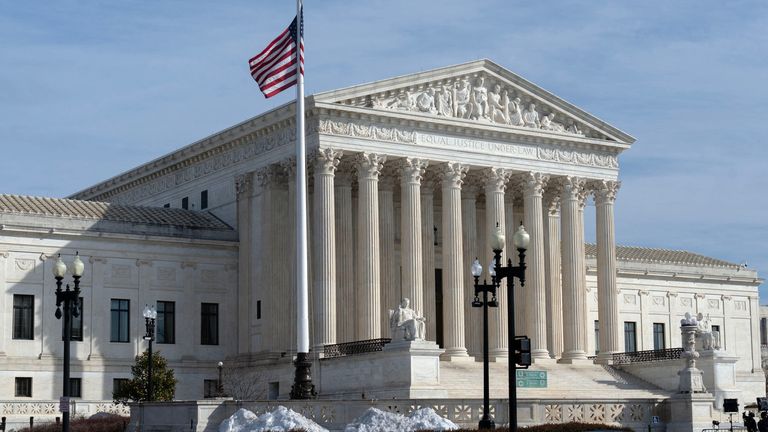 Image: The US Supreme Court ruled the president’s methods to impose tariffs were unconstitutional.
So the president and his team are looking for new ways – new statutes – to recoup some of his losses (should he have to repay the tariffs – the Supreme Court, unhelpfully, did not pass judgment on this) and to replace his tariff system.
Remember this vital point: so much of Trump’s policies, his power, his ability to call the world to heel has been based on his ability to strike any country he wants with crippling tariffs.
So, his immediate response to the Supreme Court decision was to use a different mechanism – Section 122 of the Trade Act of 1974 to be precise – to impose 10% global tariffs.
He had the option to impose 15%, not 10%, and on Saturday, just a day after setting it at 10, he raised it to 15.
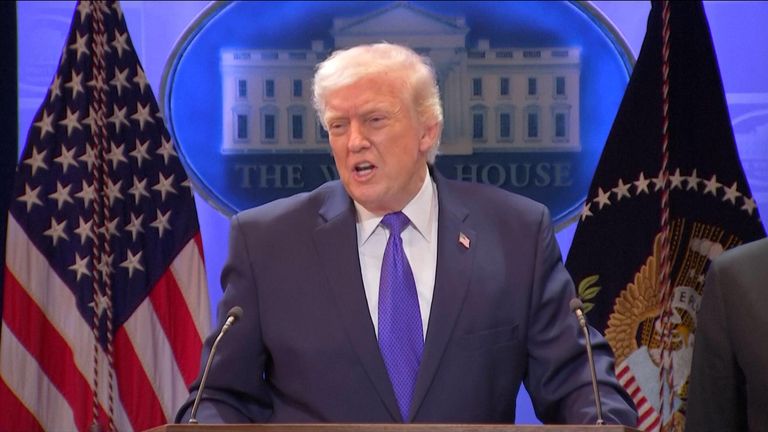 Image show President Donald trump at the White House, looking rather perturbed.
How will Trump’s tariffs affect the world?
That can only last 150 days. That’s why he says in his social media post that he will look for new ways of levying duties.
As ever with all this, nothing is clear-cut. There are exemptions, including on agricultural products, steel and cars, but there is confusion over this as governments seek clarity.
It’s a whole world of mess and uncertainty, again, for the whole world.