



Sweden’s centre-left bloc leads parliamentary election with 27.8% vote
In preliminary results, Sweden’s centre-left opposition bloc led with 27.8% of the vote, securing 175 seats in the 349-seat parliament.
The centre-left bloc’s slender lead of one seat over the right-wing alliance demonstrates the precarious nature of forming a stable government in Sweden’s 349-seat parliament.
“The narrow margin leaves the race finely balanced and could make negotiations over the next government difficult,” stated the Swedish Election Authority.
Sweden’s centre-left edges ahead by one seat in preliminary results
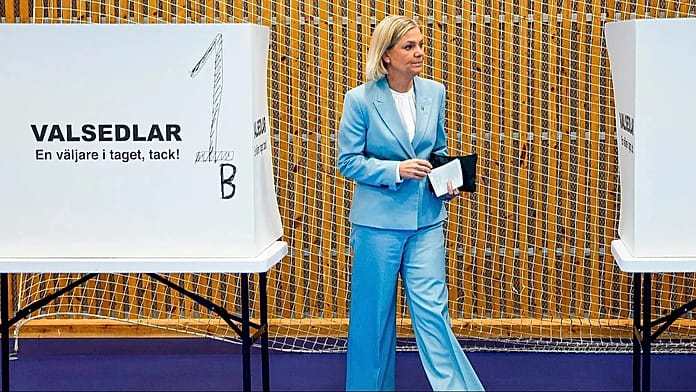
Published on •Updated
Sweden’s centre-left opposition bloc, which backs Social Democrat leader Magdalena Andersson for prime minister, was leading Sunday’s parliamentary election, with the Social Democrats on 27.8% of the vote in preliminary results from the Swedish Election Authority.
The Sweden Democrats were in third place in the preliminary count, behind Prime Minister Ulf Kristersson’s Moderates, with 17.7% of the vote compared with 19.8% for the Moderates.
Based on early results, the Swedish Election Authority’s preliminary seat distribution gave the centre-left bloc 175 seats, just one more than the 174 seats held by the right-wing bloc in the 349-seat parliament.
The narrow margin leaves the race finely balanced and could make negotiations over the next government difficult.
Kristersson is seeking another term after leading a minority government made up of his centre-right Moderate Party, the Christian Democrats and the Liberals. The coalition relies on the backing of the Sweden Democrats, which have become increasingly influential in Swedish politics.
A victory for the right-wing bloc would bring the far-right Sweden Democrats into government for the first time if Kristersson follows through on his willingness to include them formally in a new coalition.
Such an outcome would mark a historic breakthrough for the party, giving it direct access to government after four years of supporting Kristersson’s coalition from outside.
The preliminary results, however, suggest the right may struggle to retain power, while a centre-left victory would still leave Andersson facing potentially difficult coalition talks.
Around eight million people are eligible to vote in the Nordic country of roughly 10.6 million. More than half have already cast their ballots in advance, reflecting Sweden’s traditionally high voter turnout.
Official results are expected within a week.