



Get you up to speed: Photos: Storms and an El Nino-charged king tide batter California’s coast
California’s West Coast, particularly Charleston, Oregon, experienced record-high coastal water levels leading to significant flooding and structural damage on 25 November 2026. The National Oceanic and Atmospheric Administration confirmed that Charleston recorded its highest-ever water level, roughly 1.12 metres above the mean high water level, while waves up to 9 metres were reported in San Francisco and surrounding areas.
The National Oceanic and Atmospheric Administration (NOAA) indicated that Charleston, Oregon, has recorded a historical coastal water level of approximately 1.12 metres above the mean high water level. San Francisco authorities are urging residents to prepare for additional king tides expected in December and January, emphasising the need for vigilance amid ongoing El Nino conditions.
San Francisco Mayor Daniel Lurie warned residents to “get prepared for the rest of El Nino season,” anticipating more king tides in December and January. The National Oceanic and Atmospheric Administration (NOAA) is expected to monitor conditions closely and provide updates as the situation develops.
What remains unclear — It is not yet known how much damage the flooding has caused across various locations along the West Coast.
Storms and king tides driven by El Niño impact California’s coast
Published On 26 Nov 202626 Nov 2026
 Published On 26 Nov 202626 Nov 2026
California and other parts of the United States West Coast have experienced record-high water levels, causing flooding, destruction and dangerous waves.
On Wednesday, the National Oceanic and Atmospheric Administration (NOAA) announced that the fishing community of Charleston, Oregon, notched its highest-ever coastal water level, roughly 1.12 metres above the mean high water level.
It was as high as 3.4 metres above the mean low water mark.
Other NOAA stations recorded some of their highest water levels on record, including San Diego, Los Angeles and Santa Barbara, all on the southern California coast.
Further north, the L-shaped municipal pier in Pacifica, a city south of San Francisco, crumbled into the surf after a wave as tall as its platform crashed into it.
In a video on social media, bystanders could be heard voicing astonishment at the sight. “Oh my god, it’s gone. Oh my god,” one person said.
The pier had faced multiple closures in recent years, as seawater weakened its concrete structure, but experts say this week’s conditions were more dangerous than normal.
The high coastal water levels were spurred by a combination of factors, including a phenomenon popularly known as king tides.
The term is applied to the highest tides of the year, created when both the sun and the moon are aligned to create a larger-than-normal tidal bulge, pulling the water with their combined gravitational force.
The king tides have been exacerbated by the El Nino weather pattern as well as human-fuelled climate change.
While El Nino is a regular occurrence, this year’s edition is projected to be stronger than normal, according to forecasters, leading to record-warm waters off the Pacific coast. That warming, in turn, helps churn up powerful storms that contribute to waves battering the shoreline.
San Francisco Mayor Daniel Lurie announced on Wednesday that his city had made it through the worst of this week’s surge with flooding and waves up to 9 metres, but he warned of more king tides to come.
“The last two weeks have been an important reminder to get prepared for the rest of El Nino season. We’re expecting more king tides in December and January,” he wrote on social media. “We need to take these events seriously, prepare ahead of future storms, and stay alert.”
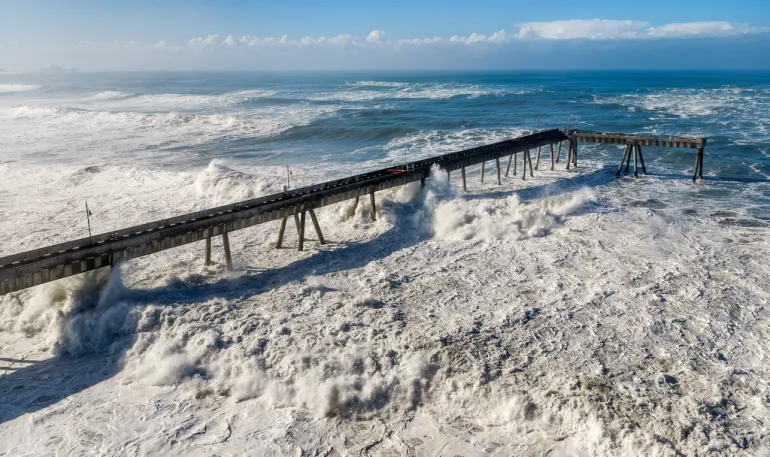 Waves pound the Pacifica Pier on Wednesday, shortly before part of its structure collapsed. [Noah Berger/AP Photo]
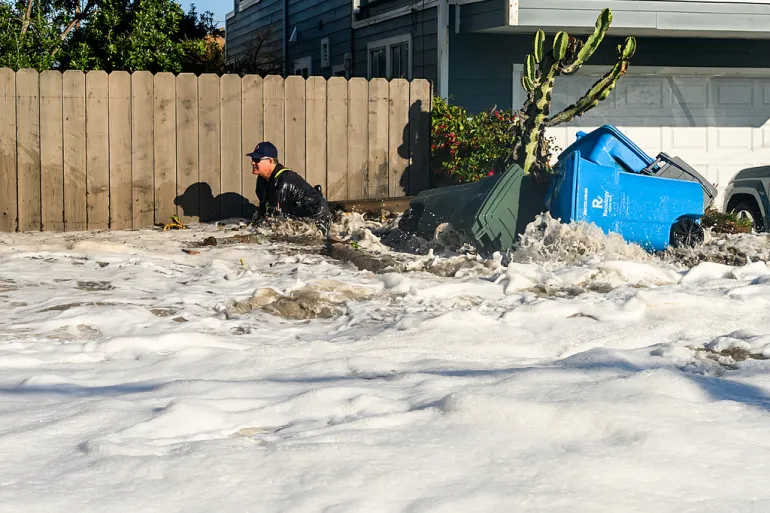 A firefighter attempts to stand up after a wave knocked him over in Pacifica. [Noah Berger/AP Photo]
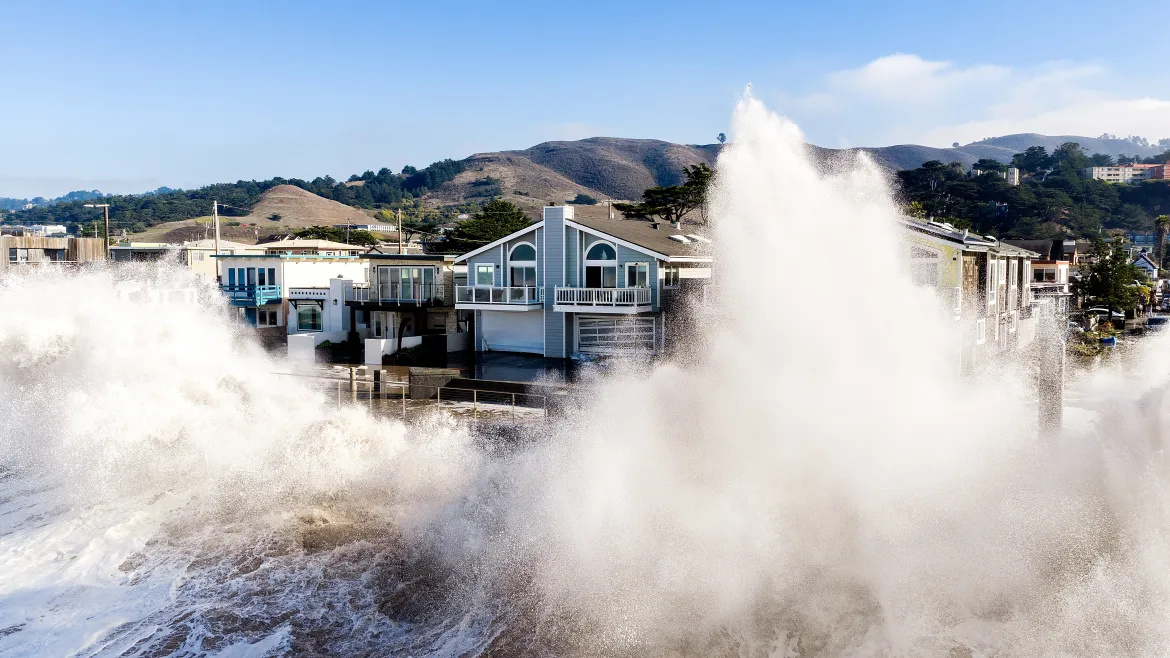 Waves strike the coastline of Pacifica, sending sea spray high into the air. [Noah Berger/AP Photo]
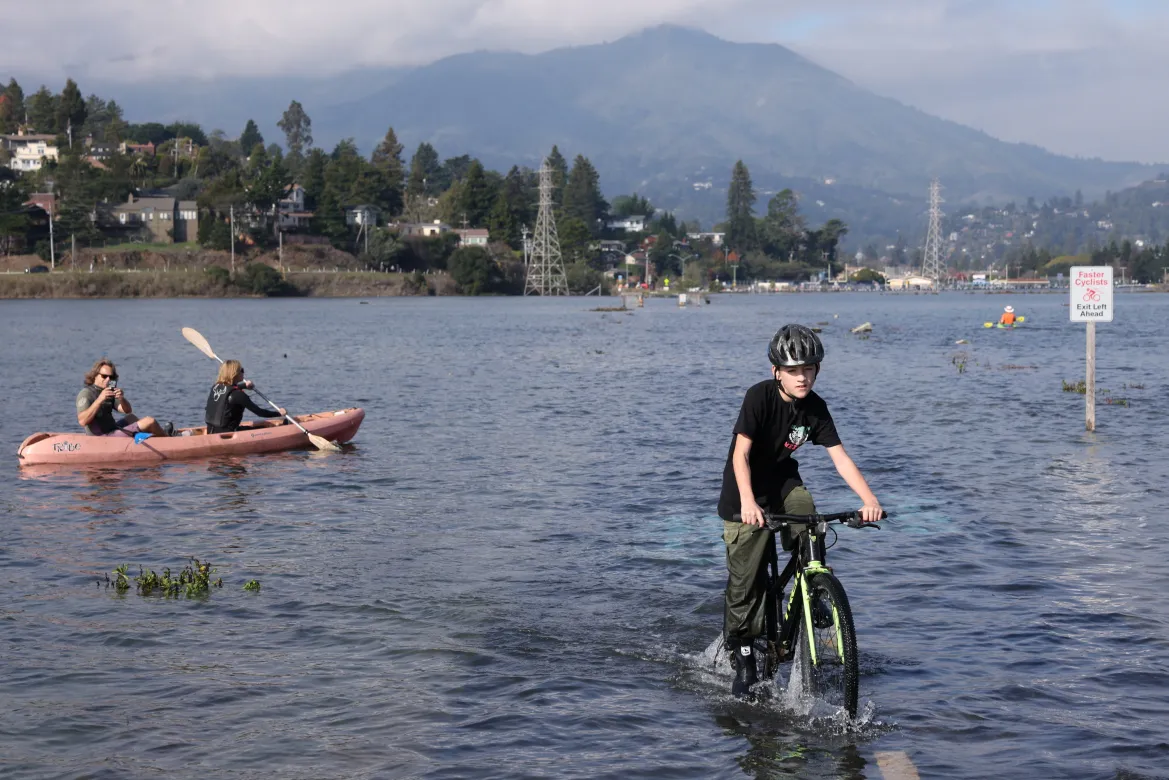 A cyclist rides a bike on a flooded bike path in Mill Valley, California. [Manuel Orbegozo/Reuters]
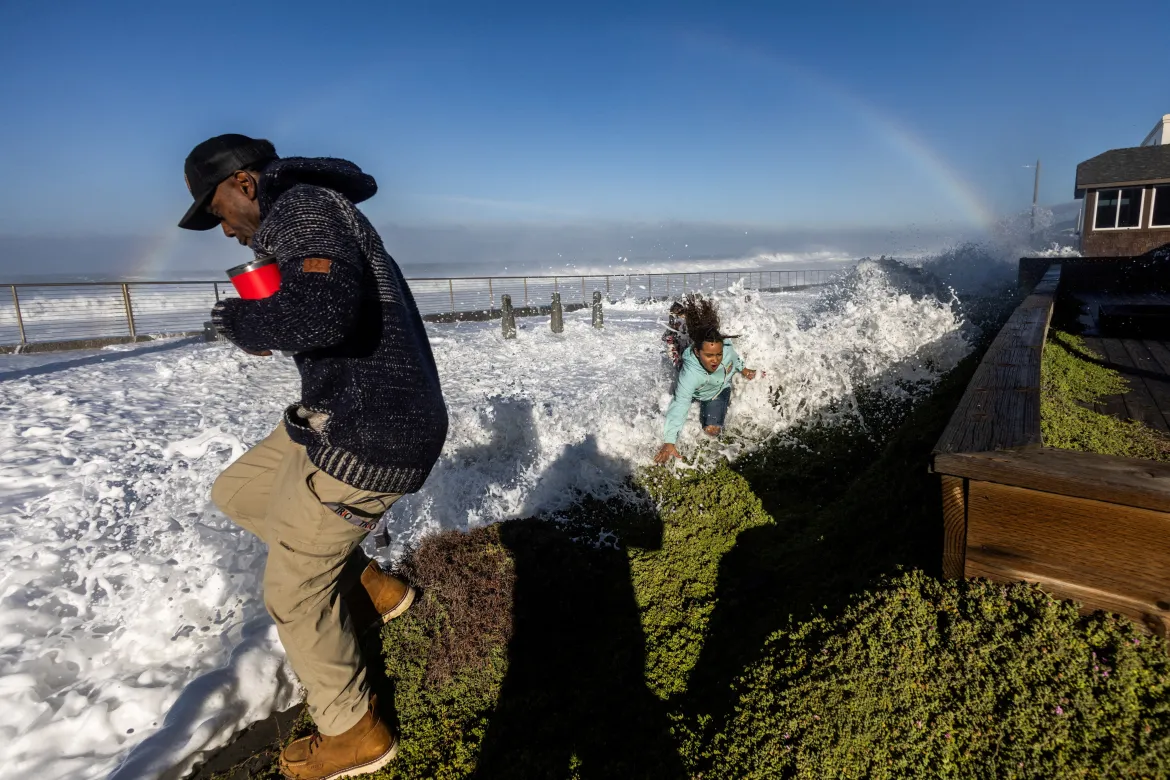 Visitors to the coastline of Pacifica had to dodge waves that climbed high onto the coast. [Carlos Barria/Reuters]
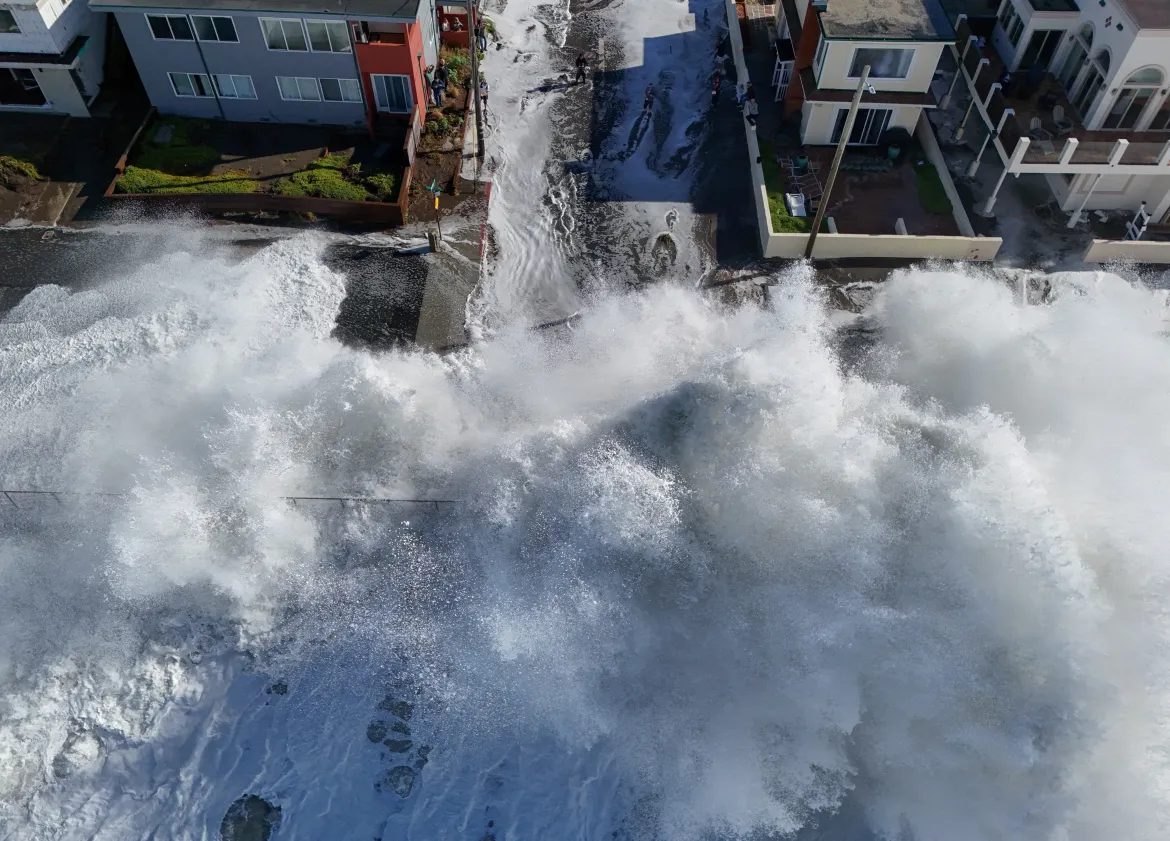 King tides in the San Francisco Bay Area brought waves that could reach as high as 9 metres, according to officials. [Carlos Barria/Reuters]
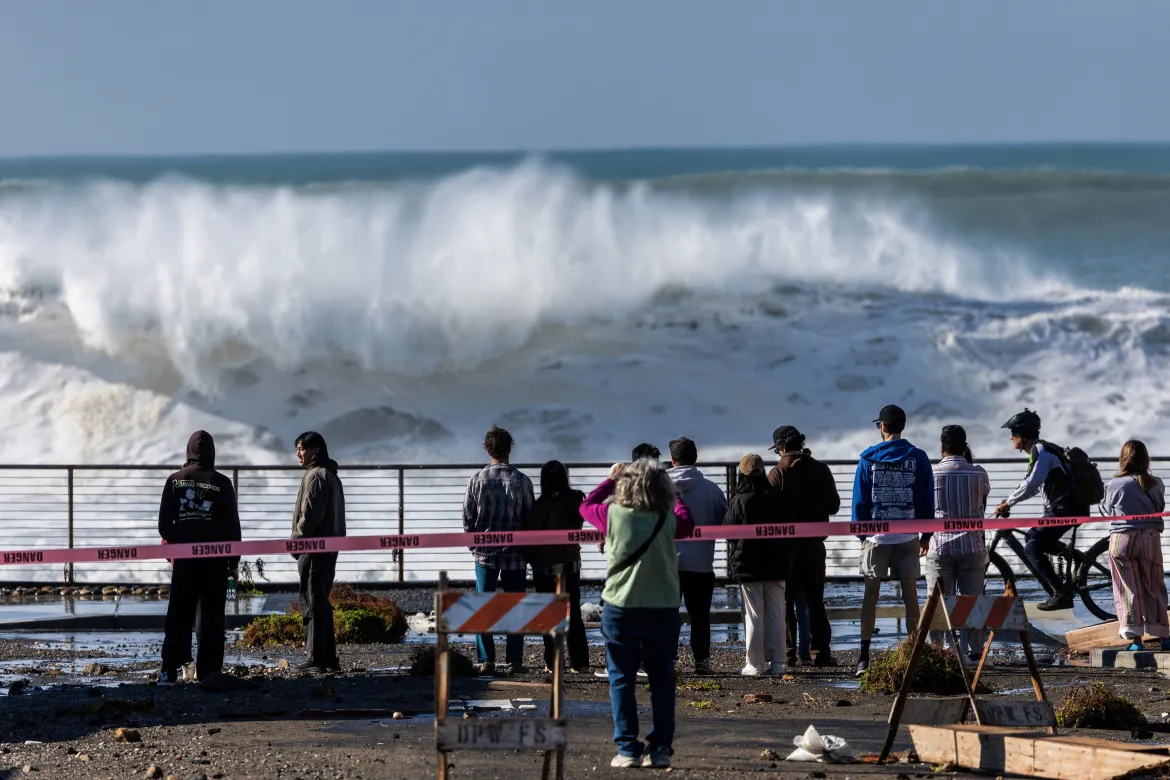 Wednesday’s waves and flooding were brought on by factors including a king tide and a strong El Nino weather phenomenon. [Carlos Barria/Reuters]
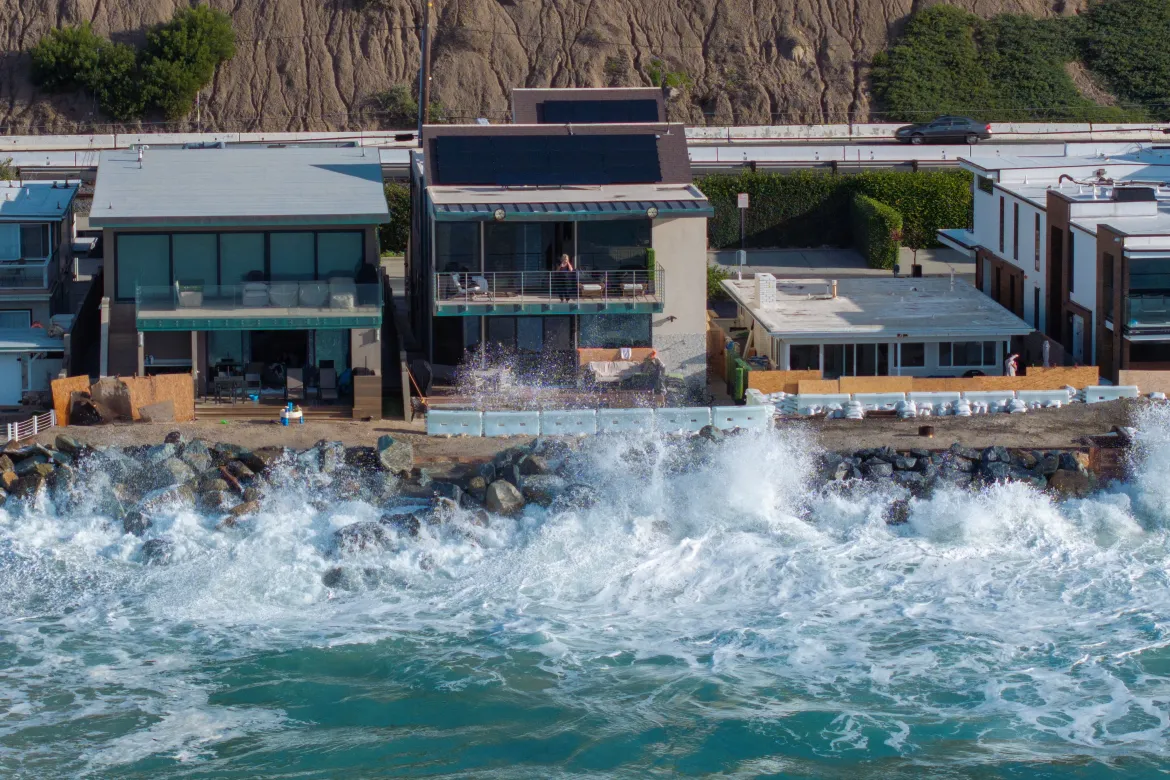 Strong waves lap at barriers erected in front of beachfront homes in Dana Point, California. [Mike Blake/Reuters]
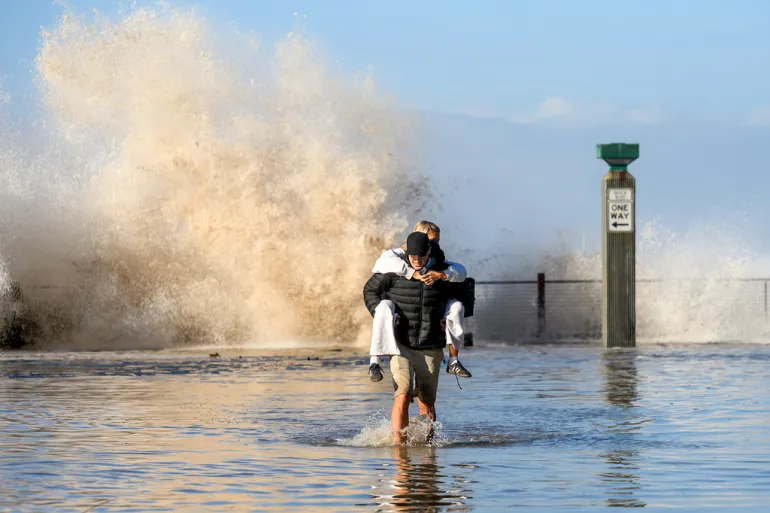 Toby McDell, visiting from New Zealand, evacuates as high surf strikes Pacifica. [Noah Berger/AP Photo]
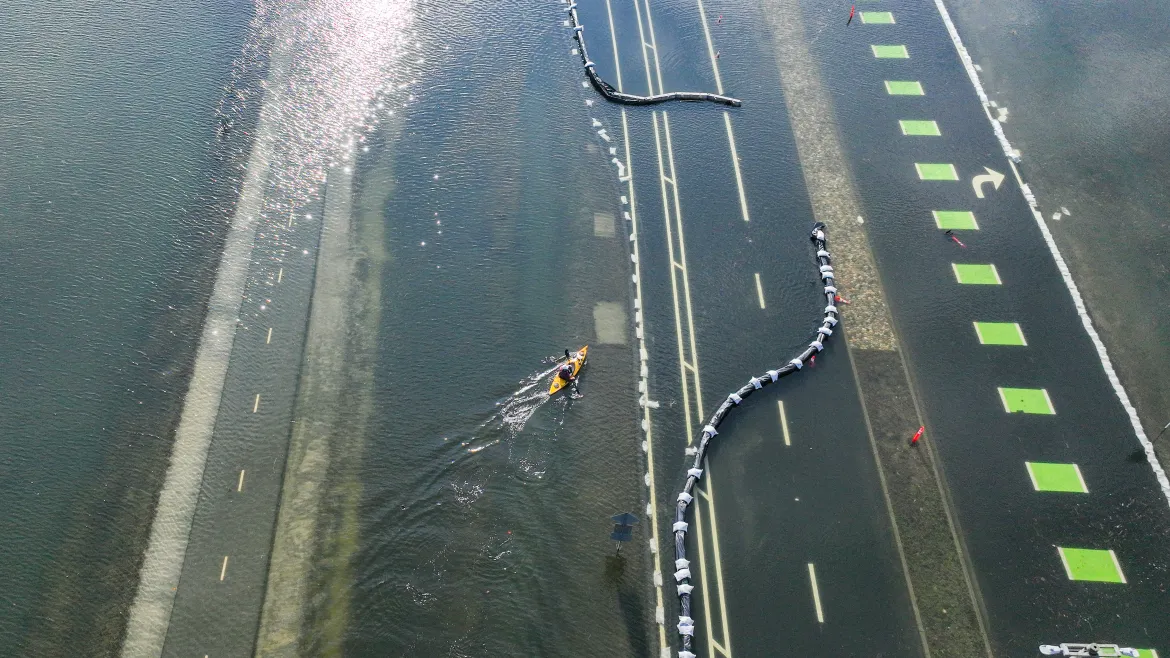 A kayaker rows through a break in the flood barrier in Mill Valley on Wednesday, as local roadways flooded. [Heather Diehl/AP Photo]