



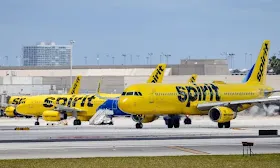
Media Lens: Spirit Airlines shuts down operations after failed government rescue attempt
Spirit Airlines cancels all flights and ends customer service.
Spirit Airlines has canceled all flights and ended customer service. This decision follows a failed effort to secure a government rescue deal, according to coverage in CBS News and CNN.
What happened
Spirit Airlines has canceled all flights and ceased operations following an unsuccessful attempt to arrange a government rescue deal. This shutdown has disrupted travel plans for numerous passengers, leaving them to scramble for alternative options.
In response to Spirit Airlines’ suspension, Delta Airlines is offering rescue fares to assist affected travelers. This measure aims to provide support for those impacted by the sudden airline shutdown.
Key facts
- Spirit Airlines has announced the cancellation of all flights.
- The airline is ceasing customer service operations.
- This decision follows a failed attempt to secure a government rescue deal.
- Delta Airlines is offering rescue fares for passengers impacted by Spirit’s shutdown.
- The shutdown has caused significant disruption for travelers, leaving them scrambling for alternative options.
Where coverage differs
- CBS News emphasizes the process of government rescue efforts that failed, while CNN emphasizes the impact on passengers and travel plans due to the airline’s shutdown.
- The Guardian foregrounds practical advice on what passengers should do next, rather than focusing solely on the operational failure of Spirit Airlines.
- Delta News Hub prioritizes how it plans to support travelers affected by the shutdown over detailing Spirit Airlines’ own operational issues.
One story, four angles
CBS News – Spirit Airlines shutting down after failed effort at government rescue deal
Publication: CBS News | Primary framing pattern: legal | Tone: factual | Intensity: 7/10 | Sentiment: neutral | Legal precision: high
Expand
Espresso Shot: CBS News focuses on the legal repercussions of Spirit Airlines’ shutdown, detailing efforts for a government bailout that fell through. The report highlights the implications for the airline industry and travelers alike.
Publication emphasis: The outlet underscores the legal and economic challenges faced by Spirit Airlines during its closure.
Framing analysis: The main focus is on legal aspects concerning the missed government support, while the consequences for travelers and employees are secondary.
Bias: Selection: A factual recount of events. Language: Neutral, sticking to legal terminology. Omission: Lacks personal stories from affected passengers.
Assessment: This piece effectively stresses the legal frameworks impacting the airline’s operations.
CNN – Travel plans upended as Spirit Airlines shuts down, leaving passengers scrambling for other options
Publication: CNN | Primary framing pattern: consequence | Tone: urgent | Intensity: 8/10 | Sentiment: negative | Legal precision: moderate
Expand
Espresso Shot: CNN emphasizes the immediate impact of Spirit Airlines’ closure on travelers, detailing passengers’ struggles to rebook flights and find alternative arrangements. The coverage portrays a chaotic scenario.
Publication emphasis: Focuses on the personal experiences and consequences faced by travelers due to the airline’s abrupt closure.
Framing analysis: While the immediate devastation to passenger plans is highlighted, the policy decisions behind the closure are given less attention.
Bias: Selection: Strong focus on human experiences. Language: Urgent and dramatic. Omission: Less emphasis on the legal implications of the airline’s actions.
Assessment: This piece effectively conveys the chaos and personal turmoil resulting from the airline’s shutdown.
The Guardian – Spirit Airlines shutdown: How to get home and get refunds
Publication: The Guardian | Primary framing pattern: moral | Tone: supportive | Intensity: 6/10 | Sentiment: empathetic | Legal precision: moderate
Expand
Espresso Shot: The Guardian addresses the specific needs of affected passengers, providing guidance on obtaining refunds and alternative travel options. It carries an empathetic tone, recognizing the frustration travelers face.
Publication emphasis: Focuses on the ethical obligation of companies to assist customers in distress.
Framing analysis: While offering practical advice, the outlet foregrounds the moral responsibility of airlines toward passengers in crises.
Bias: Selection: Highlights the plight of affected customers. Language: Supportive and instructive. Omission: Lacks a broader discussion on industry challenges.
Assessment: This article effectively conveys both empathy and practical information for stranded travelers.
Delta News Hub – Delta offers rescue fares to support travelers following Spirit Airlines suspension of operations
Publication: Delta News Hub | Primary framing pattern: policy | Tone: promotional | Intensity: 5/10 | Sentiment: neutral | Legal precision: low
Expand
Espresso Shot: Delta News Hub promotes its response to Spirit Airlines’ closure by offering rescue fares. The article aims to attract travelers affected by the shutdown by highlighting Delta’s assistance.
Publication emphasis: Focuses on Delta’s proactive approach to capitalize on a competitor’s failure while offering a customer-friendly solution.
Framing analysis: The main emphasis is on Delta’s corporate social responsibility, with less attention given to the broader implications of the airline industry’s economic health.
Bias: Selection: Highlights Delta’s supportive initiatives. Language: Positive and encouraging. Omission: Limited context on Spirit Airlines’ situation and its causes.
Assessment: This article effectively serves Delta’s business interests while promoting its customer care efforts amidst competition.
Food for thought
CBS News adopts the strongest legal framing by emphasizing the “failed effort at government rescue,” which signals responsibility and regulatory accountability in the collapse of Spirit Airlines. In contrast, CNN’s coverage leans toward escalatory framing, portraying the situation as “travel plans upended,” highlighting the chaotic impact on passengers without addressing systemic failures. While CBS focuses on formalities of corporate and regulatory dynamics, CNN adopts a more sensationalist approach, emphasizing personal inconvenience. The facts do not change. What changes is where scrutiny lands.