



What’s the Latest: Liberals’ 2026 budget passes in House of Commons
Members of Parliament voted to pass the 2026 federal budget in the House of Commons with a vote of 162 to 151. The budget, tabled by the Liberal government, outlines significant borrowing and tax measures aimed at infrastructure construction and capital projects.
The government will table one or more budget implementation bills that require committee studies and votes before the proposals become law. The Liberals’ previous budget implementation act for the 2025 budget was only tabled in May of this year and is still under consideration in Parliament.
The 2026 federal budget, passed by a vote of 162 to 151, faces criticism from NDP Leader Avi Lewis, who argues it favours big businesses over affordable living solutions. Following the budget’s approval, the government is expected to table one or more implementation bills that could be amended before becoming law.
What remains unclear — It is uncertain when the government will table the budget implementation bills necessary for enacting the proposals in Budget 2026.
Liberal government budget for 2026 approved by House of Commons
Members of Parliament voted to approve the 2026 federal budget in the House of Commons, with the motion passing 162 to 151. Liberal MPs applauded as the Speaker announced the results. The budget, introduced on 5 November, outlines significant new borrowing and tax initiatives designed to stimulate infrastructure construction and capital projects across Canada.
In contrast to the previous year’s budget vote, which required support from other parties, the Liberals now hold a majority of seats in the Commons. This allows the government to pursue its agenda more independently. Last year’s pivotal vote saw Elizabeth May, then leader of the Green Party, cast the decisive ballot for Budget 2025.
Conservative Leader Pierre Poilievre has condemned the proposed level of borrowing in the new budget, asserting it imposes undue financial burdens on Canadians and fails to address rising living costs. Meanwhile, Parliamentary budget officer Annette Ryan raised concerns over the overall borrowing trajectory but noted that improved revenues have bolstered the government’s fiscal standing.
Finance Minister François-Philippe Champagne defended the budget’s approach, stating, “Confident countries invest.” He pointed to Canada’s strong fiscal position as a basis for ongoing investment rather than solely focusing on deficit reduction. Proposed measures include a $36 billion productivity mega-deduction, aimed at encouraging business investment in machinery, and additional support for cultural sectors and low-income families.
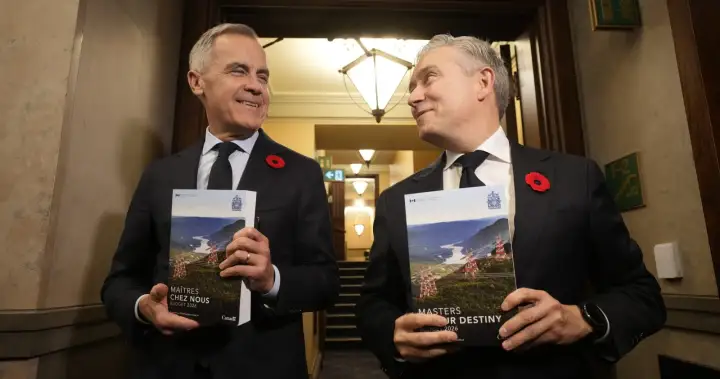
NDP Leader Avi Lewis announced his party’s opposition to the budget, which he believes prioritises large businesses over Canadian families. He stated, “Canadians need a budget that delivers real solutions to lower the cost of living.” The budget, titled “Maîtres Chez Nous” or “Masters of Our Destiny,” has also faced criticism from Bloc Québécois Leader Yves-François Blanchet, who argued that it does not adequately enhance provincial control. Before implementation, the government must still navigate additional legislative processes.