



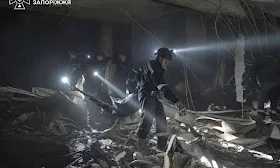
Media Lens: Russian strike on Ukrainian aid centre kills 29 with 48 people missing
Russian forces killed 29 people in a bombing at a humanitarian aid centre in Ukraine. The attack occurred as the US announced new peace talks regarding the ongoing conflict.
Quick links: What has happened | Status quo | Confirmed facts | Preconceptions | Elisions | One story, four angles | Related links
What has happened
In a recent attack claimed by Ukrainian officials, a Russian bombing targeted a humanitarian aid center in Ukraine, resulting in the deaths of at least 29 individuals. The incident was reported to have occurred during a period when the U.S. was attempting to initiate peace talks regarding the ongoing conflict between Russia and Ukraine.
The strike has left approximately 48 people missing, further escalating concerns about the humanitarian implications of the war. This development comes as various organizations and governments continue to respond to the dire humanitarian situation in Ukraine amidst the ongoing military actions.
Status quo
A recent Russian airstrike targeted a humanitarian aid hub in Ukraine, resulting in the deaths of 29 individuals. This attack coincided with ongoing peace talks being held in the United States. The incident underscores the continued violence in the region and highlights the challenges faced in ensuring safe delivery of aid during the conflict. Various news sources have reported on the escalating tensions and humanitarian crises developing as a result.
Confirmed facts
- Russian bombing at a humanitarian aid center in Ukraine killed 29 people.
- At least 48 individuals are still reported missing following the Russian strike.
- The bombing occurred during new peace talks announced by the United States.
- The attack is part of ongoing military actions in Ukraine conducted by Russian forces.
Preconceptions
- Al Jazeera prioritizes the humanitarian impact of the Russian attack, highlighting the civilian casualties first with a clear humanistic angle, claiming “29 killed” while also mentioning ongoing diplomatic efforts for peace talks.
- The BBC focuses on the broader context of the conflict, placing emphasis on the military implications and escalating violence, indicating “Russian bombing” as a significant lead without as much immediate focus on humanitarian outcomes compared to Al Jazeera.
- DW.com also reports on the death toll but gives further attention to the specifics of the strike, stating “at least 26 killed” and framing the report within the scope of Russian military strategy, thus emphasizing military movements over civilian impacts.
- The Hill highlights the consequences of the attack via the death toll but adopts a tone of urgency regarding the ongoing humanitarian crisis, indicating “with 48 still missing,” suggesting a focus on the aftermath and ongoing search efforts.
- In contrast, Brave New World de-emphasizes immediate geopolitical implications, opting instead to focus primarily on the humanitarian figures and the immediate emotional impact on victims, thus reducing the emphasis on military strategy in its coverage.
Elisions
- Discrepancies in casualty figures from different sources: Al Jazeera reports 29 killed in the recent Ukrainian aid hub attack, while BBC states 29 while mentioning 48 are still missing, indicating a potential gap in comprehensive casualty reporting.
- Coverage of US involvement: The Hill emphasizes the announcement of US peace talks in relation to the attack, whereas DW.com focuses solely on the strike’s immediate effects, lacking mention of international diplomatic responses.
- Responses from Ukrainian officials differ: While BBC attributes the attack information to Ukrainian sources, Al Jazeera provides commentary from Ukrainian military spokespeople that indicate a much broader discussion on ongoing military strategies, showing a divergence in the portrayal of local authority responses.
One story, four angles
Al Jazeera – Russian attack on Ukraine aid hub kills 29 as US announces new peace talks
Publication: Al Jazeera | Intensity: (7/10) | Sentiment: Neutral | Legal precision: Moderate
Expand
Espresso Shot: The focus is on the tragic death toll from a Russian attack coupled with the context of a potential diplomatic effort by the U.S.
Key differences:
1. **Comparison in Tone**: Al Jazeera’s use of “kills 29” frames the act as direct and violent, contrasting with other outlets that might use “fatalities” to soften the impact.
2. **Framing Peace Talks**: The headline positions U.S. peace talks as secondary, whereas some competitors highlight immediate crisis over diplomacy.
3. **Geopolitical Context**: Al Jazeera emphasizes the ongoing humanitarian crisis in Ukraine more explicitly, connecting the attack to broader implications for aid and conflict.
Bias: Selection: Focuses predominantly on casualties with minimal context about the attack’s background. | Language: “Russian attack” implies direct responsibility but lacks nuance on context. | Omission: Lacks mention of Ukrainian responses or international reactions.
Assessment: Readers are likely to perceive the urgency of the humanitarian crisis overshadowing diplomatic efforts.
BBC – Russian bombing kills 29 people at humanitarian aid centre in Ukraine, Kyiv says
Publication: BBC | Intensity: (8/10) | Sentiment: Negative | Legal precision: High
Expand
Espresso Shot: The reader’s initial focus is on the factual reporting of casualties tied explicitly to the bombing of an aid center.
Key differences:
1. **Specificity in Reporting**: BBC mentions “humanitarian aid centre,” adding a layer of context that highlights the intentional targeting of aid efforts.
2. **Active Voice Use**: “kills 29 people” presents a more direct moral confrontation compared to phrases used in other outlets that may present it more passively.
3. **Credibility through Attribution**: By stating “Kyiv says,” BBC adds a layer of cited authority, contrasting with others that might present facts without such attribution.
Bias: Selection: Highlights the humanitarian aspect prominently, possibly skewing perception towards a critique of Russian aggression. | Language: The term “bombing” establishes a violent and aggressive narrative. | Omission: Limited context regarding the geopolitical background driving the conflict.
Assessment: Readers are primed to view the bombing as a severe humanitarian violation amidst ongoing conflict.
DW.com – Ukraine: At least 26 killed in Russian strikes on aid center
Publication: DW.com | Intensity: (7/10) | Sentiment: Negative | Legal precision: Moderate
Expand
Espresso Shot: The lead emphasizes the casualty figures while also framing the context of the attack’s target as significant.
Key differences:
1. **Contextual Focus**: DW emphasizes that strikes occurred on “aid center,” similar to BBC but uses “at least 26 killed” which may downplay immediate impact compared to BBC’s more definite tone.
2. **Variable Casualty Reporting**: The phrase “at least” introduces uncertainty, contrasting with Al Jazeera and BBC that assert specific casualty figures.
3. **Terminology Differences**: Uses “strikes” in place of “bombing,” which can alter the perceived severity of the event across different platforms.
Bias: Selection: Prioritizes immediate casualty numbers, limiting discussions on the aftermath or broader implications. | Language: “strikes” may reduce the perceived barbarity of the attack compared to terms used by others. | Omission: Neglects to mention the international context affecting the situation.
Assessment: The reader might perceive a sense of tragedy alongside the chaotic nature of conflict, slightly minimizing the aggressiveness of the act.
The Hill – Death toll hits 29 after Russian strike on Ukrainian aid site, with 48 still missing
Publication: The Hill | Intensity: (6/10) | Sentiment: Negative | Legal precision: Moderate
Expand
Espresso Shot: The opening lines draw attention to the rising death toll while highlighting the ongoing search for additional victims.
Key differences:
1. **Emphasis on the Casualty Count**: “Death toll hits 29” suggests a more escalating situation, differing from more static reporting of previous outlets.
2. **Inclusion of Missing Individuals**: The mention of “48 still missing” adds a layer of urgency and human interest that others do not emphasize, creating a narrative of an ongoing crisis.
3. **Use of “strike”**: Similar to DW, the choice of “strike” moderates the language used to describe the event, potentially lessening perceived severity.
Bias: Selection: Prioritizes the numbers, potentially reducing focus on the geopolitical context. | Language: “hits” and “strike” may downplay the event’s severity compared to terms used by others. | Omission: Less emphasis on the humanitarian context and potential long-term impacts of the strike.
Assessment: Readers may initially perceive a grave scenario yet may also sense a disconnect from the ongoing implications of the humanitarian situation.
In comparing the coverage of recent attacks in Ukraine, Al Jazeera emphasizes the human cost with a focus on casualties, framing the event as a tragedy amid peace talks, while BBC adopts a similarly serious tone but highlights the broader implications for humanitarian efforts. DW underscores the scale of destruction with direct reporting on casualties, enhancing its urgency. The Hill takes a more analytical approach, framing the event within the context of ongoing geopolitical tensions. Ultimately, while Al Jazeera provides the most compassionate perspective, The Hill’s framing is the most escalatory. The facts do not change. What changes is where scrutiny lands.
Related links
Al Jazeera
Russian attack on Ukraine aid hub kills 29 as US announces new peace talks
BBC
Russian bombing kills 29 people at humanitarian aid centre in Ukraine, Kyiv says
DW.com
Ukraine: At least 26 killed in Russian strikes on aid center
The Hill
Death toll hits 29 after Russian strike on Ukrainian aid site, with 48 still missing