



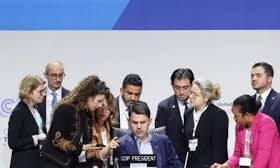
Media Lens: COP31 climate talks in Turkey collapse without consensus on key issues
COP31 climate negotiations in Turkey ended without reaching a consensus. The talks faced significant disagreements over fossil fuel commitments and financial support.
Quick links: What has happened | Status quo | Confirmed facts | Preconceptions | Elisions | One story, four angles | Related links
What has happened
The COP31 climate negotiations held in Turkey concluded without a consensus, primarily due to disagreements over fossil fuel usage and financial commitments among participating nations. Despite extensive discussions, the final agreement failed to address critical issues, leaving many countries unsatisfied with the outcomes.
This failure marks another setback in international climate diplomacy, reflecting ongoing tensions between economies reliant on fossil fuels and those advocating for stronger climate action. The lack of progress at COP31 has raised concerns about the efficacy of future negotiations in effectively addressing climate change challenges.
Status quo
COP31 climate negotiations held in Turkey recently ended without reaching a consensus. Talks were marked by disagreements surrounding fossil fuel policies and financial commitments. The failure to agree leaves key climate measures unresolved, emphasizing ongoing tensions among nations regarding climate action and financial responsibilities. This marked another setback in global efforts to combat climate change effectively.
Confirmed facts
- COP31 climate negotiations occurred in Turkey.
- Negotiations failed to reach a consensus.
- Issues surrounding fossil fuels were a major sticking point in the talks.
- The negotiations involved multiple countries and various stakeholders.
- This breakdown of talks has been reported by major news outlets such as BBC, The Guardian, and The New York Times.
Preconceptions
- The BBC prioritises the consensus failure in COP31 climate negotiations, hinting at the underlying causes such as “fossil fuel and money rows,” while The New York Times emphasizes the bitter clashes over fossil fuels that led to the talks’ collapse, indicating a deeper conflict inherent in the negotiations.
- AP News frames its coverage around the historical context and suggests that the collapse of the climate talks was “years in the making,” while The Guardian spotlights the immediate consequences of key deal rejection, focusing on current events rather than historical narrative.
- The New York Times frames its reporting through named sources (Lisa Friedman and Chico Harlan) whereas BBC coverage primarily presents a more collective narrative, indicating a diversified sourcing approach which may affect the perceived responsibility within the discussions.
- In terms of tone, The Guardian’s announcement of the break down as a “key deal rejected” offers a more dramatic perspective on the negotiations, contrasting with AP’s analytical tone which suggests inevitability and systemic failure without as strong an emotional appeal.
Elisions
- The BBC emphasizes the breakdown of negotiations due to intense disputes over fossil fuel commitments, while The New York Times focuses on the broader implications of these failures, including geopolitical tensions which could be lost in other coverage.
- AP News argues that the collapse of talks was a culmination of years of underlying issues, a perspective not highlighted in The Guardian’s reporting which zeroes in on immediate outcomes without historical context.
- Some outlets, like the BBC, discuss reactions from civil society and activists, whereas others like The New York Times and AP News provide minimal coverage of these viewpoints, potentially neglecting significant grassroots perspectives.
One story, four angles
BBC – COP31 climate talks fail to reach deal amid fossil fuel and money rows
Publication: BBC | Intensity: (8/10) | Sentiment: Negative | Legal precision: High
Expand
Espresso Shot: The emphasis is on the lack of consensus at COP31, particularly surrounding contentious issues like fossil fuels.
Key differences:
1. The BBC focuses on the political dimensions, stating there are “rows” over money vs. climate action.
2. They highlight failed negotiations rather than solutions, using language like “fail to reach deal.”
3. The context of financial stakes is emphasized right in the headline, potentially steering readers towards a narrative of incompetence.
Bias: Selection: Focuses on conflicts and failures rather than potential solutions | Language: Phrasing suggests tension and blame (e.g., “rows”) | Omission: Lacks mention of any successful initiatives or future negotiations.
Assessment: The reader is led to believe that COP31 was a significant failure predominantly due to conflicts over fossil fuels and financial issues.
The New York Times – U.N. Climate Talks Collapse in a Bitter Clash Over Fossil Fuels
Publication: The New York Times | Intensity: (9/10) | Sentiment: Negative | Legal precision: Medium
Expand
Espresso Shot: The focus is predominantly on the conflict regarding fossil fuels, casting blame and disappointment regarding the negotiations.
Key differences:
1. Language such as “collapse” signifies a dramatic failure, establishing urgency and disappointment.
2. They frame the event as if it were inevitable, using “bitter clash” to denote a longstanding conflict.
3. The term “over fossil fuels” frames the contention explicitly, revealing a perceived ideological divide.
Bias: Selection: Results are depicted negatively, emphasizing failure over progress | Language: Choice of “collapse” invokes a sense of catastrophe | Omission: Misses positive outcomes or discussions that took place during talks.
Assessment: The impression conveyed is that COP31 was a disastrous failure largely centered around entrenched fossil fuel disputes.
AP News – The collapse of UN climate talks, over fossil fuels, was years in the making
Publication: AP News | Intensity: (7/10) | Sentiment: Negative | Legal precision: High
Expand
Espresso Shot: The narrative suggests that the collapse was not sudden but rather a culmination of long-standing issues related to fossil fuels.
Key differences:
1. This article emphasizes the historical context with “years in the making,” which provides depth to the analysis.
2. The phrasing “the collapse of UN climate talks” maintains a focus on failure, but suggests inevitability.
3. By referencing fossil fuels, it shares similarities with other narratives, yet adds a backstory that feels less accusatory.
Bias: Selection: Emphasizes historical failures rather than immediate events | Language: “Years in the making” implies a systemic issue, creating a broader narrative | Omission: Lacks detail on advocates or solutions discussed that may have emerged.
Assessment: Readers are likely to view COP31’s failure as an expected outcome shaped by deep-rooted conflicts over fossil fuels.
The Guardian – Cop31 climate talks break down as key deal rejected
Publication: The Guardian | Intensity: (8/10) | Sentiment: Negative | Legal precision: Medium
Expand
Espresso Shot: The article underscores a breakdown in negotiations, focusing on pivotal deals that were turned down.
Key differences:
1. The use of “key deal rejected” emphasizes failures in decision-making, suggesting a lack of unity among parties.
2. The wording “break down” portrays an urgent and chaotic atmosphere.
3. The framing may resonate more with readers interested in the realpolitik of negotiations, rather than the philosophical aspects of climate change.
Bias: Selection: Prioritizes negative outcomes from negotiations over potential next steps | Language: Phrases like “key deal rejected” heightens the sense of urgency and failure | Omission: Misses potential new coalitions or unexpected dialogues that may have happened.
Assessment: Readers are likely to deduce that COP31’s breakdown was primarily due to contested pivotal decisions, emphasizing division and lack of resolve.
Among the recent coverage of the COP31 climate negotiations, The New York Times employed the strongest framing, describing the collapse of talks as a “bitter clash over fossil fuels,” emphasizing the intensity of disputes. In contrast, AP News offered a more escalatory approach, framing the situation as years in the making, hinting at deeper issues with historical governance. Meanwhile, BBC and The Guardian highlighted differing aspects, with the former focusing on the failure to reach consensus and the latter covering the rejection of key deals, contributing to a complex narrative. The facts do not change. What changes is where scrutiny lands.
Related links
BBC
COP31 climate talks fail to reach deal amid fossil fuel and money rows
The New York Times
U.N. Climate Talks Collapse in a Bitter Clash Over Fossil Fuels
AP News
The collapse of UN climate talks, over fossil fuels, was years in the making