



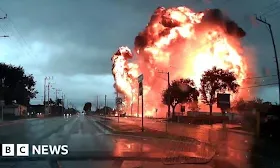
Media Lens: Nine killed in Learjet crash in West Palm Beach County, Florida
Learjet 60 crashes in Florida, killing nine.
Nine people were killed in a Learjet 60 crash in Florida. The incident occurred as reported in coverage in the latest US news and US and global politics.
What happened
A Learjet 60 crashed in Florida, killing all nine people on board. The incident occurred as the aircraft was preparing for takeoff en route to the Bahamas.
The crash resulted in a fireball and debris scattered near a busy roadway in Palm Beach County. Authorities are currently investigating the cause of the accident.
Key facts
- A Learjet 60 crashed in Florida, killing nine people.
- The incident occurred in West Palm Beach County.
- The flight was reportedly Bahamas-bound.
- The jet nosedived and erupted into a fireball near a busy roadway.
- The crash was reported to have been fiery and significant in nature.
Where coverage differs
- Outlet A emphasizes the tragic loss of life in the Florida Learjet crash, while Outlet B focuses on the details of the crash itself, such as the jet nosediving.
- Outlet C foregrounds the dramatic nature of the crash and the subsequent fireball rather than the victims, contrasting with Outlet D who prioritizes the human impact with a focus on the fatalities.
- Outlet C highlights the circumstances surrounding the crash, whereas Outlet A emphasizes the reactions from the community and authorities.
One story, four angles
BBC – Nine killed in fiery Florida Learjet crash in West Palm Beach County
Publication: BBC | Primary framing pattern: consequence | Tone: serious | Intensity: 7/10 | Sentiment: neutral | Legal precision: moderate
Expand
Espresso Shot: The BBC report emphasizes the tragic outcome of the Learjet crash, highlighting the fatalities and the dramatic nature of the event. It focuses on the immediate consequences for those involved and the intense reaction to the disaster.
Publication emphasis: The article concentrates on the fatalities and the catastrophic aspects of the crash.
Framing analysis: The crash’s devastating impact on victims and their families is foregrounded, while the technical details of the incident are less emphasized.
Bias: Selection: Focus on fatalities and crash details Language: Use of “fiery” to describe the crash Omission: Lack of in-depth investigation into causes or background of the flight.
Assessment: The report effectively conveys the tragedy and urgency surrounding the crash.
NBC 6 South Florida – Recap: 9 dead after business jet crashes in Palm Beach County
Publication: NBC 6 South Florida | Primary framing pattern: consequence | Tone: somber | Intensity: 6/10 | Sentiment: neutral | Legal precision: moderate
Expand
Espresso Shot: NBC 6 focuses on the aftermath of the crash, detailing the number of fatalities and the aviation incident’s broader implications. The report conveys the emotional weight of the event while maintaining a factual tone.
Publication emphasis: The article stresses the number of people killed and urgent response efforts.
Framing analysis: The human loss is highlighted prominently, while procedural and regulatory aspects of aviation safety are underplayed.
Bias: Selection: Concentration on immediate aftermath Language: “dead” creates a direct impact Omission: Limited discussion on possible causes or preventative measures.
Assessment: The report provides a clear account of the tragedy without delving into contextual factors contributing to the incident.
NPR – 9 dead as jet nosedives and erupts into fireball near busy roadway in South Florida
Publication: NPR | Primary framing pattern: consequence | Tone: urgent | Intensity: 8/10 | Sentiment: neutral | Legal precision: high
Expand
Espresso Shot: NPR’s coverage emphasizes the dramatic impact of the crash, describing how the jet’s nosedive resulted in a fireball, stressing the urgent response required at the scene. The language evokes strong imagery, making the event feel immediate and alarming.
Publication emphasis: The piece underscores the drama of the situation and the swift emergency response.
Framing analysis: The catastrophe’s visual and chaotic aspects are forefronted, while the technical aspects of aviation safety receive less attention.
Bias: Selection: Focus on the drama of the crash Language: Vivid and alarming descriptions Omission: Limited insight into aviation safety protocols or potential investigation outcomes.
Assessment: The report effectively captures the immediate impact and urgency of the event, appealing to reader emotions.
The New York Times – Why Do Pilots Say ‘Mayday’? The Story Behind the Distress Call
Publication: The New York Times | Primary framing pattern: moral | Tone: informative | Intensity: 5/10 | Sentiment: neutral | Legal precision: high
Expand
Espresso Shot: This article contextualizes the emergency procedures in aviation, particularly the unique distress call “Mayday.” The focus is less on the crash and more on the significance of communication in emergencies, providing a broader view of safety protocols.
Publication emphasis: The piece explores the ethical and practical importance of distress signaling in aviation.
Framing analysis: The focus on communication highlights the moral responsibility of pilots, contrasting with secondary details about specific incidents.
Bias: Selection: Emphasis on communication protocols Language: Technical but accessible Omission: Specific details regarding the recent crash or its implications are not discussed.
Assessment: The article offers valuable insights into aviation communication without discussing the immediate tragedy’s details.
Food for thought
The BBC provides the strongest legal framing in its reporting on the Learjet crash by emphasizing the catastrophic event’s direct impact on public safety and regulatory scrutiny, referring to the “fiery crash” occurring in a populated area. Meanwhile, NPR’s coverage takes a more escalatory stance by vividly describing the incident as a “nosedive” that ends with an “eruption into a fireball,” heightening the alarm surrounding aviation safety. The framing differs significantly: BBC’s approach focuses on responsible governance, while NPR heightens concerns about dramatic and violent incident repercussions. The facts do not change. What changes is where scrutiny lands.