


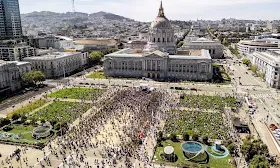
Media Lens: Nationwide ‘No Kings’ protests draw massive crowds against Trump administration
“No Kings” protests held nationwide against Trump administration.
“No Kings” protests were held nationwide against the Donald Trump administration. The organizers reported a record global turnout, with coverage in various news outlets highlighting the events.according to as reported in
What happened
Nationwide protests known as “No Kings” have taken place against the Trump administration, highlighting widespread discontent. Organizers claim this movement has resulted in record global turnout, particularly in the Bay Area, where protests have attracted large crowds.
Major news outlets including CNN, the San Francisco Chronicle, and The New York Times have covered these protests, emphasizing the significant public engagement. The demonstrations reflect a growing sentiment among various communities regarding political leadership and governance.
Key facts
- Protests titled “No Kings” were held nationwide against the Trump administration.
- These protests drew huge crowds, with record global turnout reported by organizers.
- The events took place on March 28, 2026.
- Media outlets like the San Francisco Chronicle, The New York Times, CNN, and The Atlantic covered the protests.
Where coverage differs
- San Francisco Chronicle emphasizes record global turnout, while The New York Times focuses on key takeaways from the protests.
- CNN prioritizes the occurrence of nationwide protests, while The Atlantic foregrounds photos from the protests.
- San Francisco Chronicle highlights community engagement, whereas CNN emphasizes the overall impact of the protests.
One story, four angles
San Francisco Chronicle – No Kings organizers tout record global turnout as Bay Area protests draw huge crowds
Publication: San Francisco Chronicle | Primary framing pattern: political | Tone: assertive | Intensity: 7/10 | Sentiment: positive | Legal precision: low
Expand
Espresso Shot: The Chronicle highlights the significant turnout at the “No Kings” protests, positioning it as a demonstration of political engagement against the Trump administration. The report emphasizes the global participation in addition to local rallies.
Publication emphasis: The Chronicle focuses on the impressive global turnout at the local protests.
Framing analysis: The primary focus is on political mobilization, while the global aspect serves as a secondary detail showcasing the movement’s reach.
Bias: Selection: Emphasizes large turnout and activist voices. Language: Positive descriptors like “record” and “huge crowds.” Omission: Specific criticisms of protest effectiveness not discussed.
Assessment: This coverage effectively portrays the protests as a significant political event in the current landscape.
The New York Times – 5 Takeaways From the ‘No Kings’ Rallies as the Midterms Heat Up
Publication: The New York Times | Primary framing pattern: policy | Tone: analytical | Intensity: 8/10 | Sentiment: mixed | Legal precision: high
Expand
Espresso Shot: The Times provides a structured overview of the “No Kings” rallies, offering insights into their implications for upcoming elections. It emphasizes participants’ motivations while questioning the overall effectiveness of the protests.
Publication emphasis: The Times focuses on the implications of the protests for electoral politics.
Framing analysis: It foregrounds political strategy and implications while providing contextual background on participants’ motivations as secondary.
Bias: Selection: Highlights strategic implications and diverse motives. Language: More critical and questioning tone compared to supportive outlets. Omission: Less focus on emotional narratives from protestors.
Assessment: This article offers a critical look at protests, situating them within the broader electoral strategy context.
CNN – March 28, 2026 — ‘No Kings’ protests take place nationwide
Publication: CNN | Primary framing pattern: consequence | Tone: neutral | Intensity: 6/10 | Sentiment: neutral | Legal precision: medium
Expand
Espresso Shot: CNN covers the nationwide “No Kings” protests, detailing the locations and participant counts without diving deeply into the motivations or implications. It provides a factual recounting of events.
Publication emphasis: CNN provides a straightforward news update on the protests’ occurrence and scale.
Framing analysis: The emphasis is on factual details and consequences rather than on political motivations or emotional narratives of participants.
Bias: Selection: Focus on event details and participation numbers. Language: Neutral, avoiding emotionally charged terms. Omission: Lack of analysis regarding protest outcomes or broader significance.
Assessment: CNN delivers a factual report, but it misses deeper insights into the protests’ significance and participant motivations.
The Atlantic – Photos From the Third Nationwide ‘No Kings’ Protest
Publication: The Atlantic | Primary framing pattern: moral | Tone: emotive | Intensity: 7/10 | Sentiment: positive | Legal precision: low
Expand
Espresso Shot: The Atlantic showcases emotional imagery from the protests, focusing on the morale and unity among participants. This visual approach emphasizes the protests’ moral significance rather than their political consequences.
Publication emphasis: The Atlantic highlights the emotional and moral elements of the “No Kings” protests through imagery.
Framing analysis: Photographs and emotional narratives take precedence, while political aspects are secondary and less analyzed.
Bias: Selection: Emphasizes visuals and emotional connection. Language: Use of evocative descriptions. Omission: Less focus on hard news reporting or consequences of the protests.
Assessment: The article provides a compelling emotional narrative but lacks depth in discussing the protests’ political ramifications.
Food for thought
The San Francisco Chronicle highlights the success of the “No Kings” protests, emphasizing the record turnout and framing the movement as a grassroots uprising against entrenched power. In contrast, The New York Times provides a more unsettling perspective, citing a potential escalation as tensions rise, suggesting a dwindling patience among protesters. CNN adopts a neutral tone, merely noting the nation-wide participation but lacking depth in its framing. The Chronicle employs the strongest legal framing by celebrating citizens’ rights to assemble, while The New York Times presents the most escalatory framing by hinting at mounting unrest. The facts do not change. What changes is where scrutiny lands.