
Latest News
- Motorcyclist dies in collision with SUV in Ottawa
- Homeland Security investigates Rep. Ilhan Omar’s home in Washington, D.C.
- Businessman ordered to demolish flat built inside horse stable in Cotswolds
- Nato’s top commander warns Russia of readiness to respond to aggression
- Ukraine parliament passes law on minority rights, easing Hungary tensions
- Yemen faces growing hunger emergency amid renewed fighting, say aid agencies
- EU implements nearly 1,600 new sanctions against Russia amid ongoing conflict.
- Delhi prepares for more protests against election chief amid crackdown


‘Southport killer bought knife on Amazon’

‘The Amazon killer’ reports the Sun.
The Sun leads with reports Axel Rudakubana bought a knife from the online retail giant Amazon despite being only 17 at the time. The paper says the law prohibits the sale of knives to under-18s. Inside the paper, the prime minister promises change saying the lessons to be learnt from the case “could not be clearer.”

‘Rudakubana admitted to carrying a knife more than 10 times before attack,’ notes The Times.
The Times says Rudakubana admitted to carrying a knife more than 10 times before he bought one on Amazon to carry out the triple murder in Southport last year. The paper says a Home Office review is underway to try to understand how the government’s counter-extremism programme Prevent failed to stop Rudakubana despite him being recommended three times and having an obsession with “extreme violence.”

‘PM may expand definition to include lone world attackers lacking clear ideology,’ says Telegraph.
The Daily Telegraph reports there are concerns security services could be inundated if the law is expanded to include what the paper calls “lone wolf attackers.”

‘War on misfits,’ says the Metro.
The Metro also quotes PM Sir Keir saying that in the past the predominant threat was highly organised political groups with clear political intent” like al-Qaeda and that, while that threat remains, a new one is posed by people “desperate for notoriety, sometimes inspired by traditional terrorist groups, but fixated on that extreme violence, seemingly for its own sake”.

‘Terror laws to be changed and social media companies urged to take down violent content,’ says The Guardian.
The Guardian quotes the PM saying: “You can’t tell me that the material this individual viewed before committing these murders should be accessible on mainstream social media platforms”. The paper says Sir Keir also pledged changes that would allow perpetrators of terror attacks to be charged under terrorism laws even if they lack a coherent ideology.

‘Loners, misfits posing new threat,’ leads the Express.
The Daily Express quotes the prime minister’s statement yesterday, saying the UK is now facing a new threat from “loners, misfits, [and] young men in their bedrooms” viewing violent material online and that “fundamental change” is needed to protect children.
‘Trump’s new era kicks-off’
‘Trump signs orders within hours,’ says Express.
The Daily Express reports “sweeping change at the stroke of a Sharpie.” The paper picks up on the many executive orders Donald Trump signed within hours of being sworn in as the new US president.
‘Trump pardons 1,500 capitol rioters,’ says The Times.
The Times says the president took aim at everyone in his inaugural speech, including migrants. Within hours of taking office, he pardoned 1,500 of his supporters who stormed the US capitol in 2021. The move sparked “joy” for his supporters and “anger and fear” for those who are not.
‘Alleged spy helped elite British school expand to China,’ says the Telegraph.
The Telegraph features an article from Philip Johnston who says that it’s hard not to envy the positivity of what Trump is promising to do for Americans. He calls on the prime minister to learn some lessons from Trump saying “boosterism sure beats gloomsterism”.

‘Flurry of announcements was exhilarating,’ says Mail.
‘Flurry of announcements was exhilarating,’ says Mail. Daniel Hannan writes in the Mail that the flurry of announcements was “exhilarating”.

When I started talking about Oligarchy, many people didn't understand what I meant.
Well, that's changed.
When the 3 wealthiest men in America sit behind Trump at his inauguration, everyone understands that the billionaire class now controls our government.
We must fight back.

Well done Prince Harry and Tom Watson for their triumph over Murdoch’s hateful empire.
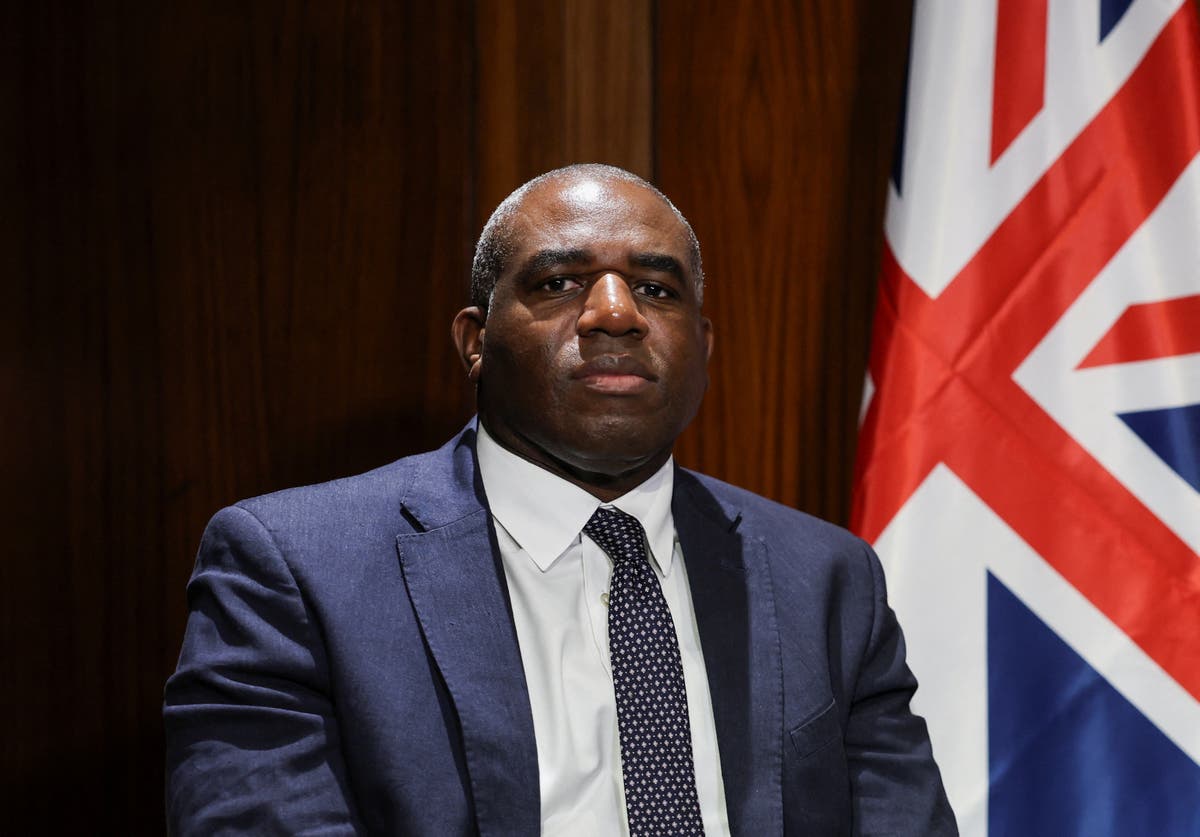
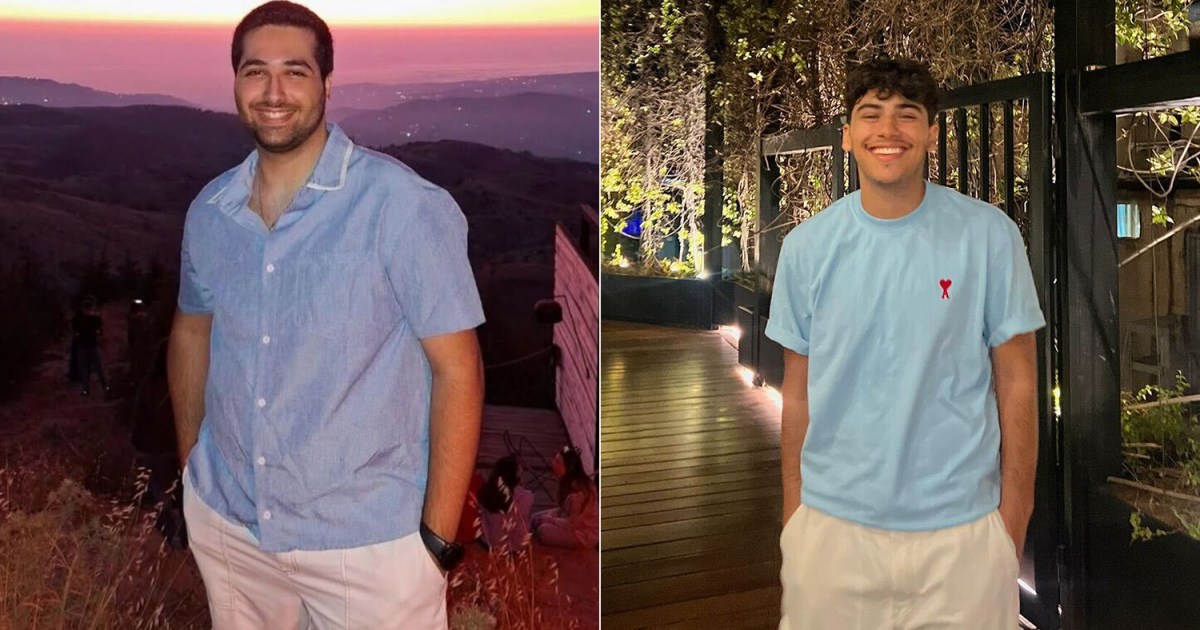
- Axel Rudakubana, 18, has been sentenced to a minimum of 52 years behind bars
- Judge says it’s unlikely he’ll ever be released
- He killed Elsie Dot Stancombe, 7, Alice da Silva Aguiar, 9, and Bebe King, 6 last year in Southport
Axel Rudakubana sentenced to a minimum of 52 years
Axel Rudakubana has been sentenced to 52 years behind bars for the murder of three little girls – and attempted murder of 10 others – last year as they attended a dance class in Southport.
Rudakubana pleaded guilty on Monday to the murders of Elsie Dot Stancombe, 7, Alice da Silva Aguiar, 9, and Bebe King, 6. He also admitted to producing ricin, possessing terrorist material, and possessing a knife.
The judge says it’s unlikely Rudakubana will ever be released despite the fact he did not receive a life sentence – due to his age at the time of the crime.
Most of the front pages react to the sentencing, some note it’s the longest sentence someone of his age has received, others pick up on the judge’s comments it’s unlikely he’ll ever be released and some question if the law should change to include life sentences for 17-year-olds.
On social media, fuelled by far-right politicians, there are calls for Rudakubana to face the death penalty.
Some papers lead with the words from the parents of the victims who spoke of how the horrors have changed their lives whilst other publications – print and online – look at how the state failed the victims, noting Rudakubana was known to police and had been referred to the Prevent scheme three times.
The reaction
The Mail reports the sentence is believed to be the longest given to a killer of his age and quotes the judge as saying it’s unlikely he will ever be released. The paper’s editorial asks why police and the Prevent programme failed to act before the murders despite signs Rudakubana was obsessed with violence. It says the signs of danger were ignored due to “box-ticking officials” weren’t sure whether he had a political or ideological motivation.
The Times says the case has prompted calls for legal reforms as Rudakubana’s age at the time of the attack meant he avoided a whole life sentence.
The Daily Express quotes the parents of the victims calling Rudakubana “pure evil” and saying they have been left with “shattered souls.” The Daily Mirror quotes Elsie’s mother who told Rudakubana that she hopes the attacks “haunt you every single day.” The Sun quotes the parents of one of the children who was injured in the attacks but survived named Child A, saying: “When we think of Southport we’ll think of the girls. Their bravery. Their strength. He will not win.”
The i says Rudakubana would have killed all 26 children in the class and it was only because of the bravery of the other children and adults present that he was stopped. The paper quotes one 14-year-old survivor saying: “I knew I was running for my life. I needed to try to get everyone to safety… a room full of defenceless children”.
The Guardian says at the sentencing it had emerged that two years before the attack his parents called the police four times in six months asking for help. The paper says that on one occasion he was caught on the bus with a blade but instead of detaining him, officers took him home and told his mother to keep knives out of his reach.
Front pages react


‘Southport killer jailed for 52-years’
‘A monster radicalised by terrorist material,’ claims the Sun’s editorial.
The Sun’s editorial says Rudakubana is “simply a monster, radicalised by terrorist material online, obsessed with violence, genocide and war, hell-bent on mass murder for its own sake, and never safe for release”.
‘Case has prompted calls for legal reforms due to lenient sentence due to his age,’ says The Times.
The Times says the case has prompted calls for legal reforms as Rudakubana age at the time of the attack meant he avoided a whole life sentence. The paper says Labour MP Patrick Hurley has asked the attorney general to review the ‘lenient’ sentence. The paper says Tory leader Kemi Badenoch is quoted as saying there is a “strong case” for amending the law to allow whole life orders for under-18s. The PM appears to agree saying “We own it to these innocent young girls and all those affected to deliver the change that they deserve”.
‘Some relatives of the victims had to leave as details of wounds read out,’ reports the Telegraph.
The Daily Telegraph describes the scene outside the court at his sentencing. It says a few of the relatives of the victims had to leave the room as prosecuting barrister Deanna Heer recited the list of wounds inflicted on the girls. She notes it was the first time Rudakubana had been in the same room as the families of his victims, though he adds that he missed many of their victim impact statements because he was removed from the court after repeatedly protesting that he felt ill.
‘Unlikely he’ll ever be released,’ says the Mail.
The Daily Mail leads on the 52-year sentence for Axel Rudakubana, 18 – for the murders of six-year-old Bebe King, seven-year-old Elsie Dot Stancombe and nine-year-old Alice da Silva Aguiar. Eight other children and two adults were injured. The paper says the sentence is believed to be the longest given to a killer of his age and quotes the judge as saying it’s unlikely he will ever be released.
‘Pure evil,’ the Daily Express quotes one of the parents of the victims.
The Daily Express quotes the parents of the victims calling Rudakubana “pure evil” and saying they have been left with “shattered souls.”

‘He would have killed all 26 children,’ says the i.
The i says Rudakubana would have killed all 26 children in the class and it was only because of the bravery of the other children and adults present that he was stopped. The paper quotes one 14-year-old survivor saying: “I knew I was running for my life. I needed to try to get everyone to safety… a room full of defenceless children”.
‘Parents called police four times in six months asking for help,’ notes The Guardian.
The Guardian says at the sentencing it had emerged that two years before the attack his parents called the police four times in six months asking for help. The paper says that on one occasion he was caught on the bus with a blade but instead of detaining him, officers took him home and told his mother to keep knives out of his reach.
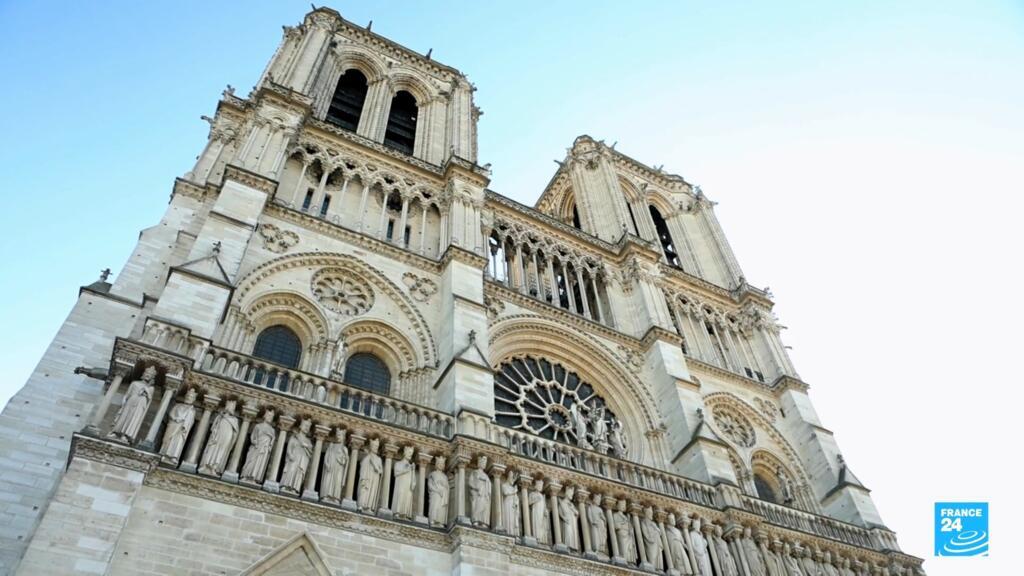
In this week’s Paris des Arts, A visit to Notre-Dame Cathedral takes centre stage as we take a trip down memory lane and delve into the history of Paris’s gothic gem with architectural historian Mathieu Lours.
A visit to Notre-Dame Cathedral
A visit to Notre-Dame Cathedral is a romance with its history, inspiring novels and tragedy through the ages. We meet Henri Chalet, the Director of the Maîtrise Notre-Dame singing school and follow his work with the choir during their rehearsals. And, in “From Paris with love”, we discover a reading of writer Sylvain Tesson’s works on stage inspired by his love of Notre-Dame Cathedral.
Notre Dame de Paris is a cathedral church in Paris. It is the most famous of the Gothic cathedrals of the Middle Ages and is distinguished for its size, antiquity, and architectural interest.
The cathedral was initiated by Maurice de Sully, bishop of Paris, who about 1160 conceived the idea of converting into a single building
From Paris with love
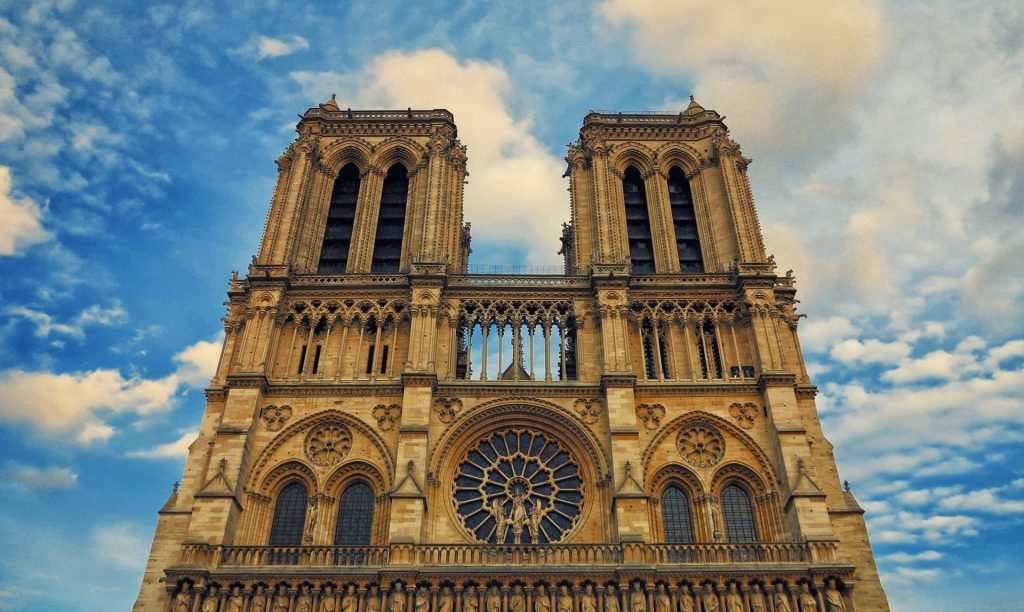
The Cathedral of Notre Dame is a masterpiece of Gothic architecture and one of the most visited monuments in for many romantics, Paris is a mythical city where stories are made, and certainly Notre Dame is part of this timeless beauty.
The most famous of the Gothic cathedrals
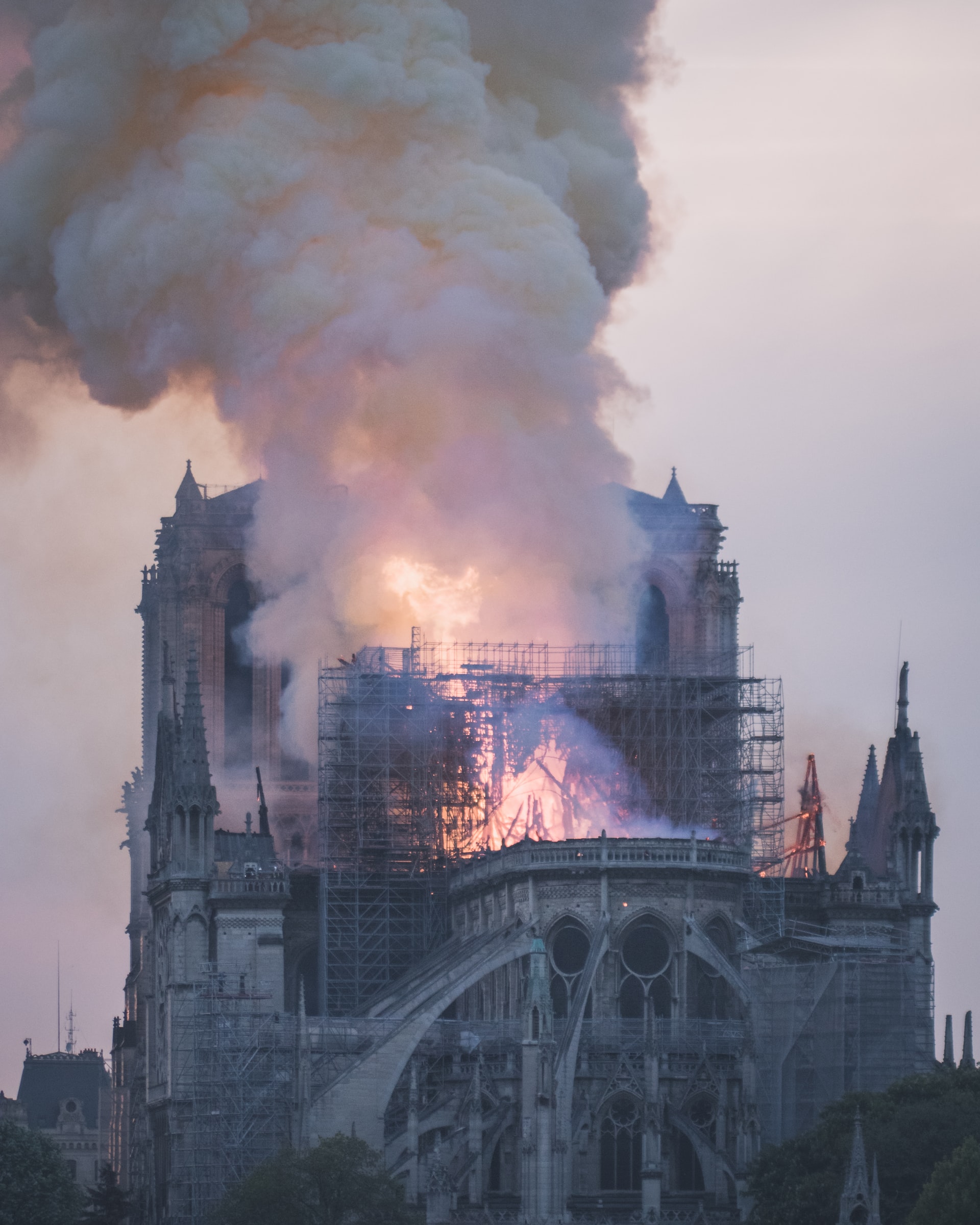
But despite the devastating 2019 fire, Notre Dame has survived to remain an enchanting Parisian monument that travelers still dream of visiting as we did with historian Mathieu Lours.
The historian paints a picture of where it’s located, it is like he is painting a picture on a blank canvas; situated on Paris’s picturesque island, Île de la Cité, Notre Dame sits quite literally in the heart of Paris. Yes, that is where Notre Dame de Paris resides, but don’t be surprised if you hear tales of other Notre Dames in other French cities.
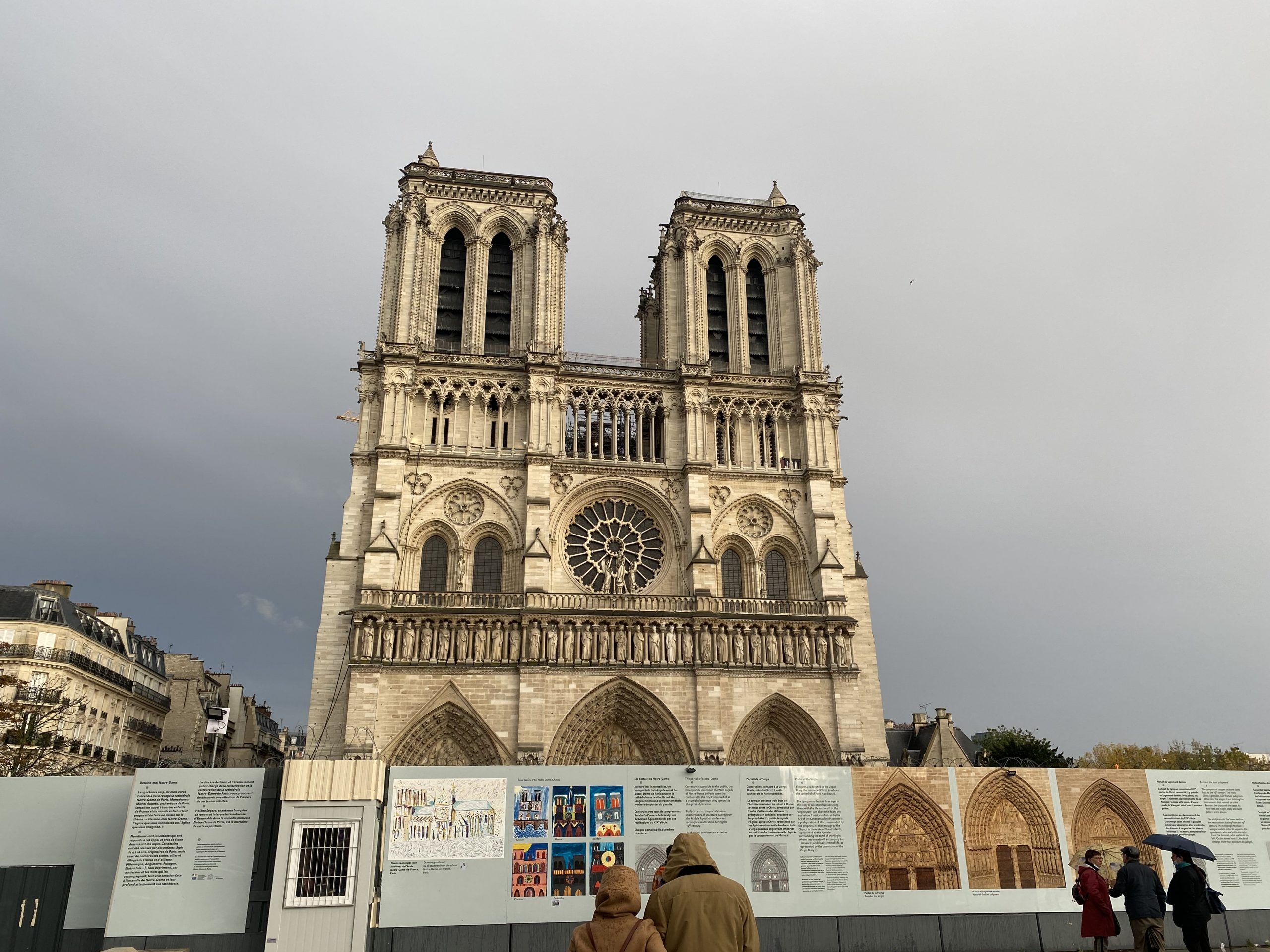
What does Notre Dame de Paris mean?
“These are not imposters of the Parisian cathedral. Notre Dame de Paris, literally translated, is “Our Lady of Paris.” Notre Dame, therefore, is the name given to the central church in many French cities and towns” says Henri Chalet.
When the cathedral’s plot of land was first considered for construction in the mid-12th century, it had already been home to a Roman temple, and later two basilicas that had themselves eroded with time. So when Pope Alexander III ordered the laying of the cathedral’s foundation only years later, the cathedral became the fourth chapter in a long line of religious gems to be erected on that spot.
“This majestic building has history seeping out of corner, every turn is almost better than the one before. That’s partly because of the history of damages it has endured. As a centerpiece of French history and symbolism, it has always been under threat of attacks” said the historian Mathieu Lours.
Damaged during the French Revolution, the cathedral was restored in the 19th century by the architect Viollet-le-Duc. But they kept the damaged statues at the front doors, known as portals, as a reminder of the devastating effects of the French Revolution.
Notre-Dame underwent major restorations by the French architect Eugène-Emmanuel Viollet-le-Duc in the mid-19th century. The popularity of Victor Hugo’s historical novel Notre-Dame de Paris (1831), wherein the cathedral is the setting, was said to have inspired the renovations.
The stained glass windows of Notre Dame, particularly the three rose windows, were long considered among the best features of the cathedral. They again have been restored over the years but as you embark to the top the towers you can enjoy a Panoramic view of Paris.
After the fire of 2019, Notre Dame was closed and the task of restoring its former glory from the fire was under way.
The cathedral officially reopened Saturday, Dec. 7, 2024, with a special reopening ceremony with lots of special guests including President Macron.
And on December 8, 2024 Notre-Dame was reopened to the public, to much fanfare following a restoration project estimated to cost upward of €700 million ($767 million).
Notre-Dame Cathedral suffered damage and deterioration through the centuries but now the majestic building has been restored to its former glory.