


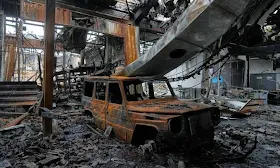
Media Lens: Iran warns US against ground invasion amid regional diplomatic discussions
Iran warns U.S. against ground invasion in Middle East.
Iran has issued a warning to the United States against a potential ground invasion in response to the deployment of US troops in the Middle East. This situation arises amid ongoing diplomatic talks involving Pakistan and regional leaders seeking to ease tensions, as highlighted in the coverage of global news coverage and international political developments.
Quick links:
What has happened |
Background |
Confirmed facts |
Points of divergence |
What’s not addressed |
One story, four angles |
Related links
What has happened
Iran has issued a warning to the United States against potential ground invasion amid rising tensions in the Middle East. This warning comes at a time when the U.S. continues to deploy additional troops to the region, prompting concerns of escalating hostilities. Iran’s leadership has expressed readiness to respond to any foreign military actions, emphasizing their strategic military capabilities.
Meanwhile, diplomatic conversations are ongoing in Pakistan, focusing on de-escalating tensions between Iran and the U.S. Regional leaders are striving for dialogue to prevent further conflict, highlighting the importance of diplomatic efforts in addressing security concerns. As both military deployments and diplomatic negotiations unfold, the situation remains complex and critical.
Background
Iran has issued a stern warning to the United States regarding any potential ground invasion amidst heightened tensions in the Middle East. This warning comes as the U.S. reinforces its military presence in the region. Meanwhile, Pakistan is engaged in diplomatic discussions with various nations, aiming to stabilize the situation. The interplay of military posturing and diplomatic efforts creates a complex geopolitical environment.
Confirmed facts
- Iran has issued a warning to the United States against a ground invasion.
- Diplomatic talks are underway in Pakistan regarding the situation between Iran and the United States.
- U.S. troops are reportedly being deployed to the Middle East.
- Iran has stated that its forces are prepared and “waiting” as U.S. troops arrive in the region.
Points of divergence
- The NPR article emphasizes diplomatic talks and the importance of negotiations, stating that Pakistan is engaging in efforts to mitigate tensions, whereas CNN focuses on live updates and the escalating threat posed by U.S. troop presence.
- CNN frames the situation as a critical warning from Iran against U.S. actions while emphasizing ongoing regional diplomatic efforts, while DW highlights Iran’s military posture, indicating a stronger emphasis on military readiness.
- DW prioritizes Iran’s defense readiness and military response to U.S. movements, reflecting a tone of caution, whereas NPR prioritizes the narrative of diplomacy and the role of regional intermediaries in easing tensions.
What’s not addressed
- Limited coverage of the humanitarian impacts of Iranian military escalations on civilian populations in impacted regions.
- Insufficient analysis regarding the implications of U.S. troop movements on diplomatic negotiations with Iran and surrounding nations.
- Lack of in-depth perspectives from local Iranian commentators or analysts to provide context to the situation from an on-the-ground viewpoint.
One story, four angles
NPR – Iran warns U.S. against ground invasion, as Pakistan holds diplomatic talks
Publication: NPR | Primary framing pattern: Warning | Tone register: Urgent | Intensity level: (8/10) | Sentiment: -0.3 | Legal precision: High
Expand
Espresso Shot:
NPR conveys a critical warning from Iran regarding possible U.S. ground troop actions in the region, indicating heightened tensions as Pakistan engages in diplomatic negotiations. This urgent framing underscores geopolitical instability and the potential for conflict escalation.
Framing analysis:
Emphasizes Iranian concerns while showing U.S. military presence coinciding with diplomatic efforts, suggesting a delicate balance between war and negotiation.
Bias:
Selection: Focuses on Iranian warning while minimizing U.S. perspective.
Language: Uses urgent language to convey a sense of danger.
Omission: Lacks detailed context on U.S. military strategy.
Assessment:
The publication prioritizes reporting Iranian sentiment, possibly inflating urgency without adequate U.S. insights.
CNN – Live updates: Iran warns against US ground invasion as regional leaders ramp up diplomatic efforts
Publication: CNN | Primary framing pattern: Live coverage | Tone register: Informative | Intensity level: (7/10) | Sentiment: -0.4 | Legal precision: Medium
Expand
Espresso Shot:
CNN’s live updates convey escalating diplomatic tensions between Iran and the U.S., emphasizing Iran’s warnings against possible military action while detailing regional diplomatic responses. The continual updates reflect ongoing developments in a high-stakes environment.
Framing analysis:
By focusing on immediate events, CNN presents an unfolding narrative that both informs and intensifies public perception of the situation’s volatility.
Bias:
Selection: Prioritizes developments in Iran, potentially overshadowing U.S. perspectives.
Language: Terms evoke urgency and caution.
Omission: Limited background on diplomatic context.
Assessment:
CNN effectively provides ongoing insights but may foster a perception of panic through selective emphasis on Iranian warnings.
DW.com – Iran war: Tehran warns US against ground assault
Publication: DW.com | Primary framing pattern: Continuing conflict | Tone register: Alarmed | Intensity level: (6/10) | Sentiment: -0.2 | Legal precision: High
Expand
Espresso Shot:
DW’s article facilitates an understanding of Tehran’s strong rhetoric against U.S. military incursions, positing the warning as part of a broader narrative about regional conflicts. The piece captures diplomatic fragility amid rising military tensions.
Framing analysis:
The article reinforces perceptions of threat while situating Iranian responses within the historical context of U.S.-Iran relations, offering comprehensive coverage of evolving tensions.
Bias:
Selection: Highlights Iranian stance, providing less insight into U.S. motivations.
Language: Alarmist phrasing heightens apprehension.
Omission: Could elaborate on possible resolutions.
Assessment:
DW successfully contextualizes the discourse but may amplify alarm through its framing of the Iranian position against U.S. actions.
BBC – Iran says its forces ‘waiting’ as US troops arrive in region
Publication: BBC | Primary framing pattern: Standoff | Tone register: Tense | Intensity level: (5/10) | Sentiment: -0.1 | Legal precision: Medium
Expand
Espresso Shot:
BBC reports on the tense situation as Iran confirms its military readiness while U.S. troops are deployed, portraying an atmosphere of strategic caution and military preparedness that enhances public awareness of the regional standoff.
Framing analysis:
The article illustrates a state of heightened alertness, presenting the scenario as a carefully watched military buildup, which underscores competing regional narratives.
Bias:
Selection: Focuses on Iranian military readiness, with less emphasis on U.S. objectives.
Language: Neutral but implies urgency in military positions.
Omission: Minimal elaboration on diplomatic alternatives.
Assessment:
The BBC adopts a balanced tone but risks underplaying the escalating anxieties tied to military actions through its cautious phrasing.
In analyzing the recent coverage of Iran’s warnings regarding U.S. military presence, NPR presented the strongest framing by emphasizing diplomatic talks alongside threats, which suggests a nuanced perspective. Conversely, CNN’s coverage displayed the most escalatory framing, highlighting increasing military tensions and suggesting a heightened state of alert. DW provided a balanced approach but did not emphasize conflict as prominently as CNN. Lastly, BBC’s coverage focused on Iran’s readiness, which adds context but lacks the escalation present in CNN’s narrative. The facts do not change. What changes is where scrutiny lands.
Related links
NPR
Iran warns U.S. against ground invasion, as Pakistan holds diplomatic talks
CNN
Live updates: Iran warns against US ground invasion as regional leaders ramp up diplomatic efforts
DW.com
Iran war: Tehran warns US against ground assault
BBC
Iran says its forces ‘waiting’ as US troops arrive in region