


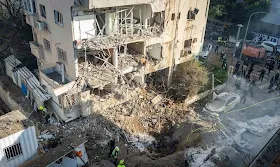
Media Lens: Iran Launches Missile Attack on Tel Aviv; Four Injured, Significant Damage Reported
Iranian missile attack hits Tel Aviv, injuring four people.
Iran launched a missile attack on Tel Aviv, causing damage and injuries. The attack occurred amidst ongoing international political developments related to the region’s tensions, particularly as diplomatic efforts to address the conflict continue. For more information, visit global news coverage and stay updated on international political developments.
Quick links:
What has happened |
Background |
Confirmed facts |
Points of divergence |
What’s not addressed |
One story, four angles |
Related links
What has happened
A recent missile attack by Iran targeted Tel Aviv, leading to significant damage and injuries. Reports indicate that at least four people sustained minor injuries and several buildings were damaged due to the assault. This incident has escalated tensions in the region and is seen as a notable development in the ongoing conflict involving Iran and Israel.
The missile strike comes amid ongoing diplomatic discussions regarding potential resolutions to the regional conflict. The situation remains fluid, with global powers keeping a close watch on developments. The Iranian government has not made an immediate comment on the attack, leaving many questions about the motivations and future actions unanswered.
Background
Iran has escalated military tensions by launching missile strikes targeting Israel, a move that coincides with ongoing discussions led by the U.S. aimed at decreasing conflict in the region. This act of aggression marks a significant escalation in hostilities amid diplomatic efforts to stabilize relations between Iran and its neighboring countries. Multiple sources report damages and injuries resulting from the attacks, highlighting the urgent need for continued diplomatic dialogues.
Confirmed facts
- Iran launched a missile attack targeting Tel Aviv.
- Four people were lightly injured in the missile attack.
- Buildings were damaged as a result of the missile strikes.
- Reports of the missile attack appeared in multiple news sources, including The New York Times and The Times of Israel.
- The missile strike is reflected as part of ongoing tensions between Iran and Israel.
Points of divergence
- Emphasis Differences: The New York Times prioritizes detailed analysis of Iran’s missile capabilities, suggesting an ongoing strategic threat, while The Times of Israel focuses on the immediate impacts of the missile attacks on civilians and infrastructure.
- Framing Differences: KUSA.com frames the conflict as part of a broader regional instability influenced by U.S. diplomatic efforts, whereas WSJ emphasizes Iran’s direct aggression towards Israel and Gulf states, establishing a belligerent narrative.
- Priority Differences: The Times of Israel emphasizes human stories and casualties resulting from the attacks, prioritizing local impacts, while WSJ highlights military developments and geopolitical implications, presenting a more analytical view on international relations.
What’s not addressed
- Insufficient coverage of the long-term ramifications of Iranian missile attacks on civilian infrastructure in Tel Aviv.
- Lack of in-depth analysis regarding the reactions and statements from key international players besides the United States in response to the ongoing conflict.
- Absence of personal stories or perspectives from residents affected by the recent missile attacks, limiting human interest angles in reporting.
One story, four angles
The New York Times – Iran War Live Updates: Tehran Fires Missile Barrage at Israel After U.S. Claims Progress on Talks
Publication: The New York Times | Primary framing pattern: Real-time updates | Tone register: Urgent | Intensity level: (9/10) | Sentiment: -0.7 | Legal precision: High
Expand
Espresso Shot:
The Times covers the Iranian missile strikes on Israel, noting the conflict escalates amid diplomatic efforts. The focus is on the immediacy of the attacks, reflecting a tense geopolitical climate.
Framing analysis:
This piece conveys urgency through its live updates approach, emphasizing ongoing military actions and diplomatic developments concurrently.
Bias:
Selection: Prioritizes military actions over humanitarian implications.
Language: Employs dramatic phrases like “missile barrage” to heighten urgency.
Omission: Limited context on civilian impacts or responses from affected communities.
Assessment:
The framing intensifies perceptions of conflict potential while minimizing broader socio-political implications.
The Times of Israel – 4 people lightly hurt, buildings mangled as Iranian missile attack hits Tel Aviv
Publication: The Times of Israel | Primary framing pattern: Incident-reporting | Tone register: Concerned | Intensity level: (7/10) | Sentiment: -0.5 | Legal precision: High
Expand
Espresso Shot:
The report focuses on the direct victims of the missile attack, detailing injuries and structural damage while conveying a sense of vulnerability in urban areas.
Framing analysis:
The emphasis is on human experience and physical destruction, drawing attention to the immediate impact of military actions on civilians.
Bias:
Selection: Highlights personal stories over political motives.
Language: Utilizes descriptive language around injuries and damage to evoke sympathy.
Omission: Less attention on retaliatory actions or government statements.
Assessment:
The publication effectively humanizes the conflict but could better balance the political context.
KUSA.com – Iran targets Israel and Gulf Arab states even as Trump says US is in talks to end the war
Publication: KUSA.com | Primary framing pattern: Political context | Tone register: Analytical | Intensity level: (6/10) | Sentiment: -0.6 | Legal precision: Medium
Expand
Espresso Shot:
This article discusses ongoing Iranian aggression while juxtaposing diplomatic dialogues suggested by the U.S., providing an analytical lens to military conflicts.
Framing analysis:
The contrast between military actions and diplomatic statements offers insight into geopolitical tensions, though less immediacy in tone reduces perceived urgency.
Bias:
Selection: Focus on diplomatic negotiations possibly undercuts urgency of military threats.
Language: Balanced terms used, though more analytical than emotive.
Omission: Lacks detailed local impact assessments of military actions.
Assessment:
The article successfully contextualizes the conflict while maintaining a moderate tone, but may not fully capture public sentiment.
WSJ – Iran War Live Updates: Iran Presses Assault as Diplomatic Efforts Persist
Publication: WSJ | Primary framing pattern: Dynamic reporting | Tone register: Serious | Intensity level: (8/10) | Sentiment: -0.7 | Legal precision: High
Expand
Espresso Shot:
This live report continuously updates readers about Iran’s military advances, presenting a grim depiction of escalating violence alongside failing diplomatic resolutions.
Framing analysis:
The dynamic nature captures the evolving landscape of conflict and highlights the pressing urgency of military actions versus political resolutions.
Bias:
Selection: Prioritizes military actions and implications significantly.
Language: The serious tone may invoke fear regarding the conflict’s escalation.
Omission: Doesn’t explore civilian consequences or broader geopolitical debates.
Assessment:
The focus on conflict dynamics is effective, yet a more humanitarian view could enhance reader understanding of the consequences.
In comparing the framing of recent articles, The New York Times displays the strongest framing by detailing the active involvement of Iran and the complexities of diplomatic negotiations, emphasizing the ongoing tensions in the region. Contrarily, KUSA.com employs the most escalatory framing, highlighting military actions and the targeting of Israel and Gulf states, which suggests a significant urgency and potential for conflict escalation. Each publication shapes its narrative differently, affecting public perception and urgency surrounding the situation.
The facts do not change. What changes is where scrutiny lands.
Related links
The Times of Israel
4 people lightly hurt, buildings mangled as Iranian missile attack hits Tel Aviv
The New York Times
Iran War Live Updates: Tehran Fires Missile Barrage at Israel After U.S. Claims Progress on Talks
KUSA.com
Iran targets Israel and Gulf Arab states even as Trump says US is in talks to end the war
WSJ
Iran War Live Updates: Iran Presses Assault as Diplomatic Efforts Persist