


Media Lens: House GOP rejects Senate DHS funding bill as shutdown enters new phase
House GOP rejects DHS funding bill passed by Senate.
The House GOP rejected the DHS funding bill passed by the Senate and is drafting an alternative. This decision comes amid ongoing discussions about government funding, as reported in latest US news and coverage in US and global politics.
What happened
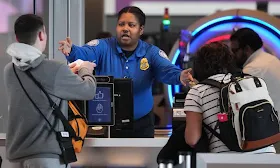
The House GOP has rejected a funding bill for the Department of Homeland Security that was passed by the Senate, prompting the drafting of an alternative proposal. This move has implications for the ongoing government shutdown and has raised concerns regarding TSA operations at airports.
Key facts
- The Senate passed a funding bill for the Department of Homeland Security (DHS).
- The House GOP rejected the DHS funding bill that the Senate passed.
- House Republicans are drafting their own alternative funding proposal.
- Concerns have been voiced by some House Republicans regarding the leadership’s direction on DHS funding.
Where coverage differs
- The Washington Post emphasizes the legislative dynamics of the DHS funding vote, while CNBC emphasizes the practical consequences for TSA operations and delays.
- MS NOW foregrounds Republican concerns regarding leadership decisions rather than specific funding strategies.
- WSJ prioritizes executive actions taken in response to funding issues over the legislative process itself.
One story, four angles
The Washington Post – House GOP rejects DHS funding bill passed by Senate, drafts alternative
Publication: The Washington Post | Primary framing pattern: Political | Tone: Critical | Intensity: 8/10 | Sentiment: -1 | Legal precision: Medium
Expand
Espresso Shot: The piece emphasizes the House GOP’s rejection of the Senate’s DHS funding bill and their willingness to draft their own alternative, indicating significant partisan divides. The framing underscores political maneuvering amidst a looming government shutdown.
Publication emphasis: The House GOP’s actions reflect deep partisan divides impacting national policy on DHS funding.
Framing analysis: The foregrounded issue is the political stance of the House GOP regarding funding, while the secondary implications relate to service disruptions and government efficiency.
Bias: Selection: Focus on GOP’s rejection and alternative proposals, Language: Words like “rejects” and “drastic” imply negativity, Omission: Lack of GOP rationale behind their funding proposal alternatives.
Assessment: The article showcases a critical perspective on GOP decision-making within the context of government operation challenges.
CNBC – TSA funding update: House GOP spikes DHS funding proposal, extending shutdown that’s caused airport delays
Publication: CNBC | Primary framing pattern: Consequence | Tone: Analytical | Intensity: 7/10 | Sentiment: -1 | Legal precision: Medium
Expand
Espresso Shot: This article highlights the immediate consequences of the House GOP’s decision to spike the DHS funding proposal, focusing on the resulting airport delays caused by the stalemate, emphasizing how political decisions directly impact citizens.
Publication emphasis: The decision to reject DHS funding has real-world consequences for the public, notably causing airport disruptions.
Framing analysis: Foregrounded is the impact on travelers and airport operations, while secondary themes include political processes and negotiations behind the scenes.
Bias: Selection: Emphasis on traveler inconvenience, Language: Terms like “spikes” indicate negative action, Omission: Limited insight into GOP’s reasoning or alternative proposals.
Assessment: The article effectively stresses the immediate fallout of the GOP’s political decisions on everyday citizens while analyzing broader implications.
MS NOW – House Republicans privately express ‘tremendous concerns’ with Mike Johnson’s play call on DHS
Publication: MS NOW | Primary framing pattern: Political | Tone: Concerned | Intensity: 6/10 | Sentiment: 0 | Legal precision: Low
Expand
Espresso Shot: This report reveals the internal dissent among House Republicans regarding leadership decisions related to DHS funding. The framing indicates potential fractures within the party as members express concern over strategic direction.
Publication emphasis: Internal GOP dissent raises questions about party unity and effective leadership on key issues.
Framing analysis: The primary focus is on the worries within the Republican ranks, while secondary themes touch on the implications for upcoming political maneuvers and governance.
Bias: Selection: Highlights dissent over leadership, Language: “Concerns” conveys negativity, Omission: Limited detail on any viable alternative solutions or unified vision.
Assessment: The article adeptly conveys the potential risks of internal divisions within the GOP impacting their handling of crucial funding issues.
WSJ – Trump Takes Executive Action to Pay TSA Workers as Funding Stalls in Congress
Publication: WSJ | Primary framing pattern: Policy | Tone: Informative | Intensity: 5/10 | Sentiment: 1 | Legal precision: High
Expand
Espresso Shot: The article reports on Trump’s executive action in response to stalled funding, focusing on its implications for TSA workers. The framing demonstrates a proactive approach amidst legislative inaction, while also highlighting executive powers being utilized in crisis situations.
Publication emphasis: Trump’s use of executive power to ensure TSA workers are paid despite congressional gridlock.
Framing analysis: Foregrounded is the policy response to funding issues, while secondary aspects include the implications for governance and worker morale.
Bias: Selection: Focus on executive action’s necessity, Language: Terms like “executive action” indicates agency, Omission: Little discussion of opposition or potential long-term effects.
Assessment: The article effectively presents a policy-driven perspective, underscoring executive action as a significant response to legislative failure.
Food for thought
The Washington Post presents the strongest legal framing by highlighting the House GOP’s rejection of a Senate-passed DHS funding bill, signaling a potential constitutional crisis over government funding. Meanwhile, CNBC adopts a more escalatory tone, emphasizing the impact of the House’s decision on TSA operations and travel disruptions, which heightens public concern. As the debate unfolds, the framing differences illustrate distinct approaches to the same congressional standoff: one focused on legal ramifications, the other on immediate societal consequences. The facts do not change. What changes is where scrutiny lands.