
Latest News
- US insists no plan B as Iran and US officials engage in talks in Islamabad
- Péter Magyar emerges as significant challenge to Fidesz party in Hungary
- Premier League — Sunday’s 5th Apr fixtures
- Father and partner face charges after nine-year-old boy found locked in van in France
- Pope Leo XIV denounces delusion of omnipotence amid US-Iran peace talks
- Cyclist narrowly escapes train collision after breaching safety barrier in Hanoi
- Viktor Orbán reshapes Hungary’s foreign policy and EU relations
- Elderly demonstrators in camping chairs among 100 detained at Palestine Action protest


🇪🇺 Europe in Brief | This week so far …
-
🔥 Heatwave death toll rises – Europe’s ongoing heatwave has claimed over 1,400 lives across Spain, Italy, France, and the UK, with temperatures soaring above 46°C in parts of Portugal.
-
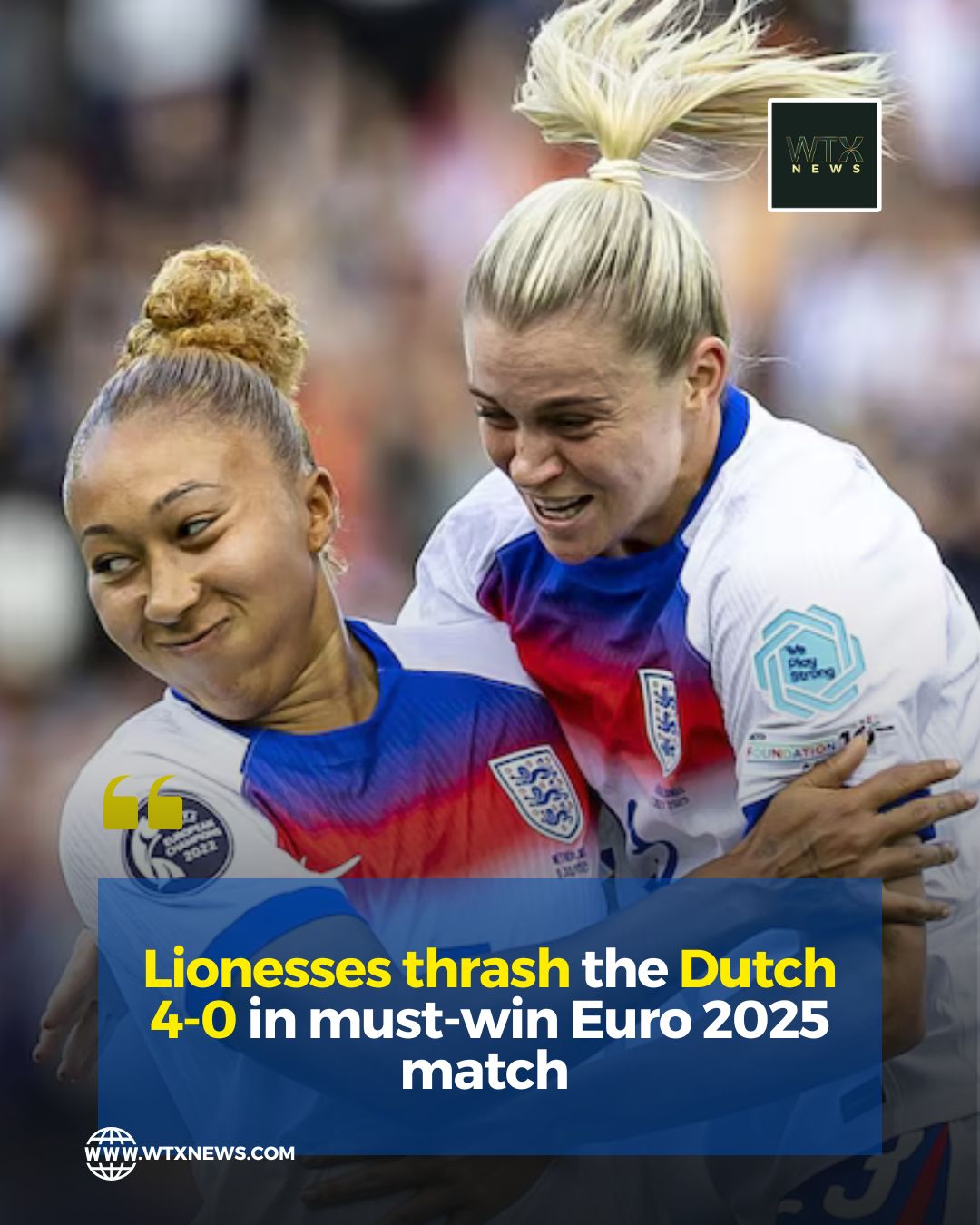
⚽ Women’s Euro 2025: Switzerland shines – Host nation Switzerland secured a 2–0 victory over Iceland in Bern, with Geraldine Reuteler scoring the decisive goal, which takes them into the quarterfinals.
-
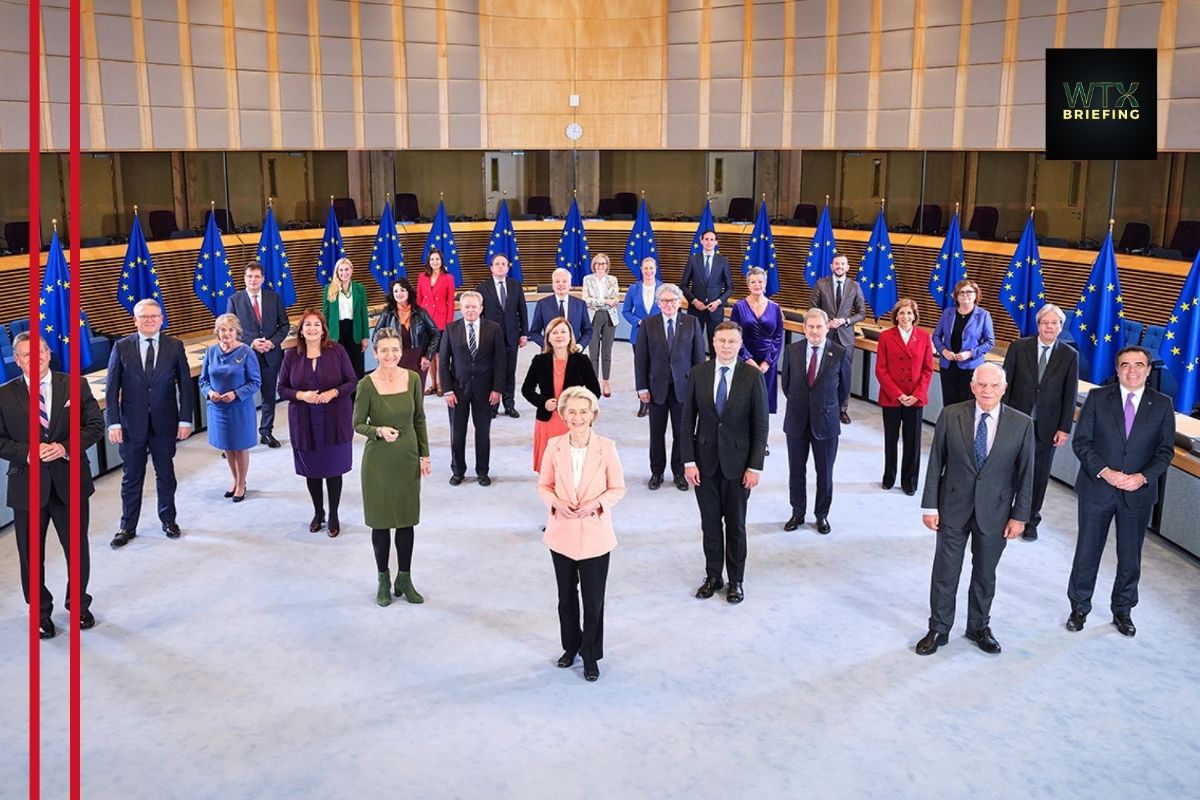
🏛️ Under Pressure Von der Leyen fights for her Commission : European Commission President Ursula von der Leyen prepares to face a crucial vote in the European Parliament, defending her leadership amid calls for censure.
-
🇵🇱 Poland reinstates border controls – Poland has reintroduced border checks with Germany and Lithuania amid concerns over illegal crossings and regional security. This has raised concerns in Brussels and Poland must adhere to EU law.
-
🇩🇪 Germany sees 50% drop in asylum applications: The number of asylum seekers in Germany has fallen by half in the first half of 2025, a significant shift reflecting changing migration patterns. There is a correlation between the teh drop in Ukrainian immigrants in 2025.
-
🇪🇺 EU–China climate talks stall – In a tug of war, between the US and China, The EU hesitates to sign a joint climate pledge with China, citing concerns over the effectiveness of China’s emissions reductions and the inability to do that whilst trying to secure a US trade deal.
-
💼 Dow to shut European assets – Dow Chemical plans to close three upstream European facilities in response to regional economic challenges and potential tariffs.
-
🧠 AI surveillance concerns in Europe – Reports reveal untested AI technology is increasingly used for protest monitoring and election interference in Europe.
-
📈 EU investor morale hits a three-year high – Eurozone investor confidence reaches its strongest level since 2022, signalling a broad economic recovery, but this could be a summer high.
Here’s an anecdote for you, have you been asked about the Mushroom murders? Well, The Mushroom Murders are about an Australian woman who poisoned her family during a lunch using mushrooms. Erin Patterson has now been found guilty of murdering three relatives at the lunch and attempting to kill another.
She killed her in-laws, the mother-in-law’s sister and husband, by using death cap mushrooms in a beef Wellington. She was found guilty on all four counts today and will be sentenced next week, bringing an end to a trial that has gripped millions around the world.
📅 Key Cultural & Business Events – This Week
- 1st EuChemS Chemical Biology School – 8–11 July (Madrid, Spain)
- Ultra Europe Festival – 11–13 July (Split, Croatia)
- Impulstanz Dance Festival – begins 10 July (Vienna, Austria)
✍️ Thought of the day
Add a little extra green to your diet today – spinach, kale, or peas bring vitamins and vitality.
🌼 Flower of the Week
Wild Marjoram (Origanum vulgare)
More than just a kitchen herb, wild marjoram bursts into purple-pink flowers in summer and is a magnet for butterflies and bees.
🐦 Bird of the Week
Green Woodpecker
With its laughing call and bright green plumage, this shy bird loves to feast on ants — often seen hopping on lawns rather than pecking trees.
Von der Leyen ‘wounded’ despite surviving EU confidence vote
European Commission President Ursula von der Leyen survived a no-confidence motion in the European Parliament on 10 July, with only 175 MEPs in support, compared to 360 against and 18 abstaining. However, the outcome revealed significant fractures across centrist parties and raised fresh political challenges for her second term. Here are five core impacts:
1. Eroding core support
Fewer votes in her favour compared to her original mandate – 360 versus 370 last November – indicate less enthusiasm from her own parties; over 160 MEPs didn’t vote, including from S&D, Renew Europe, and Greens, signalling a fragile coalition.
2. Italian EPP split
Within the EPP, Italy’s Brothers of Italy neither backed nor opposed her, reflecting growing tensions and signalling Giorgia Meloni’s wavering loyalty.
3. Greens’ frustration
Greens/EFA mostly opposed the motion, yet many abstained in protest at diluted climate policy and stricter migration measures, a sign of eroding trust.
4. Far-right emboldened
Far-right groups called the vote a moral victory, with Gheorghe Piperea declaring, “175 votes … is a very good proportion,” and threats of fresh motions post-summer.
5. Budget pressure intensifies
Key MEP groups secured verbal assurances on maintaining the future European Social Fund in return for votes. However, looming next‑term budget talks will likely spark conflict over defence versus cohesion funding.
🔁 Reactions:
- European reaction (centre-left): While many in the Socialist & Democrat group backed von der Leyen to maintain institutional stability, several MEPs have warned that trust is waning, especially over her handling of climate, transparency, and Hungary’s democratic backsliding.
- UK reaction: The UK government remained neutral but signalled continued engagement with the EU Commission on security, trade, and migration. Diplomats note quiet relief in Whitehall that leadership remains stable during ongoing talks over migration and Ukraine.
- Opposition reaction (Green-left and far-right): Greens abstained in protest at her climate concessions and toughened migration stance, while right-wing parties declared moral victory, arguing that the 175 votes against von der Leyen reflect a growing rejection of the “Brussels elite”.
📰 Media bias & framing:
- Euronews/Guardian/Reuters/AP focus on political dynamics and cross-party divisions beyond far-right critique (euronews, The Guardian).
- FT highlights the motion’s ripple into budget negotiations and rising EU bloc strains (Financial Times).
- El País, Dagens Nyheter, Welt note transparency and governance concerns—Pfizergate, election interference, climate rollback—driving intra-coalition unease (El País).
📊 Sentiment: Neutral–negative. Although converted into a technical win, von der Leyen emerges politically battered, with shaken confidence among allies. Her authority could be seriously tested in upcoming budget debates and climate policy decisions.
Russia launches largest missile‑drone barrage on Kyiv, prompting global calls for tougher sanctions
In the early hours of Thursday, Russian forces unleashed a record-breaking aerial assault on Kyiv, involving around 400 Shahed drones and 18 cruise and ballistic missiles, the largest strike since the full-scale invasion began three years ago. The bombardment persisted for nearly ten hours, triggering air-raid sirens and sending civilians scrambling to underground shelters. Two people were killed and at least 13 injured, with fires reported in six of Kyiv’s ten districts, including residential buildings, offices and warehouses.
The attack coincided with a high-profile recovery and sanctions summit in Rome, where Ukrainian President Volodymyr Zelensky urged Western leaders to impose “biting” sanctions on Russia, including targeting its oil exports, to deter further aggression.
🔁 Reactions:
- President Zelenskiy: “Sanctions must be imposed faster and hard enough so Russia truly feels consequences” (The Guardian)
- Ukrainian authorities: “Entire night of explosions, rooftops blazing, residents forced underground” (The Guardian)
- Security analyst: > “This marks a tactical escalation—designed to stretch Ukraine’s defences and morale” (AP News)
📰 Media Bias & Framing:
- Reuters/AP/Guardian emphasise the unprecedented scale of the attack, the civilian impact, and the symbolic timing during a major diplomatic event (Financial Times).
- Financial Times, WSJ analyse how Russia aims to undermine Ukraine’s air defences and challenge NATO’s support strategy (Financial Times).
- Independent/The Times spotlight how reopening U.S. arms deliveries under Trump contrasts with the intensity of Russian aggression (The Daily Beast).
📊 Sentiment: Negative. The fury and magnitude of the strike, along with civilian casualties, dramatically raise the stakes of the conflict, reinforcing Kyiv’s plea for immediate and punitive sanctions while underlining Ukraine’s intensified need for Western air-defence systems.
Starmer and Macron unveil “one in, one out” Channel migration deal
A new bilateral deal announced at the end of French President Emmanuel Macron’s state visit pledges a pilot “one in, one out” returns scheme: the UK will return around 2,600 irregular Channel migrants per year to France, matched by accepting an equal number of asylum seekers with strong UK ties. The agreement follows the UK’s abandonment of the Rwanda plan and includes provisions for biometric checks in the UK and £480 million in funding for French border patrols and surveillance. Negotiations continue on start date, additional financing, and legal clearance in France. The pilot allows 50 returns per week, but opposition from other EU countries and concerns over legal challenges remain.
Reactions:
- Keir Starmer & Emmanuel Macron: “Shared solutions are key to breaking the smuggling gangs’ business model.”
- Tory critics: “Deal fails to deter crossings – just 50 returns are inadequate.”
- EU “Med‑5” group (Spain, Italy, Greece, Cyprus, Malta): > “This bilateral deal risks shifting burdens onto southern Europe.”
Media Bias & Framing:
- Guardian/AP/Reuters/Euronews report the bipartisan progress and diplomatic symbolism, noting both logistical and political hurdles.
- Independent/Times emphasise negotiation friction – money, legal clearance, support from other EU members – and the symbolic reset in Franco‑British relations. (The Independent)
- El País and EU outlets warn that a UK–France bilateral approach may unsettle the collective Schengen framework and may shift migration pressures elsewhere. (El País)
Sentiment: Neutral–negative. While the deal represents a diplomatic breakthrough, signalling renewed Franco‑British cooperation and an alternative to the Rwanda policy, critics argue its scale is too limited and risks infringing EU solidarity and legal norms.
France launches “Diplomatic Reserve” to bolster soft power and combat disinformation
France has established a “Diplomatic Reserve”, aiming to recruit 1,000 volunteers by year-end to support citizen services abroad, strengthen diplomatic outreach, and counter misinformation. These volunteers, from Foreign Ministry staff, NGOs, academia and the private sector, will offer crisis support (such as during the Israel–Iran conflict), assist in major events (like the 2026 G7), and promote France’s global narrative to combat disinformation campaigns. Foreign Minister Jean‑Noël Barrot emphasised the initiative’s civic focus and its role in upholding France’s third‑largest diplomatic network.
🔁 Reactions:
- Jean‑Noël Barrot: “We need citizens to defend France’s interests and tell our story abroad.”
- NGO leader: > “This is a valuable tool for soft‑power outreach and crisis support.”
- Security analyst: > “Deploying digital expertise against disinformation shows a modern diplomatic mindset.”
📰 Media Bias & Framing:
- Euronews frames the reserve as a proactive, citizen‑focused strategy to enhance diplomacy and counter “propaganda”.
- Politico/Euractiv note this fits into wider efforts to push back against Russian and Wagner‑linked disinformation campaigns in Africa and Europe, linking it to past Viginum transmissions from the Foreign Affairs Ministry.
(politico.eu) - Le Monde/DW highlight the potential: more voices, greater diversity, and mobilisation of soft power – but flag the need for parliamentary approval and robust training frameworks.
📊 Sentiment: Neutral–positive. The initiative signals a strategic shift towards citizen diplomacy and disinformation resilience. Its success, however, will depend on execution: recruiting qualified volunteers, ensuring quality training, securing oversight and keeping partisan influence at bay.
Poland to reintroduce border checks with Germany and Lithuania amid surge in irregular migration
Poland’s government has announced temporary border controls along its frontiers with Germany and Lithuania, beginning 7 July for 30 days. The move comes amid a reported threefold increase in irregular crossings from Lithuania (251 detentions so far in 2025 versus 175 in 2024) and complaints that Germany is redirecting migrants back into Polish territory.
Prime Minister Donald Tusk framed the decision as necessary to curb “uncontrolled flows” and asserted Poland would maintain checks if Germany persists with its own. The border regime is staffed by 800 police, 300 gendarmes, and 500 territorial army personnel. Lithuania has agreed to coordinate to minimise disruptions.
🔁 Reactions:
- Donald Tusk: “Temporary controls are necessary to reduce uncontrolled flows to a minimum.”
- Interior Minister Tomasz Siemoniak: “We must act now to tackle illegal migration.”
- Lithuanian President Gitanas Nausėda: > “Measures must be temporary and effective for free movement.”
📰 Media Bias & Framing:
- Reuters/AP/Euronews emphasise the operational facts – numbers, staffing and official justification — without an editorial slant. (apnews.com, reuters.com, euronews.com)
- Financial Times and Washington Post scrutinise the move’s impact on Schengen’s integrity and its legal basis under EU law, noting criticism from human rights groups.
- Local Polish outlets highlight domestic support (62 per cent in favour) and far-right protests advocating vigilante border patrols.
📊 Sentiment: Neutral–negative. The action displays firm political will to secure borders and respond to public pressure, but poses risks to EU cohesion and freedom of movement, with migration flows now shifting to other routes.
Germany sees 50 per cent drop in asylum applications in first half of 2025
Germany recorded just 61,300 new asylum applications in the first half of 2025, almost half the volume compared with 121,426 in H1 2024. June alone brought fewer than 7,000 applications, a 60% decline year-on-year. It marks the lowest June figure since March 2013.
The drop reflects stricter border controls, suspension of family reunification, ending fast-track citizenship, and the expansion of “safe country” lists. EU data confirm Germany has fallen from the top spot to third place among EU asylum destinations, behind Spain and France.
🔁 Reactions:
- Interior Minister Nancy Faeser: “Consistent action is pushing back irregular migration.” (reuters.com)
- Chancellor Merz (proposed policy): > “Strict border rules and deportations are necessary to prevent overload.” (apnews.com)
- German Police Union: > “Border checks are unsustainable, officers overstretched.” (thetimes.co.uk)
📰 Bias Snapshot:
- Reuters/Bild focus on numerical decline and policy links without an emotive tone.
- EUAA/Eurostat reports place the trend in a broader EU context, noting falling asylum rates and shifting national destinations (euaa.europa.eu).
- DW/local outlets caution that data reflect policy choices and external factors—such as reduced Syrian flows—not just migrants’ intentions (dw.com).
📊 Sentiment: Neutral–negative. The sharp decline delivers a political win for policy-makers but raises concerns over legal sustainability, humanitarian impact, and timing as Germany adjusts its role in EU asylum policy.
A round up of what the Politicians have been doing.
The prime minister welcomes French President Emmanuel Macron for a three-day state visit where the PM is set to push for a deal between the UK and France on the
Tracking Trump’s presidency Live:
Trump made an angry start to the week displaying his frustration at Israel.
On Tuesday he headed to NATO to secure billions of spending for
On Monday, the European Commissioner was fighting for her political career as she appeared before MEPs ahead of her facing a no-confidence vote on Thursday.
Tracking Trump’s presidency Live:
Trump made an angry start to the week displaying his frustration at Israel.
On Tuesday he headed to NATO to secure billions of spending for
✍️ Quote of the Week
“History is a set of lies agreed upon.” — Napoleon Bonaparte
This week’s news shows how narratives — whether political, digital, or economic — can be engineered, exposed, or reimagined. The truth, as ever, lies between the lines, but there is no doubt, that history belongs to the victor.
🕵️ No, Macron did not hide cocaine on a train to Ukraine
A viral video claiming French President Emmanuel Macron was “caught red-handed” hiding a cocaine bag on a train to Ukraine has been thoroughly debunked by France 24’s fact-checking team. The footage, which showed Macron holding a white pouch before tucking it into his coat, was deceptively edited. The object was a known brand of French facial tissue.
The clip gained traction on platforms like X and TikTok, fuelled by conspiracy influencers. AI analysis of the video confirmed digital tampering.
This story reflects the increasing use of manipulated media to undermine political figures — particularly during periods of tension like Macron’s current Green rebellion.
Key takeaway: In an age of digital warfare, viral misinformation can move faster than diplomacy.
This weeks global cultural & business events provides a round up of the highlights key events taking place around the world. You don’t need a private jet to get around, some are virtual as well.
🌍 Global Cultural & Business Events This Week
- 🇮🇹 La Biennale di Venezia – Venice
- 🇺🇸 G7 Finance Ministers Summit – New York
- 🇺🇳 UN Digital Inclusion Forum – Geneva
- 🇩🇪 Berlin Design Week – Berlin
- 🇺🇸 SXSW EDU Europe – London
🏛️ Political events to keep your eyes on
- NATO: Turkey requests joint monitoring of PKK disbandment
- IMF: Revises 2025 global growth forecast to 3.2%
- UNESCO: Adds Gaza’s Old Port to watchlist of threatened heritage sites
- WHO: Issues early warning for rising dengue clusters in Asia
- World Bank: Launches climate adaptation bond for Sahel nations
FEATURED EVENT – International Summit – Tirana, Albania
Meeting of the European Political Community, 16 May 2025
The sixth meeting of the European Political Community will bring together leaders from across the continent in Tirana, Albania under the theme ‘New Europe in a new world: unity – cooperation – joint action’.
The EU will be represented by the President of the European Council, António Costa, who will co-chair the meeting along with the Prime Minister of Albania, Edi Rama.
🖼️ Art/Culture Highlight – Kunsthaus Zurich: “Surveillance and the Self”
An exhibition tracing the history. A Future for the Past
The exhibition focuses on various – also contradictory – perspectives on the historical context in which the arms manufacturer and patron Emil G. Bührle built up his collection: it highlights the biographies of former owners of individual works, whose sale took place under questionable circumstances, and the question of how a differentiated approach to history can succeed in the immediate present.
The Bührle Collection: art, context, war and conflict.
✍️ Thought of the day
We’ve delveoped this need to move on to the ‘next thing’ standing in one place seems to make one anxious. That may be because of the way we are being engineered, the thirst for more. But the negative impact of that is, we rarely get to enjoy the moment.
When enjoying a meal, a walk in nature, or any other activity, pay attention to the details and fully experience it, just stand still (figuratively) and process what you have done, The next, more is not always better.
✍️ Quote of the Week
“Europe cannot look away. The price of inaction is always paid in lives.”
— Roberta Metsola, President of the European Parliament, speaking on migration and border deaths in the Mediterranean.
Spain overtakes Japan in GDP per capita
Spain has surpassed Japan in GDP per capita, with projections indicating Spain’s GDP per capita exceeding $42,300, while Japan’s remains around $41,700, based on current trends.
This shift is attributed to Spain’s robust economic performance, driven by strong domestic demand, a thriving tourism sector, and effective utilisation of EU recovery funds. In contrast, Japan’s economy has faced challenges, including a declining working-age population and limited growth in domestic consumption.
The International Monetary Fund (IMF) forecasts that Spain’s GDP per capita will maintain its lead over Japan until at least 2030.
From dancing in Austria to international workshops in computational chemical biology, there are some huge cultural and innovation events this week across the European continent. Check out what’s happening in the EU/ Europe this week.
🇪🇺 EU Events Guide: 7–13 July 2025
📅 Key Events
- XXVI European Conference on Organometallic Chemistry – 7–10 July (Bern, Switzerland)
- 1st EuChemS Chemical Biology School – 8–11 July (Madrid, Spain)
- Ultra Europe Festival – 11–13 July (Split, Croatia)
- Impulstanz Dance Festival – begins 10 July (Vienna, Austria)
- Schrammel Klang, Gent Jazz & Cactus Festivals – 11–13 July (Austria, Belgium)
🧪 Science & Innovation
EuCOMC – 7–10 July, Bern
Leading organometallic chemists gather to discuss catalysts, advanced synthesis, and new materials.
EuChemS School – 8–11 July, Madrid
International workshops in computational chemical biology geared toward PhD and postdoc researchers.
🎶 Cultural & Music Festivals
Ultra Europe – 11–13 July, Split
Three-day EDM extravaganza on Croatia’s Adriatic coast, drawing over 150,000 fans from around the world.
Impulstanz Dance Festival – from 10 July, Vienna
Europe’s largest contemporary dance festival featuring performances, workshops, and city-wide spectacles.
Schrammel Klang (Austria), Gent Jazz & Cactus Festival (Belgium)
Regional music festivals showcasing folk, jazz, and world fusion acts from 11–13 July.
Lessons in leading through crisis from Jacinda Ardern
Former New Zealand Prime Minister Jacinda Ardern shares insights and lessons in leading through crisis, reflecting on the challenges of leadership at the highest levels.
She shares how her empathetic leadership style, shaped by self-doubt, that drove her with the power of transparent communication and leading with trust, not ego, allowed her to move forward decisively.
Here are the Key Takeaways from her interview on Leadership:
1 – Imposter Syndrome Can Be a Leadership Asset
2 – Trust Is Built Through Honesty, Not Perfection
3 – Empathy and Resilience Aren’t Mutually Exclusive
4 – Crisis Is an Opportunity to Advance Policy Goals
5 – Sustainable Leadership Requires Self-Awareness
A bit of travel inspiration from some of our favourite places and best deals.
Subscribe to Updates
Get the latest creative news from FooBar about art, design and business.
© 2026 WTX News.