


EU leaders call for de-escalation amid ongoing Middle East conflict
Riho Terras and Özlem Demirel clashed on The Ring over the EU’s role in the Middle East conflict as divisions among leaders deepen.
EU leaders reiterated the importance of “de-escalation” and “restraint” amid ongoing divisions on military versus diplomatic approaches to the Middle East conflict.
As the conflict in the Middle East enters its fourth week, EU leaders are set to convene to discuss their stance on military involvement.
Briefing summary
During a recent debate on EU News, former army general Riho Terras and MEP Özlem Demirel discussed the EU’s role in the ongoing conflict in the Middle East.
As the situation escalates, EU leaders have urged for “de-escalation, the protection of civilians, and restraint,” reflecting significant divisions within the bloc regarding intervention.
Demirel warned that military actions historically fail to establish democracy, while Terras asserted that military means are essential for effective diplomacy, illustrating contrasting viewpoints among EU officials.
Escalation in the Middle East – Not Europe’s war? MEPs go head-to-head in The Ring
Published on
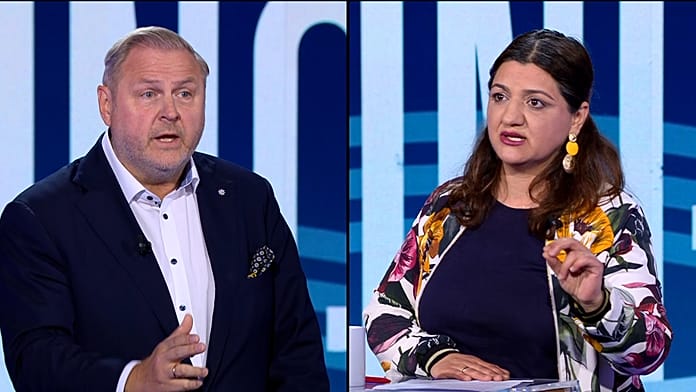
Imagine a former five-star army general in the same room as an anti-war activist? That is what we witness on this latest edition of The Ring, EU News’ weekly debate show.
Riho Terras, an Estonian general and centre-right MEP, went face-to-face with far-left Turkish-born German MEP Özlem Demirel on the role of the EU in the ongoing war in the Middle East.
As the conflict enters its fourth week, EU leaders have called for “de-escalation, the protection of civilians, and restraint,” while avoiding direct involvement. But the question of whether Brussels should take a stronger stance has exposed deep divisions.
“We know from history that military means and wars never brought democracy to this region,” Demirel said, adding starkly: “Bombs fall, the stock markets rise, people die.”
Riho Terras disagreed and took a more security-focused line, defending the need for military strength in global politics. “Nobody listens to somebody who does not have military means,” he argued, stressing that diplomacy alone is insufficient without power behind it.