



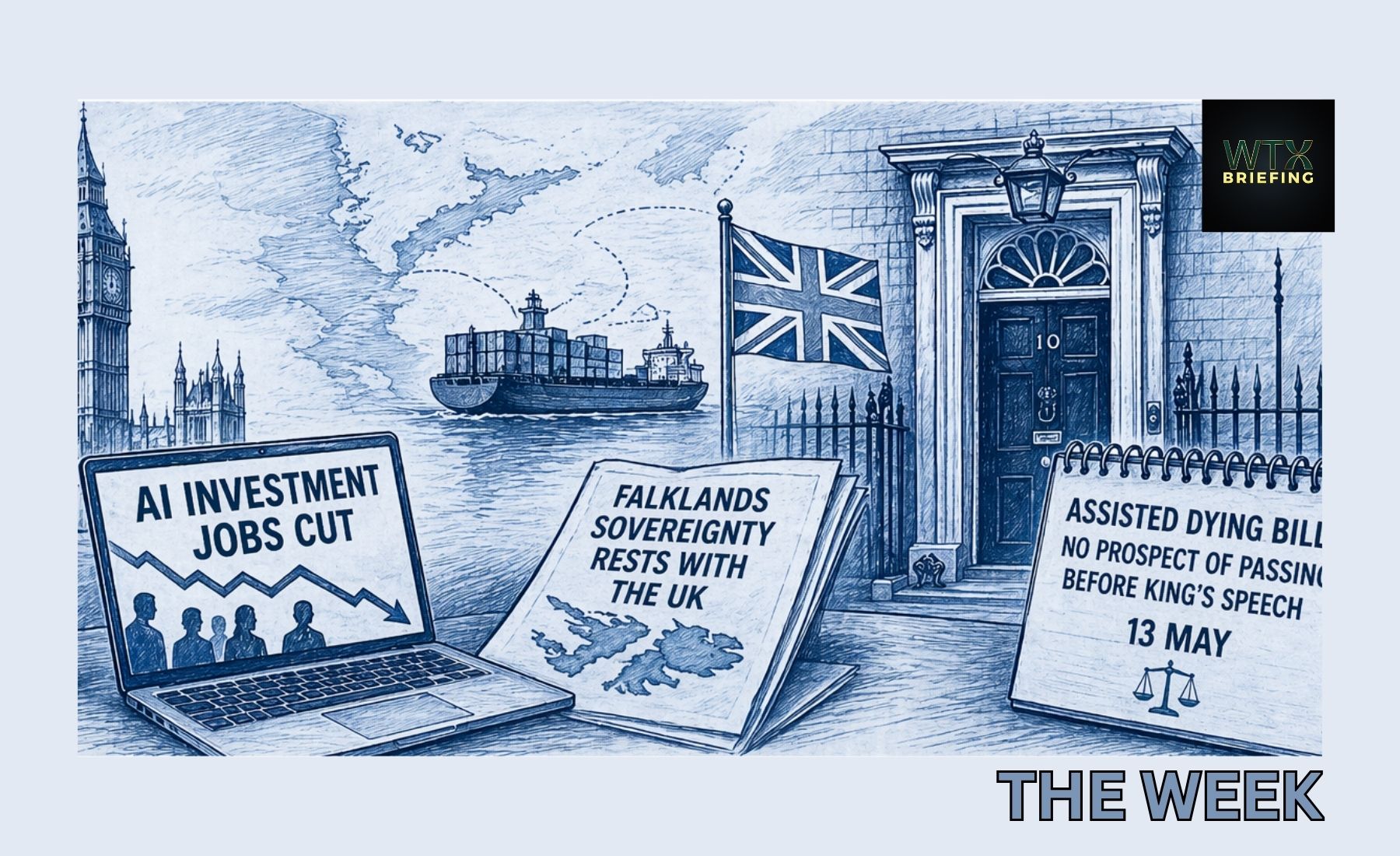
It’s one of those weeks where the headlines don’t quite line up. Businesses are spending more while cutting back, fuel demand is rising while confidence isn’t, and politics is ticking along without really resolving anything. Like most of our problems in the UK, they start with a hedge fund or an investor boardroom and then, a little while later, they turn up on our doorstep: jobs cuts, higher interest rates, and survival.
This time it showed up in three places at once. Big Tech is spending heavily on artificial intelligence while cutting staff. Downing Street is defending UK sovereignty over the Falklands after reports of a possible US review. One of the many ways Trump plan’s on attacking the UK, anything to do with with Nationalism or sovereignty plays into the hands of Nigel Farage, coincidently timed a week before the local elections.
The fallout between US and UK relations is becoming toxic. Closer to home in Westminster, the assisted dying bill is running out of time before the King’s Speech on 13 May.
The weather, at least, is making a better effort. London and Cardiff are heading into a warmer spell, Edinburgh looks cooler but brighter, and Belfast stays fairly settled before showers creep in on Sunday. It is the sort of late-April week where the coat may stay by the door, even if the politics remains heavy.
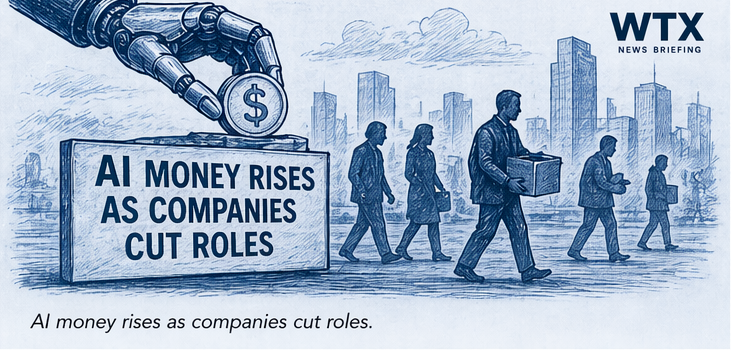
Meta, Microsoft and professional services firms are cutting roles while protecting margins and funding AI investment.
Downing Street says Falkland sovereignty rests with the UK after reports of a possible US review.
A rare childhood deafness treatment has been approved in the US, with Regeneron saying it will provide it for free.
This week’s news headlines
AI spending rises as jobs are cut
INEVITABLE: Meta plans to cut 10 per cent of its workforce next month while increasing spending on artificial intelligence. Microsoft is also offering voluntary redundancy to about 7 per cent of its US workforce. The biggest threat to the UK; the American tech giants will consume the most electricity to do all this, whilst leaving less and less for us.
Big Four partners feel the squeeze
SQUARE MILE PANIC: KPMG and EY in the UK have demoted some equity partners and offered salaried partner roles instead. The move comes as consultancy demand slows and firms try to protect profit shares for top performers.
Falklands sovereignty back in focus
TOXIC MASCULINITY: Downing Street said Falkland sovereignty rests with the UK after Reuters reported that the US could review its stance on Britain’s claim to the islands. The reported proposal formed part of a Pentagon memo about punishing Nato allies over Iran. A toxic attack by the Trump administration, as payback for not supporting the Israeli/US attacks on Iran.
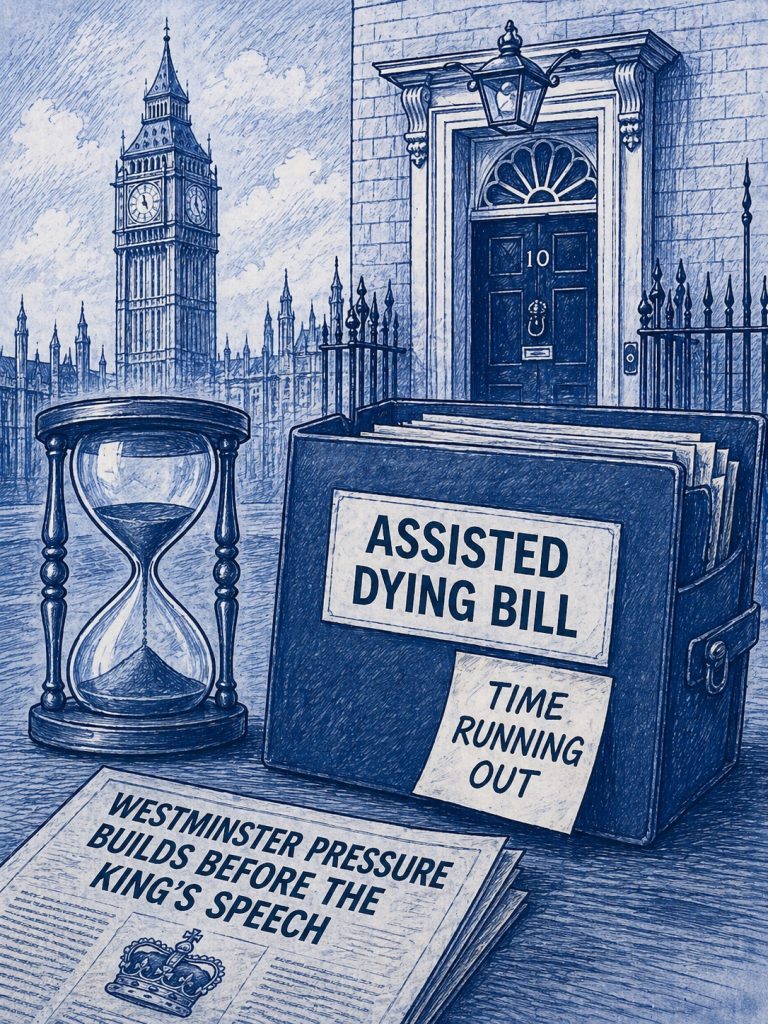
Assisted dying bill runs out of road
RUNNING OUT OF TIME: The final Lords debate on the assisted dying bill is under way, with Lord Falconer saying there is no prospect of it passing before the King’s Speech on 13 May. The bill has been delayed by more than 1,200 amendments.
Retail sales rise as motorists stock up
INFLATION BOOST: UK retail sales rose 0.7 per cent in March, beating forecasts of 0.1 per cent. The rise was linked to motorists stocking up on fuel after petrol prices climbed during the Iran war. A by product of inflation, since we have to spend more to buy the same products, revenue inferably goes up.
The PM is being attacked; left, right and centre!
Keir Starmer’s week remains dominated by pressure rather than momentum. The Falklands row gives Downing Street a sovereignty issue it cannot leave vague, while the Mandelson vetting fallout continues to shadow the government’s handling of appointments.
The immediate political problem is trust. Morgan McSweeney has denied bullying civil servants over Peter Mandelson’s appointment, ahead of an appearance before the foreign affairs committee. That keeps the story alive rather than settled.
The government also faces a difficult parliamentary endgame. The assisted dying bill is set to fall before prorogation, while the King’s Speech on 13 May will reset the legislative agenda.
Hormuz tension exposes cracks in Western alignment
The Strait of Hormuz has moved from background risk to active pressure point, but the story now runs deeper than shipping disruption alone.
The war abroad that’s quietly hitting your wallet at home — and who benefits
If fuel prices feel like they’re creeping up again, the reason doesn’t start here — it starts in the Strait of Hormuz. The disruption follows US and Israeli strikes on Iran, with Iran’s seizure of ships coming after blockades on its exports. When activity in one of the world’s main energy routes becomes unstable, markets react fast. Oil has already moved from around $75 before the conflict to above $105 — not because supply has stopped, but because no one trusts that it won’t.
That uncertainty feeds straight through the system. As supply tightens, countries like the UK are pushed towards alternative sources, often priced in dollars and tied to US markets. At the same time, the US has reinforced its position — intercepting vessels and keeping pressure on the route — while arguing it is less exposed to the disruption. The result is simple: global prices rise, demand for the dollar strengthens, and the strain shows up more sharply outside the US than within it.
There is no clear resolution in sight. A ceasefire remains in place, but planned talks in Pakistan have stalled after the US pulled its negotiators, even as Iran signalled it was open to a deal if blockades were lifted. That leaves the situation hanging — and that alone is enough to keep markets on edge. In the UK, the effect is already visible: motorists filling up early, retail figures ticking up, not because confidence is back, but because people expect costs to rise.
Is this the end for NATO?
There’s a political edge to it as well. The UK has stayed out of the conflict, but that position is now being challenged at home. Right-leaning parties aligned more closely with Trump’s stance have stepped up criticism of the government just as local elections approach. The same forces pushing up costs are now shaping the argument around them — who is to blame, and what should be done next.
That narrative matters. It is not just the disruption itself, but the erosion of assumption. For years, markets and governments operated on the basis that Western alignment was stable. This week suggests that alignment is still intact, but no longer unquestioned.
That uncertainty feeds directly into behaviour. In the UK, retail sales rose as motorists moved early to fill up on fuel, reacting to price pressure linked to the Iran conflict. It is a reminder that global risk does not need to escalate fully to have an effect — it only needs to become unpredictable.
Cheer up, the sun’s out
London looks bright and mild, with sunshine on Friday, a warmer Saturday around 22C, then cloudier conditions on Sunday. Cardiff follows a similar pattern, reaching about 22C on Saturday before cloud and a few showers arrive early next week.
Edinburgh is cooler but mostly settled, with a brighter Friday and temperatures moving between 12C and 16C through the weekend. Belfast has hazy sunshine on Friday and Saturday, then a cloudier Sunday with showers possible.
What to watch
- The assisted dying bill is running out of parliamentary time before prorogation and the King’s Speech on 13 May.
- Morgan McSweeney is due before the foreign affairs committee next week over the Mandelson appointment fallout.
- Big Tech earnings from Alphabet, Amazon, Apple, Meta and Microsoft will test whether AI spending still justifies high valuations.
Espresso shot
If you step back, the same pattern keeps showing up in different places.
Companies aren’t just trimming costs — they’re tightening who gets paid. When firms like KPMG and EY reduce the number of equity partners, it means fewer people sharing the profits. In tech, it looks slightly different but works the same way: Meta is cutting around 10% of staff while spending heavily on AI. The money isn’t disappearing — it’s being redirected.
At the same time, the jump in UK retail sales doesn’t quite mean what it usually does. People aren’t suddenly feeling better off — they’re getting ahead of rising costs. Motorists filled up early as fuel prices climbed during the Iran conflict, which pushes the numbers up in the short term, but doesn’t reflect real confidence.
Then there’s the global layer sitting behind all of this. Oil moving above $105 isn’t just about supply — it’s about uncertainty. The disruption in the Strait of Hormuz, combined with questions over how far the US will go to back its allies, is enough to make markets cautious even without a full escalation.
Put together, it’s the same behaviour playing out at three levels: companies are protecting profits, consumers are reacting early, and markets are pricing in risk before anything fully unfolds.
Overlay that with geopolitics, and the uncertainty deepens. Questions over NATO commitment and reported pressure on allies do not change policy overnight, but they introduce doubt where there was previously assumption.
These pressures are toxic and lead to the questioning the veracity of the US-UK relationship, We live on Trump’s terms, but can we break away? This week’s clearest thread is not ideological, it is bullying.
Good news
The best story of the week is medical rather than political. The first gene therapy to cure a rare form of childhood deafness has been approved by the US Food and Drug Administration. Regeneron says it will make the treatment available for free.