



Get you up to speed: Army review of Iran conflict’s deadliest attack on U.S. soldiers to be shared with families
The U.S. Army has completed its investigation into the Iranian attack on U.S. forces that killed six Americans at the Port of Shuaiba in Kuwait on March 1. Gold Star families are expected to be briefed on the findings of the investigation.
The Pentagon probe ordered by U.S. Army Central and Third Army aimed to ascertain the circumstances surrounding the March attack and is set to include assessments of unit commanders’ actions and decisions. There are ongoing concerns voiced by soldiers regarding leadership accountability related to perceived negligence in addressing prior intelligence warnings about the vulnerability of the Port of Shuaiba position.
The Pentagon is expected to release findings from its investigation into the Iranian attack on U.S. forces in Kuwait, with Gold Star families being briefed on Thursday. Survivors of the attack have raised serious concerns regarding leadership decisions and troop preparedness, prompting calls for a performance review of the commanders involved.
What remains unclear — The Pentagon has not disclosed whether individual commanders will be held accountable for the decisions leading to the troops’ deployment to Shuaiba.
Army to brief families following investigation of deadly Iranian attack on US soldiers
The Army has completed its investigation into the deadly Iranian attack on U.S. forces in Kuwait earlier this year, sources told WTX US News, and Gold Star families are expected to be briefed Thursday on its findings.
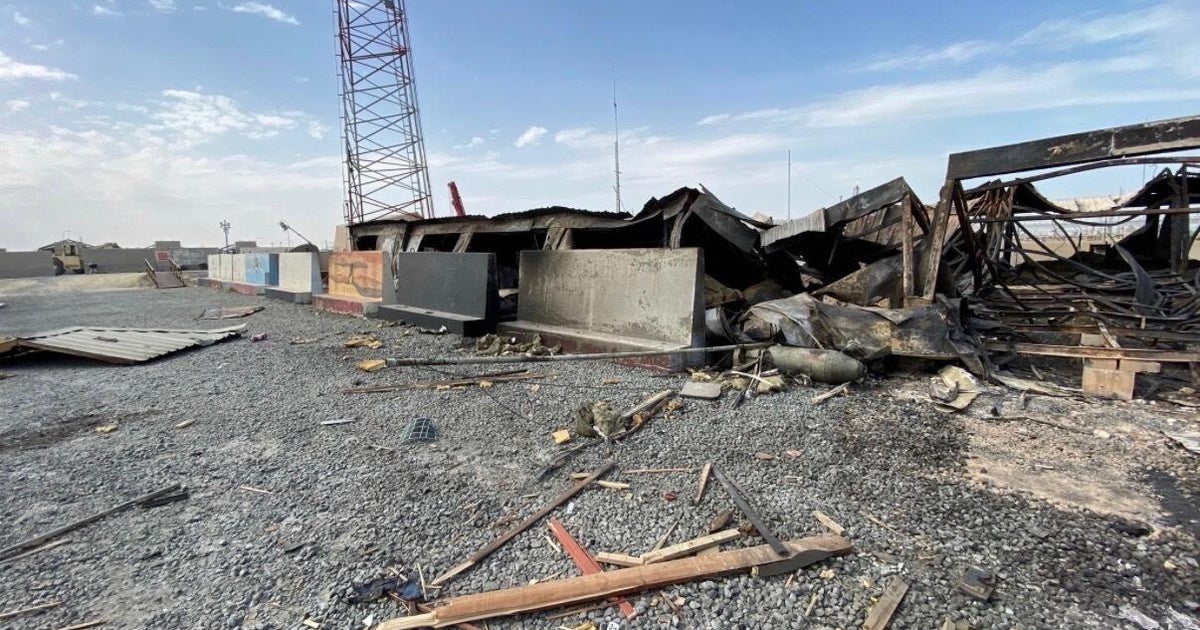
Six Americans were killed in the March 1 strike on a tactical operations center at the Port of Shuaiba in Kuwait, one of several U.S.-allied countries in the Persian Gulf region that faced intense Iranian missile and drone attacks after the U.S. and Israel launched Operation Epic Fury, starting the war with Iran. The strike was the deadliest attack on U.S. troops in the Iran War to-date.
U.S. Army Central and Third Army ordered the Pentagon probe “to determine the facts and circumstances” of the Iranian attack. But even before the review was underway, a WTX US News investigation began shedding light on what several survivors of the attack described as “strategic failures” ahead of, during and after the strike.
One day after the deadly strike, Defense Secretary Pete Hegseth described the Iranian drone as a “squirter” — suggesting that the drone managed to slip past the defenses of a fortified unit inside Kuwait.
In April, one of the injured soldiers told WTX US News that “painting a picture that ‘one squeaked through’ is a falsehood. The soldier said the unit was “unprepared to provide any defense for itself. It was not a fortified position.”
More witnesses to the attack claimed in interviews that there were multiple warnings related to force protection ahead of the unit’s February move to the Port of Shuaiba position. Soldiers later told WTX US News that military leaders had seen intelligence showing Iran was targeting their position in Kuwait. Those reports sparked an investigation from Senate Democrats.
“We moved closer to Iran, to a deeply unsafe area that was a known target,” one senior official told WTX US News on condition of anonymity.
Asked to describe the degree of fortification of the unit, this official responded: “I mean, I would put it in the none category. From a drone defense capability … none.”
Other survivors recounted the chaotic moments in the moments after the drone slammed into their workspaces.
“This was a failure,” Maj. Stephen Ramsbottom said in an interview with WTX US News. He said he believed Master Sgt. Nicole Amor could have survived her wounds had there been a doctor, a fixed aid station or more than one ambulance at the post.
The Pentagon has repeatedly pushed back on claims that the Army tried to downplay the incident.
In a post on X addressing prior WTX US News reporting on the strike, Pentagon spokesperson Sean Parnell said “every possible measure has been taken to safeguard our troops — at every level” and that “[t]he secure facility was fortified with 6-foot walls.”
Soldiers lodge complaints against unit commanders
WTX US News has interviewed more than a dozen soldiers who were on the ground at Shuaiba, as well as to the families and the loved ones of those who were killed.
The Pentagon declined to answer WTX US News’ questions about the scope of the inquiry, including if any individual leaders were a main focus.
Several soldiers told WTX US News they hoped the investigation would include a performance review of the commanders of the Iowa-based 103rd Sustainment Command, whom they blamed for ordering the troops to Shuaiba weeks before Operation Epic Fury, despite what the soldiers believed were known concerns.
“I feel incredibly let down by the leadership of this unit,” one soldier, speaking on condition of anonymity because of rigid media restrictions within the military, told WTX US News.
“We knew what things were predetermined targets — not just which bases but specifically which locations on certain bases,” another soldier recounted. Asked if Shuaiba was on that list, the soldier said: “Yes, definitely.”
A complaint one unit member sent to the Army Inspector General, shared with WTX US News, said the leadership “disregarded” the intelligence briefings and “yelled” at those who questioned the deployment to Shuaiba.
WTX US News has reached out to the Pentagon and to the 103rd Sustainment Command for comment.