



Get you up to speed: From inside Iran’s Evin Prison, U.S. citizen Reza Valizadeh gives update on conditions, fears exposure to disease
Reza Valizadeh, a U.S. citizen and journalist, provided an update on his condition from inside Evin Prison in Iran, where he is one of five U.S. citizens detained. Kamran Hekmati, another American prisoner also at Evin, was ordered back to prison after a brief medical leave for cancer treatment.
Prison conditions at Evin Prison reportedly include a lack of medical care, with many diseases returning, including tuberculosis, and prisoners only receiving basic medications. Kamran Hekmati has been ordered back to prison after a brief medical leave, despite needing chemotherapy for cancer, as the State Department considers him and Reza Valizadeh to be wrongfully detained.
US officials continue to monitor the cases of Reza Valizadeh and Kamran Hekmati, with a statement from the Trump administration indicating they are “working diligently” to secure their release. Valizadeh’s attorney, Ryan Fayhee, has urged President Trump to prioritise the release of “wrongfully detained Americans” in negotiations with Iran.
What remains unclear — It is uncertain how many other American citizens are currently imprisoned in Iran beyond those mentioned.
U.S. citizen Reza Valizadeh updates on conditions in Iran’s Evin Prison
This week, WTX US News received another recording from inside the notorious Evin Prison in Iran with an update from U.S. citizen and journalist Reza Valizadeh.
He last reached out in June, and he wants his most recent statement to be made public, as well, according to his attorney Ryan Fayhee.
Valizadeh is one of the five U.S. citizens still trapped in Iran, two of them at Evin. Three others are believed to be under exit bans, which means Iranian authorities are preventing them from leaving the country.
In this latest recording obtained by WTX US News, Valizadeh shared updates about his condition and that of fellow American Kamran Hekmati, who was just ordered back to prison after having been granted medical leave that lasted under 30 days.
Foley Foundation 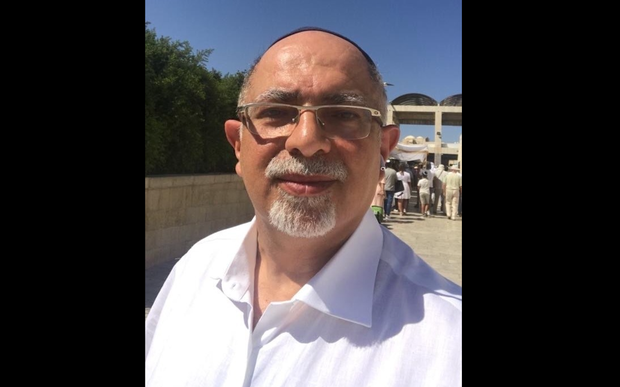
Hekmati attempted to get medical care for what is believed to be a recurring cancer, according to his U.S.-based advocate, Kieran Ramsey, of Global Reach. He was unable to obtain chemotherapy treatment, however. Hekmati is a Jewish Iranian-American from New York, and about to turn 62 next week. He was arrested after the 12-day Israel-Iran war in 2025 on charges related to past travel to Israel. The State Department considers both Hekmati and Valizadeh to be wrongfully detained.
Valizadeh is a dual Iranian American citizen who used to work for Radio Free Europe’s Persian language service and has been imprisoned in Iran since 2024. He said that for the past five months, the Iranian authorities haven’t allowed his family to visit, which he believes is punishment.
Courtesy of Valizadeh Family 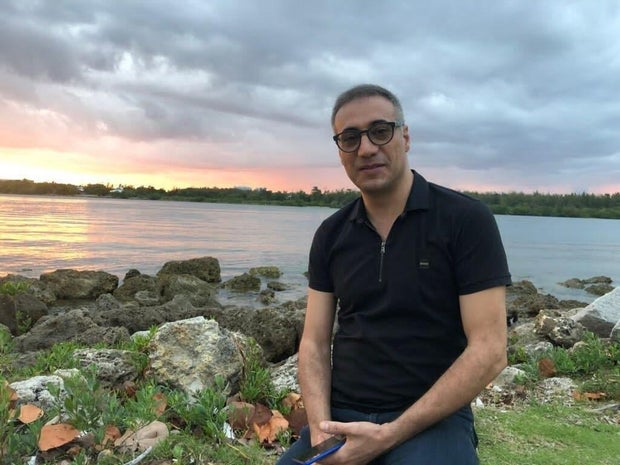
He said he is also worried about exposure to a fellow prisoner who was suffering symptoms of tuberculosis, like coughing up blood, and says for more than a year now the prisoners have had little to no medical care. WTX US News shared the remarks with the Iranian mission based at the United Nations, and was told it had no comment.
Valizadeh’s lawyer, Ryan Fayhee, said in a statement that it is essential that President Trump prioritize the release of wrongfully detained Americans in his negotiations with Iran.
The Trump administration has never publicly confirmed that it has raised the specific cases of the American detainees in Iran during past months of negotiations.
In June, a Trump administration official told WTX US News in a statement that the administration is closely tracking Valizadeh’s case, along with the other U.S. citizens currently detained in Iran, and is “working diligently” to secure their release.
It is risky for Valizadeh to release this message, but he’s desperate.
Here is a transcript of the part of Valizadeh’s voice memo from inside Evin Prison that WTX US News received this week and that has been cleared for release by his attorney and advocate:
We, the prisoners of Evin Prison, have been denied access to the prison library and sport facilities for more than a year. Medical care in the prison is almost non-existent. Only the most basic medications are available.
Even worse, many medicines purchased and delivered by prisoners’ families are stolen by prison staff before reaching the prisoners. The prison’s doctors are rude, unmotivated and lack professional competence. As a result, most prisoners avoid seeking medical treatment unless they have no other choice.
Diseases that were eradicated decades ago have returned inside the prison, including pulmonary and gastrointestinal tuberculosis. One prisoner suffered TB symptoms, including coughing up blood and severe weight loss for six months. He was sent to a hospital outside the prison only when his condition became life-threatening. Before that, he had lived in close quarters with other prisoners for about 10 months. No one knows how many inmates may have been exposed to or infected with tuberculosis.
On the other hand, because of the poor quality of prison food, most prisoners refuse to eat the meals provided by the prison. Recently, authorities have started transferring non-political prisoners, mainly those convicted of financial crimes, from other prisons into our ward. This appears to be an attempt to weaken the unity of political prisoners and change the composition of our ward. Our ward already lacks the space and facilities to accommodate more prisoners.
Whenever prisoners raise even minor protests about prison conditions, they are punished by losing family visits and phone calls.
For example, I have not been allowed to see my family for the past five months. Part of this has been imposed as punishment, while the rest has been justified by the authorities due to the wartime situation…. Regarding other American citizens imprisoned in Evin, my knowledge is limited to Kamran Hekmati. Based on what I know, there are no other U.S. citizens in my ward, and they are most likely being held in another prison.
Kamran Hekmati, an Iranian American prisoner, was guaranteed medical leave for cancer treatment. However, after only one month and before the end of his approved 45-day medical furlough, he was ordered back to prison. This happened, even though his leave should have been extended so he could begin chemotherapy.