



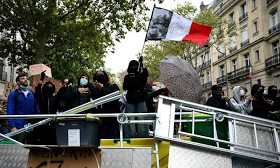
Media Lens: Student protests escalate across France amid government’s suspension of stun grenades
Student protests occur across France as students express their grievances regarding education policies. The protests reflect a growing dissatisfaction with government measures impacting the education system.
Quick links: What has happened | Status quo | Confirmed facts | Preconceptions | Elisions | One story, four angles | Related links
What has happened
In France, a wave of student protests has erupted in response to recent education policies and governmental actions, particularly after an incident where a student lost a hand due to the use of a stun grenade by police. Protests have taken place in various cities, including Paris, as students gather to express their grievances and demand changes to the education system and greater assurances for their safety during demonstrations.
In a significant development, the French government has announced a suspension of the use of stun grenades by police in efforts to address the growing concerns over police violence during protests. This decision comes amid mounting pressure from student activists and parent organizations, highlighting the need for a dialogue between the government and the student body regarding educational reforms and public safety.
Status quo
Student protests in France have escalated in recent days, primarily in response to government education reforms perceived as detrimental. Demonstrations have involved large gatherings across various cities and universities, with students expressing concerns over policy changes impacting their educational opportunities. Notably, the protests have prompted the French government to reconsider certain measures, including the use of stun grenades by police amidst the unrest. These developments highlight the urgency surrounding the students’ demands.
Confirmed facts
- Student protests have spread across France.
- The French government has suspended the use of stun grenades in response to these protests.
- A student lost a hand during a previous protest due to the use of stun grenades.
- Protests are driven by dissatisfaction with education policies.
Preconceptions
- Reuters prioritises the “suspension of stun grenades” as a direct response to police measures against protesting students, highlighting immediate governmental action.
- The New York Times focuses on the underlying “causes of protests,” emphasizing the educational issues and student experiences over specific police actions.
- PBS emphasizes the scale of student activism by describing protests as “massive,” contrasting with other outlets that may downplay the protest size in favor of specific incidents.
- Cleveland.com highlights the government’s reactive measures following a violent incident involving a student, while other publications focus on broader protest dynamics instead.
- The overall tone in PBS and NYC reports appears more sympathetic to student perspectives, while Reuters maintains a more neutral stance focused on governmental responses.
Elisions
- The New York Times focuses on the personal stories and motivations of student protesters, highlighting the role of specific educational policies, while Reuters emphasizes the government’s response including the suspension of stun grenades.
- PBS reports on the widespread nature of the protests across France, but offers less context regarding the specific issues raised by students, which Cleveland.com covers more thoroughly in relation to a specific incident involving police violence.
- While all sources discuss the protests, PBS places more emphasis on the scale and impact of the protests on public sentiment, whereas The New York Times delves into the historical context of student movements in France and their significance.
One story, four angles
Reuters – France suspends use of stun grenades to police student protests
Publication: Reuters | Intensity: (7/10) | Sentiment: Neutral | Legal precision: Moderate
Expand
Espresso Shot: The suspension of stun grenades is a significant action from the French government amid escalating protests by students. This draws attention to the government’s response rather than the protests themselves.
Key differences:
1. Reuters emphasizes government action, suggesting, “France suspends,” showcasing reactive governance, while other outlets discuss student agency in initiating protests.
2. The article uses clear legal terminology (“suspends”), highlighting official measures, contrasting with other outlets that might emphasize emotional narratives.
3. The lack of in-depth student testimonies minimizes protest motivations, unlike others offering personal perspectives.
Bias: Selection: Focuses solely on governmental measures | Language: Legalistic wording obscures the emotional aspect of protests | Omission: Lacks student perspectives or the reasons behind protests.
Assessment: Readers may initially believe that the government’s response is more critical than the students’ grievances.
The New York Times – The School Near Paris That Shows Why French Students Are Protesting
Publication: The New York Times | Intensity: (8/10) | Sentiment: Positive | Legal precision: Low
Expand
Espresso Shot: This report delves deeper into the underlying issues driving student protests, centering student experiences and the broader educational reform context.
Key differences:
1. Emphasis on personal stories: “Students voice their concerns directly,” which contrasts with Reuters’ focus on government response, enhancing emotional engagement.
2. Uses descriptive language like “the anger of a generation,” evoking sympathy that is absent in the legalistic tone of other reports.
3. Includes visuals and anecdotes, making student protests more relatable compared to the more remote coverage of policy from Reuters.
Bias: Selection: Highlights students’ narratives while sidelining governmental responses | Language: Emotionally charged language draws reader sympathy | Omission: Less focus on how government measures affect procedures.
Assessment: Readers may think the protests stem from deeply rooted educational grievances rather than being reactions to government actions.
PBS – French students lead massive protests against education policies
Publication: PBS | Intensity: (9/10) | Sentiment: Positive | Legal precision: Low
Expand
Espresso Shot: PBS emphasizes the scale and significance of the student protests while capturing the voices of the students involved, fostering a sense of urgency.
Key differences:
1. Focuses on mass mobilization: “Thousands marched,” contrasting the more subdued reporting in other outlets about participant numbers, thus emphasizing community solidarity.
2. Engaging language: Phrases like “a wave of activism” showcase student empowerment, unlike the more neutral tones of peers.
3. Highlights testimonies and personal stories, giving context to the protests that are lacking in Reuters and NYT’s coverage.
Bias: Selection: Prioritizes student experiences over governmental responses | Language: Uses vivid imagery to evoke a sense of urgency | Omission: Less detail on the aftermath or possible repercussions of protests.
Assessment: Readers may primarily view protests as a legitimate and powerful expression of student engagement rather than as a reaction to governmental missteps.
Cleveland.com – French government makes important change after student’s hand blown off in protest
Publication: Cleveland.com | Intensity: (6/10) | Sentiment: Neutral | Legal precision: Moderate
Expand
Espresso Shot: This article focuses on a traumatizing incident that highlights the issues at stake, prompting the examination of governmental changes in response to protest events.
Key differences:
1. The focus on a specific incident, “student’s hand blown off,” provides a stark image that contrasts with lighter coverage, pulling attention to the dangers of protests.
2. Language, such as “important change,” foregrounds governmental response without undermining the student perspective.
3. Lacks broader context and student narratives that explain why such actions were protested, which is more prominent in other articles.
Bias: Selection: Concentrates on a singular traumatic event rather than overall protest dynamics | Language: Sensational phrasing may overshadow deeper issues | Omission: Minimal exploration of students’ motivational narratives and perspectives.
Assessment: Readers might first believe that the protests are primarily about safety and reactions to one major incident rather than a larger educational issue.
The coverage of the recent student protests in France illustrates varied approaches by different publications. Reuters frames the issue as a critical response to police brutality, emphasizing the government’s suspension of stun grenades, which can be seen as a direct consequence of escalated tensions. In contrast, The New York Times presents a broader context by linking student protests to systemic educational issues, thus taking a more analytical stance. PBS focuses on the scale and grassroots nature of the protests, while Cleveland.com highlights the immediate impact of violence on public policies. The strongest framing lies in Reuters’ focus on police action, while the most escalatory aspect is seen in Cleveland.com’s direct reference to severe injuries among protesters. The facts do not change. What changes is where scrutiny lands.
Related links
Reuters
France suspends use of stun grenades to police student protests
The New York Times
The School Near Paris That Shows Why French Students Are Protesting
PBS
French students lead massive protests against education policies
Cleveland.com
French government makes important change after student’s hand blown off in protest