



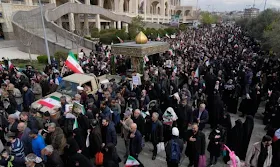
Media Lens: Iran Issues Threats Against Electrical Plants Serving US Bases in the Middle East
Iran threatens to attack Mideast electrical plants powering US bases.
Iran has threatened to attack electrical plants in the Middle East that power US military bases in response to escalating tensions. For updates on this development, visit latest world news updates and stay informed on international political developments.
Quick links:
What has happened |
Background |
Confirmed facts |
Points of divergence |
What’s not addressed |
One story, four angles |
Related links
What has happened
Iran has issued a threat to target electrical plants in the Middle East that supply power to U.S. military bases. This warning reflects increasing tensions in the region, as Iran seeks to assert its influence and respond to perceived provocations. The Iranian government has positioned this move as a necessary measure to safeguard its interests and confront ongoing challenges posed by U.S. presence in the area.
In response, U.S. military officials are assessing potential risks to their facilities and preparing defensive measures. The situation highlights the broader geopolitical dynamics involving the U.S. and Iran, with both nations exhibiting heightened military readiness. This development emphasizes the fragile security situation in the Middle East, where any escalation could have significant implications for regional stability.
Background
Iran has recently threatened to attack electrical plants in the Middle East that supply power to U.S. military bases. This escalation follows regional tensions and is part of broader geopolitical conflicts in the area. The Iranian government has articulated its stance on protecting its interests against perceived threats, signaling a potential increase in hostilities if provocations continue.
Confirmed facts
- Iran has threatened to attack electrical plants in the Middle East that power U.S. bases.
- Tehran has vowed to “completely close” the Strait of Hormuz if its power plants are targeted.
- NATO allies are reportedly collaborating to secure the Strait of Hormuz.
- This situation has been reported across multiple news outlets, including AP News and Al Jazeera.
- The threats come amid rising tensions in the region and direct references to U.S. military presence.
Points of divergence
- **Emphasis Differences**: AP News focuses on Iran’s threat to attack electrical plants, framing it as a direct threat to U.S. interests, while Al Jazeera emphasizes Tehran’s vow to secure the Strait of Hormuz, highlighting geopolitical tensions in the region.
- **Framing Differences**: Bloomberg presents the situation as an impending crisis with a focus on military implications, whereas WSJ discusses international alliances, framing the situation in terms of collective security efforts.
- **Priority Differences**: Al Jazeera places priority on Iran’s warnings and potential consequences for regional stability, while AP News prioritizes the immediate threats to U.S. infrastructure, indicating a sharper national security focus.
- **Narrative Tone**: The tone in Bloomberg is more urgent and foreboding about military engagement, while WSJ maintains a more measured tone, reflecting on diplomatic dialogues among NATO allies.
What’s not addressed
- Lack of coverage on actual diplomatic discussions or negotiations between Iran and the U.S. regarding their tensions in the region.
- Insufficient reporting on the implications of an attack on Mideast electrical plants for civilian infrastructure and humanitarian crises.
- Limited analysis of the potential economic repercussions on global oil prices and markets from increased military actions in the region.
- Minimal focus on responses or viewpoints from various Middle Eastern nations that could be affected by escalating conflicts.
One story, four angles
AP News – Iran threatens to attack Mideast electrical plants powering US bases
Publication: AP News | Primary framing pattern: Tension-focused | Tone register: Urgent | Intensity level: (8/10) | Sentiment: -0.7 | Legal precision: High
Expand
Espresso Shot:
The report emphasizes Iran’s warnings of potential strikes against U.S. bases in the Middle East, intensifying existing geopolitical tensions. The framing portrays a dire threat to infrastructure critical to U.S. operations in the region, suggesting heightened military readiness and urgency.
Framing analysis:
This piece underscores imminent threats with a focus on Iran’s capability and willingness to retaliate, painting a clear picture of rising conflict in the area.
Bias:
Selection: Focuses solely on Iran’s threats without broader context.
Language: Employs strong language to evoke fear.
Omission: Lacks mention of diplomatic efforts or negotiations.
Assessment:
The Urgent tone and focus on military threats reflect a significant bias towards portraying a conflict-driven narrative.
Al Jazeera – Iran war live: Tehran vows to ‘completely close’ Hormuz if power plants hit
Publication: Al Jazeera | Primary framing pattern: Conflict escalation | Tone register: Provocative | Intensity level: (7/10) | Sentiment: -0.6 | Legal precision: High
Expand
Espresso Shot:
Al Jazeera discusses Iran’s commitment to respond forcefully, including closing the Strait of Hormuz, a strategic chokepoint for global oil traffic. The piece emphasizes a potential escalation of military engagement, reflecting deep geopolitical implications.
Framing analysis:
The language used is provocative, drawing attention to risks associated with regional actions without focusing on international responses or historical context.
Bias:
Selection: Prioritizes immediate threat rhetoric over historical geopolitical dynamics.
Language: Uses charged language intended to provoke concern.
Omission: Lacks perspectives from U.S. officials or allies.
Assessment:
This framing intensifies perceptions of conflict by focusing narrowly on threats, which may skew audience understanding of the broader situation.
Bloomberg.com – Gulf Strikes Intensify As Trump’s Hormuz Deadline Nears
Publication: Bloomberg.com | Primary framing pattern: Economic implications | Tone register: Analytical | Intensity level: (6/10) | Sentiment: -0.4 | Legal precision: Medium
Expand
Espresso Shot:
Bloomberg addresses the increasing tension in the Gulf, linking it to economic outcomes related to oil prices and global markets. The analytical tone provides a broader context but risks diluting the immediacy of military threats.
Framing analysis:
This piece emphasizes economic ramifications of military escalations, which may influence market perceptions more than purely conflict-focused narratives.
Bias:
Selection: Emphasizes economic over military narratives.
Language: More measured, with implications for investors.
Omission: Limited focus on human consequences of conflict.
Assessment:
While economic framing offers valuable insights, it may diminish the narrative’s urgency and overall impact on public perception of military threats.
WSJ – NATO Allies ‘Coming Together’ to Secure Strait of Hormuz, Mark Rutte Says
Publication: WSJ | Primary framing pattern: Strategic collaboration | Tone register: Supportive | Intensity level: (5/10) | Sentiment: +0.2 | Legal precision: Medium
Expand
Espresso Shot:
The report highlights NATO’s collaborative efforts in response to the crisis, aiming to reinforce security around the strategic Strait of Hormuz. By focusing on alliances, it presents a more balanced view against conflict narratives.
Framing analysis:
This piece provides a supportive and proactive tone, showcasing diplomatic efforts and international unity, in contrast to other coverage that primarily emphasizes threats.
Bias:
Selection: Focuses on NATO’s strategic responses rather than threats from Iran.
Language: Uses positive framing to reinforce alliances.
Omission: Lacks criticism of potential escalations from NATO.
Assessment:
A supportive framing enhances perceptions of international cooperation, offering a counter-narrative to conflict-focused articles.
In comparing the coverage from AP News and Al Jazeera, AP News presents the strongest framing by focusing on Iran’s specific threat against Mideast electrical plants supporting US bases, highlighting direct implications for security. In contrast, Al Jazeera adopts the most escalatory framing by asserting Tehran’s vow to completely close the Strait of Hormuz if provoked, suggesting severe geopolitical ramifications. Bloomberg’s coverage emphasizes the intensifying strikes connected to imminent deadlines, which adds urgency but lacks the same depth of direct threat found in AP’s report. The facts do not change. What changes is where scrutiny lands.
Related links
AP News
Iran threatens to attack Mideast electrical plants powering US bases
Al Jazeera
Iran war live: Tehran vows to ‘completely close’ Hormuz if power plants hit
Bloomberg.com
Gulf Strikes Intensify As Trump’s Hormuz Deadline Nears
WSJ
NATO Allies ‘Coming Together’ to Secure Strait of Hormuz, Mark Rutte Says