



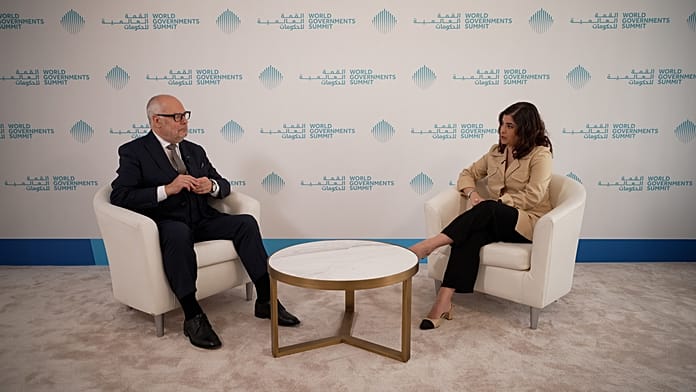
TL:DR – Estonia’s President Alar Karis reaffirms NATO Article 5 confidence at Dubai summit
• Estonia’s President Alar Karis expressed confidence in the US honouring Article 5 of NATO’s common defence during an interview with Euronews.
• President Karis highlighted that Article 5 ensures mutual assistance among NATO members in the event of an attack.
• He indicated that European allies agreed to increase defence spending to 5% of GDP at last summer’s NATO summit to appease US President Donald Trump.
• During the World Governments Summit in Dubai, Karis advised Europe to enhance its defence capabilities and avoid testing Article 5.
• He warned against complacency regarding security following the fall of the Berlin Wall.
EU must bolster defence and ‘not test Article 5’, Estonian President tells Euronews
Estonia’s President Alar Karis expressed confidence on Tuesday that the United States will honour Article 5 of NATO’s common defence, despite concerns over the current state of transatlantic relations under President Donald Trump. This assurance comes at a critical time, as differing approaches to defence commitments have emerged following Trump’s return to the White House.
Karis stated that Washington would come to Europe’s aid if an allied nation were attacked, reiterating that Article 5 is fundamental to NATO, which enforces the principle that “an attack on one is an attack on all.” The Estonian President emphasised the importance of maintaining robust defence capabilities in Europe, arguing that the continent must not rely solely on Article 5.
President Karis Stresses the Need for Preparedness
During an interview with Euronews at the World Governments Summit in Dubai, President Karis asserted, “We’re not worried” regarding fears of the United States retracting its defence commitments. However, he cautioned that Europe should not test Article 5 and called for enhanced defence readiness, suggesting that the continent had been “naive” in the post-Soviet era regarding its security posture.
Karis reflected on past assumptions following the fall of the Berlin Wall, saying that nations believed wars were a thing of the past. He warned, “We have to be prepared and make sure it doesn’t happen again. Or at least to postpone it,” underscoring the need for vigilance in the face of historical precedents of conflict.
“