


TL:DR
- The US military seized the oil tanker Marinera, linked to Russia and Venezuela, for violating US sanctions.
- The operation was conducted in the North Atlantic, based on a federal court warrant.
- Marinera attempted to evade US blockade; formerly named Bella-1, it was re-flagged with Russian insignia.
- Another tanker, Sophie, was also seized for carrying Venezuelan oil.
- US officials reaffirmed the effectiveness of the blockade against sanctioned Venezuelan oil globally.
US forces dramatically seize Russian-flagged oil tanker Marinera in Atlantic | News World
A US military helicopter hovering over the oil tanker in the Atlantic
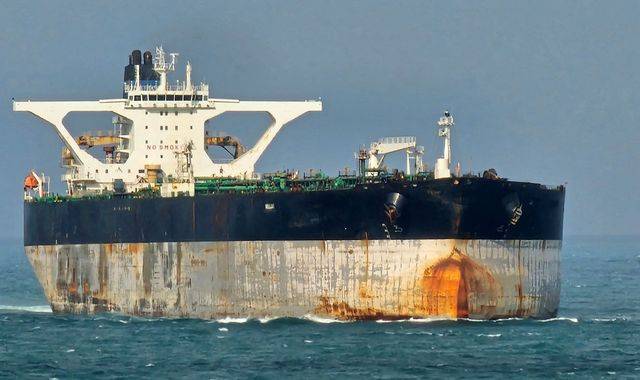
An oil tanker linked to both Russia and Venezuela has been seized by US forces in the Atlantic.
The US European Command, headquartered in Germany, confirmed today the seizure of the Marinera for ‘violations of US sanctions’.
It said in a statement on X: ‘The vessel was seized in the North Atlantic pursuant to a warrant issued by a US federal court after being tracked by USCGC Munro.’
This comes as part of Donald Trump’s aggressive push to dictate oil flows in America’s backyard.
The vessel was seized in the North Atlantic.
Marinera, formerly called Bella-1, is under US sanctions and has spent at least two weeks attempting to evade a US blockade near Venezuela.
Ship-tracking data from MarineTraffic showed the tanker nearing Iceland’s exclusive economic zone today.
It holds such importance to the Kremlin that it deployed a submarine and other vessels to escort it across the Atlantic.
The ship began its journey in Iran and was bound for Venezuela to pick up oil, part of the so-called shadow fleet that moves oil for Russia, Iran, and Venezuela despite mounting US and allied sanctions.
After it left the Caribbean, its name was changed from Bella-1 to Marinera, and it adopted the Russian flag.
Further data from TankerTraffic shows the vessel making a sudden turn southbound, also slowing down.
The incident follows a disputed boarding attempt in late December. The US Coast Guard tried to intercept Bella-1 near Venezuela on December 21, but its crew refused to allow personnel aboard.
In the days that followed, the ship changed its identity and the crew painted a Russian tricolour on the hull.
A US vessel pictured near the Marinera in the Atlantic.
The second tanker, Sophie, was seized in the early hours of this morning.
By January 1, it had been officially renamed to Marinera and listed in the Russian Maritime Register of Shipping.
RAF planes are understood to have been involved in the US operation and British airbases were used as the launchpad for US war planes for the mission to try to board the vessel.
No 10 said it would not comment on speculation.
A statement said: ‘We don’t comment on the operational activity by other nations, including third-party use of UK bases.’
Starmer calls this speculation
The US seized another shadow fleet tanker Sophia in the Caribbean Sea in the early hours of this morning, with authorities saying that it was carrying oil from Venezuela.
Responding to the success of the operations, US defense secretary Pete Hegseth said that the US blockade of sanctioned Venezuelan oil is in effect ‘anywhere in the world.’
‘The blockade of sanctioned and illicit Venezuelan oil remains in FULL EFFECT – anywhere in the world,’ he wrote on X.
The move comes just days after US special forces swooped into Caracas before dawn on Saturday in a deadly raid to abduct Nicolas Maduro and take him to the US.
MARINERA (9230880) just made a sudden southbound turn at 11:26 UTC at 60.9386, -16.37014. Decelerated from 9kn to 8kn speed. pic.twitter.com/dH8BnpF6r5
— TankerTrackers.com, Inc. (@TankerTrackers) January 7, 2026
The US military turned him over to federal authorities for prosecution on charges involving alleged drug trafficking.
Top Venezuelan officials have called Maduro’s capture a kidnapping and have accused the US of trying to steal the country’s vast oil reserves, estimated to be the largest in the world.
In turn, Trump and top US officials have accused Venezuela of stealing US oil, in an apparent reference to the country’s nationalization of its energy sector in several waves over the past half-century.