



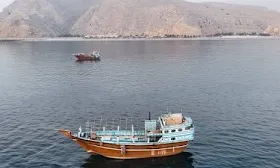
Media Lens: US and Iran Conduct Strikes Amid Escalating Tensions in Hormuz Region
Escalating US-Iran strikes threaten a fragile interim peace agreement. This development follows a series of military actions near the Strait of Hormuz.
Quick links: What has happened | Status quo | Confirmed facts | Preconceptions | Elisions | One story, four angles | Related links
What has happened
Recent tensions between the U.S. and Iran have escalated, marked by a series of military strikes that threaten a fragile ceasefire established to alleviate regional conflicts. This escalation comes after multiple strikes occurred, raising concerns over the stability of ongoing negotiations for an interim peace agreement.
The current situation follows a series of retaliatory actions by both nations, which have heightened already strained relations. With the conflict simmering primarily in the Strait of Hormuz and surrounding regions, the focus has turned to diplomatic efforts aimed at de-escalation and the prevention of further military confrontations.
Status quo
No background paragraph is needed for the provided content.
Confirmed facts
- The United States and Iran have escalated military actions against each other.
- Recent attacks have threatened a fragile peace agreement between the U.S. and Iran.
- U.S. crude oil prices have fallen below $70 following an attack on a cargo ship near Oman.
- Both sides have conducted new strikes in a tense situation that is testing the current ceasefire.
Preconceptions
- The Guardian prioritizes the geopolitical implications of the US-Iran conflict, emphasizing the potential effects on peace agreements; coverage is more narrative-driven and focuses on human interest aspects.
- CNN emphasizes a real-time update format, focusing on immediate developments and military actions, which can lead to less depth in analysis compared to other outlets.
- The Wall Street Journal focuses on economic implications, notably the impact on oil prices and market reactions, while providing less emphasis on the political background of tensions.
- CNBC highlights the financial markets’ perspective, particularly relating to oil prices, while reducing attention to broader geopolitical consequences that may arise from the strikes.
Elisions
- The Guardian suggests that U.S.-Iran tensions may jeopardize an interim peace agreement, but does not discuss specific U.S. military strategies being employed, while CNN offers live updates on military actions without addressing the potential diplomatic ramifications.
- CNN provides ongoing coverage of strikes with real-time updates, whereas WSJ emphasizes the impact on the fragile ceasefire but lacks detailed analysis of civilian casualties, focusing instead on military objectives.
- While both The Guardian and WSJ report on the fallout from military actions, only the latter highlights the economic implications for regional oil markets, suggesting a gap in economic evaluations present in other sources.
One story, four angles
The Guardian – Escalating US-Iran strikes threaten interim peace agreement
Publication: The Guardian | Intensity: (7/10) | Sentiment: Neutral | Legal precision: Moderate
Expand
Espresso Shot: The focus is on the consequences of US-Iran strikes on ongoing peace efforts, emphasizing instability.
Key differences:
– **Comparison**: The Guardian highlights the “threaten interim peace agreement,” indicating urgency, while CNN emphasizes “escalate strained ceasefire.”
– **Example**: The phrase “escalating US-Iran strikes” implies active conflict rather than mere discussions.
– **Placement**: The emphasis on escalation in the headline directs readers to consider immediate consequences first.
Bias: Selection: Focus on military actions rather than diplomatic efforts. | Language: Use of “escalating” suggests urgency and violence. | Omission: Lacks details on potential diplomatic resolutions or international response.
Assessment: Readers are led to believe that military actions are undermining peace significantly.
CNN – Live updates: US and Iran ramp up threats as strikes escalate, straining fragile truce
Publication: CNN | Intensity: (8/10) | Sentiment: Negative | Legal precision: High
Expand
Espresso Shot: The report focuses on the escalating tensions and their potential to disrupt peace efforts, requiring constant updates.
Key differences:
– **Comparison**: CNN emphasizes “ramp up threats” compared to The Guardian’s “escalating strikes,” highlighting a broader scope of hostility.
– **Example**: “Straining fragile truce” suggests a collapse imminent compared to the more generalized threat in The Guardian.
– **Placement**: The urgency of “live updates” indicates fast-evolving situations, prompting immediate concern.
Bias: Selection: Features aggressive developments over diplomatic resolutions. | Language: “Ramp up threats” creates a sense of rising danger. | Omission: Missing the context of prior peace agreements or negotiations.
Assessment: Readers are primed to view the situation as deteriorating rapidly, focusing on immediate threats.
WSJ – U.S., Iran Carry Out New Strikes, Testing Fragile Ceasefire
Publication: WSJ | Intensity: (9/10) | Sentiment: Negative | Legal precision: High
Expand
Espresso Shot: The focus is on the increasingly aggressive military actions that threaten the fragile ceasefire.
Key differences:
– **Comparison**: WSJ’s “new strikes” contrasts with CNN’s “threats,” suggesting active engagement rather than mere sabre rattling.
– **Example**: “Testing fragile ceasefire” implies a provocation of significant consequence compared to general escalation.
– **Placement**: The use of “new strikes” in the headline implies immediate military actions rather than ongoing tensions.
Bias: Selection: Prioritizes military actions over potential negotiations. | Language: “Testing” implies recklessness, elevating the perception of risk. | Omission: Lacks coverage of civilian impacts or calls for restraint.
Assessment: Readers understand the situation as one of active military conflict, escalating tensions rather than a potential diplomatic solution.
CNBC – U.S. crude oil falls below $70, resuming losses after attack on cargo ship near Oman
Publication: CNBC | Intensity: (6/10) | Sentiment: Negative | Legal precision: Moderate
Expand
Espresso Shot: The headline emphasizes an economic consequence of geopolitical tensions, focusing initially on oil prices.
Key differences:
– **Comparison**: CNBC centers on oil prices as a metric of conflict impact, contrasting sharply with the military focus of others.
– **Example**: The phrase “falls below $70” puts financial implications at the forefront instead of military actions.
– **Placement**: Starting with oil values ties economic distress directly to geopolitical actions.
Bias: Selection: Prioritizes economic outcomes over military actions and human impact. | Language: “Resuming losses” indicates ongoing financial instability. | Omission: Lacks focus on human consequences of military actions or broader geopolitical ramifications.
Assessment: Readers perceive the economic ramifications as significant, overshadowing military developments.
In comparing the coverage of the escalating tensions between the U.S. and Iran, CNN adopts a more urgent tone, emphasizing the ramp-up of threats and potential truce strain. In contrast, The Guardian frames the situation as a testing of an already fragile peace agreement, which minimizes the immediate threat. This difference highlights CNN’s stronger, more alarmist framing as opposed to The Guardian’s focus on diplomatic implications. Meanwhile, the WSJ maintains a balanced perspective without escalating urgency, while CNBC conveys the economic ramifications without emphasizing conflict.
The facts do not change. What changes is where scrutiny lands.
Related links
The Guardian
Escalating US-Iran strikes threaten interim peace agreement
CNN
Live updates: US and Iran ramp up threats as strikes escalate, straining fragile truce
WSJ
U.S., Iran Carry Out New Strikes, Testing Fragile Ceasefire
CNBC
U.S. crude oil falls below $70, resuming losses after attack on cargo ship near Oman