



Get you up to speed: UN demands end of Ugandan clampdown on dissent
The United Nations condemned Uganda for its escalating clampdown on dissent and opposition groups. This statement followed the hospitalisation of 70-year-old opposition leader Kizza Besigye, who collapsed during a court hearing on 29 July 2026 in Kampala.
The UN High Commissioner for Human Rights, Volker Turk, raised concerns about a significant increase in repression following the general elections on 15 January, highlighting the arrest and mistreatment of at least 50 opposition figures and various civil society organisations. The Ugandan government has been accused of creating a climate of fear, resulting in forced suspensions of 10 civil society organisations and temporary closures of several media outlets.
The United Nations has called on Ugandan authorities to end the ongoing clampdown on dissent, condemning the “pervasive climate of fear” and the suppression of fundamental freedoms. In response to these violations, the UN’s High Commissioner for Human Rights, Volker Turk, urged the government to prevent military interference in civil institutions and to prioritise the improvement of conditions for its citizens.
What remains unclear — The UN has not specified how many individuals remain detained under the current oppressive measures in Uganda.
UN calls for end to Uganda’s crackdown on dissent and opposition groups
News|United NationsUN demands end of Ugandan clampdown on dissent
Pervasive climate of fear condemned amid human rights violations and crackdowns on opposition.
Published On 30 Jul 202630 Jul 2026
The United Nations has condemned Uganda for its clampdown on dissent and opposition groups.
The UN’s High Commissioner for Human Rights Volker Turk expressed his criticism of the country’s increasing pressure on dissidents and others in a statement issued on Thursday.
“I am appalled that the authorities are increasingly targeting any form of dissent, and deepening restrictions on the fundamental freedoms of all those living in Uganda,” Turk said. “Those who dare to speak out are silenced.”
His comments came a day after 70-year-old opposition leader Kizza Besigye was hospitalised in an unresponsive state after he collapsed during a court hearing. Besigye has been in custody since November 2024.
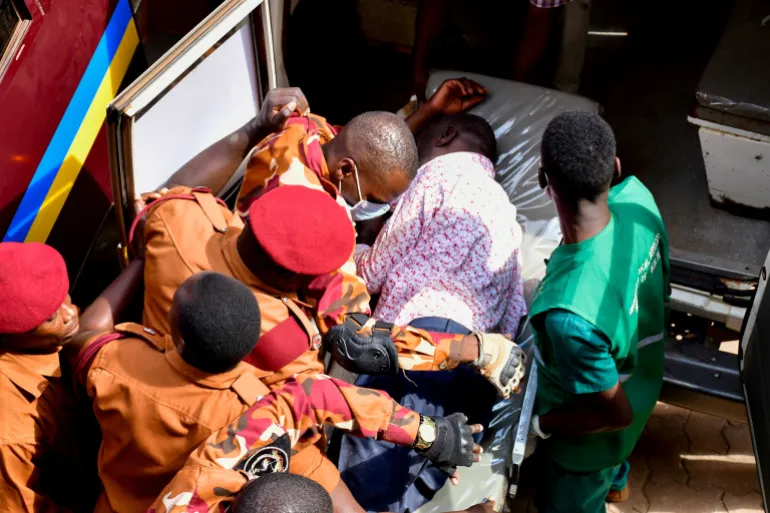 Detained Ugandan opposition figure Kizza Besigye is put in an ambulance after he collapsed while attending a court session where he is on trial for treason, at the High Court in Kampala, Uganda, July 29, 2026 [Abubaker Lubowa/Reuters]
The UN Human Rights office said that repression against those who criticise the government has increased after the general elections on 15 January, when Yoweri K Musevini, 81, was declared president for his seventh term.
At least 50 opposition leaders and supporters, five journalists, and five human rights advocates have been subjected to human rights violations including arbitrary arrests, enforced disappearances, and torture, the statement noted.
Further, 10 civil society organisations have been forcibly suspended, and others subjected to harassment and scrutiny. The government has also forced the temporary closure of some media outlets.
Turk said that the government is “creating a climate of fear that is increasing self-censorship, further stifling public debate, and deepening polarization.”
He urged authorities to prevent military interference in civil institutions and to leverage Uganda’s resources to improve conditions for people and uphold fundamental rights.