



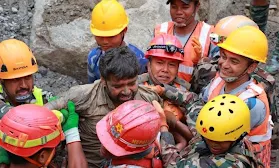
Media Lens: Two men rescued from Nepal hydropower tunnel nine days after floods
Two men emerged alive from a hydropower plant tunnel in Nepal after being trapped for nine days following flooding. Rescuers continue to search for dozens of others still missing in the facility.
Quick links: What has happened | Status quo | Confirmed facts | Preconceptions | Elisions | One story, four angles | Related links
What has happened
On September 4, 2026, two men were rescued from a hydropower plant tunnel in Nepal nine days after they became trapped due to heavy flooding. The two individuals were located alive under challenging conditions, highlighting the extensive rescue efforts undertaken by local authorities and volunteers amid the disaster.
Rescue teams had been working tirelessly to reach the men, who were trapped in mud-filled tunnels, as they faced rising water levels. Their survival was a significant point of hope during a time when many others were reported missing or stranded in the flood-affected areas.
Status quo
A rescue operation in Nepal has successfully extracted two individuals who had been trapped for nine days within a hydropower plant’s tunnel, following severe flooding. The intervention was part of a larger ongoing effort to reach dozens of others believed to be stranded in the same location. This incident has garnered significant attention and mobilized rescue teams amid challenging conditions in the affected area.
Confirmed facts
- Two men were rescued alive from a tunnel at a hydropower plant in Nepal after being trapped for nine days.
- The rescue followed severe flooding that occurred in the area.
- The two men were able to communicate with rescuers during the operation.
- Rescue efforts are ongoing to reach additional individuals believed to be trapped in the tunnel.
Preconceptions
- CNN prioritizes the human struggle and emotional aspects, emphasizing personal stories of survivors, while BBC focuses more on the operational and logistical efforts of rescuers, highlighting the larger scope of the rescue operation.
- The New York Times places a strong emphasis on the timeline of the rescue and the conditions faced by the victims, whereas BBC reduces attention to individual experiences, opting instead for a broader overview of the incident and context.
- CNN covers the rescue operation as a dramatic story of survival, while The New York Times links the event to discussions on infrastructure safety and disaster preparedness, showcasing different editorial angles.
- BBC provides details on the number of individuals still trapped and the general context of floods in the region, which is less emphasized in CNN’s reporting, focusing more on the heroics of the rescue effort.
Elisions
- Coverage on the Nepal hydropower tunnel rescue highlights CNN’s focus on first-person narratives and emotional appeals from families of the rescuers, while BBC emphasizes the logistical challenges faced by rescuers, leading to different public perceptions of the emergency response.
- The New York Times reports on the timeline and specifics of the rescue operation in detail, noting key dates and events, while other outlets such as CNN provide a more general overview, lacking specific chronological elements.
- BBC sources a diverse range of rescue team comments, which provides a broader perspective on the ongoing rescue efforts, whereas The New York Times primarily focuses on statements from official government sources, potentially leading to a narrower viewpoint.
One story, four angles
CNN – Two men pulled alive from Nepal hydropower plant tunnel nine days after floods
Publication: CNN | Intensity: (7/10) | Sentiment: Positive | Legal precision: Moderate
Expand
Espresso Shot: The headline leads readers to focus on the remarkable survival story of the two men and their miraculous rescue from the tunnel nine days after the floods.
Key differences:
– **Comparison**: CNN emphasizes the emotional narrative of survival (“two men pulled alive”) rather than detailing the rescue efforts, contrasting with BBC’s focus on ongoing rescue attempts.
– **Specific Example**: CNN’s choice of word “pulled alive” creates dramatic urgency, while BBC emphasizes “rescuers try to reach” the trapped individuals.
– **Placement**: CNN features this story as a standalone headline, signaling its importance and urgency, while BBC includes the news within broader coverage of the incident.
Bias: Selection: CNN highlights the survival as a miracle, possibly overshadowing broader issues surrounding the floods | Language: The use of “pulled alive” carries a dramatic tone that elicits strong emotional responses | Omission: Details about the flood’s aftermath and ongoing rescue operations are less emphasized.
Assessment: Readers are initially led to believe that this story showcases a miraculous survival against great odds.
BBC – Nepal rescuers try to reach dozens trapped in tunnel after two found alive
Publication: BBC | Intensity: (6/10) | Sentiment: Neutral | Legal precision: High
Expand
Espresso Shot: The article focuses on ongoing rescue efforts, prompting readers to consider the broader context of the disaster and the profound challenges involved.
Key differences:
– **Comparison**: BBC’s headline offers a more procedural view, highlighting the efforts to reach multiple trapped individuals, whereas CNN narrows in on the rescue of two.
– **Specific Example**: BBC’s phrasing “rescuers try to reach” positions the story in a more serious light, reflecting the urgency and the need for continued efforts.
– **Placement**: CNN presents the rescue story as a highlight, while BBC embeds it within a wider narrative of rescue operations.
Bias: Selection: BBC presents a broader overview of the situation, likely appealing to readers interested in wider implications | Language: More neutral language contrasts with CNN’s dramatic storytelling | Omission: Doesn’t emphasize the emotional aspect of survival as strongly as CNN.
Assessment: Readers likely perceive the situation as serious, with ongoing efforts reflecting the complexities of rescue operations.
The New York Times – 9 Days After Flood, Two Men Are Pulled Alive From Mud-Filled Tunnels in Nepal
Publication: The New York Times | Intensity: (8/10) | Sentiment: Positive | Legal precision: High
Expand
Espresso Shot: The headline emphasizes the duration of entrapment alongside survival, framing it as a significant feat amidst adversity.
Key differences:
– **Comparison**: The New York Times stresses the duration of time the men were trapped, enhancing the narrative of survival, unlike CNN’s more immediate drama.
– **Specific Example**: The phrasing “pulled alive from mud-filled tunnels” conveys stark imagery, highlighting both the survival and the adverse conditions.
– **Placement**: The article aligns the timeline with the dramatic outcome, indicating precise timing in rescue efforts.
Bias: Selection: The New York Times accentuates the survival narrative, possibly lending a more editorial perspective on resilience | Language: Descriptive imagery enhances emotional resonance, possibly biasing readers toward a more heroic view | Omission: Less focus on the broader implications of the flooding itself beyond individual survival anecdotes.
Assessment: Readers likely believe they are witnessing a tale of survival that highlights human resilience in crisis.
In comparing the coverage of the Nepal rescue, CNN’s “Two men pulled alive from Nepal hydropower plant tunnel nine days after floods” emphasizes a sense of hope and resolution, showcasing the successful rescue operation as a triumph of human effort. Conversely, the BBC’s “Nepal rescuers try to reach dozens trapped in tunnel after two found alive” adopts a more escalatory framing, highlighting ongoing danger and uncertainty regarding the fate of others still trapped. While CNN focuses on the positive outcome, the BBC accentuates the tension and urgency of the situation. The facts do not change. What changes is where scrutiny lands.
Related links
CNN
Two men pulled alive from Nepal hydropower plant tunnel nine days after floods
BBC
Nepal rescuers try to reach dozens trapped in tunnel after two found alive
The New York Times
9 Days After Flood, Two Men Are Pulled Alive From Mud-Filled Tunnels in Nepal
CNN
‘Don’t panic’: How two men were rescued from a flood-stricken Nepali power plant