



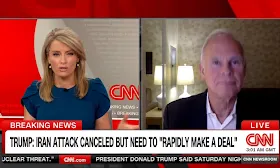
Media Lens: Trump agrees to pause strikes on Iran pending rapid deal progress
Trump addressed the ongoing conflict with Iran, announcing a pause on potential strikes contingent on reaching a deal swiftly. The remarks came as tensions continue to unfold in the region.
Quick links: What has happened | Status quo | Confirmed facts | Preconceptions | Elisions | One story, four angles | Related links
What has happened
On August 1, 2026, President Donald Trump announced a pause on military attacks against Iran, contingent upon reaching a quick diplomatic agreement. The announcement came amid heightened tensions in the region, with both Iran and Israel remaining on high alert.
This decision aligns with recent discussions aimed at securing a ceasefire, where Trump emphasized the need for a rapid resolution to de-escalate hostilities. The situation remains fluid, with ongoing diplomatic efforts to address the underlying issues between the U.S. and Iran.
Status quo
No background paragraph needed.
Confirmed facts
- Trump is reported to have called off strikes against Iran.
- The decision to halt military action against Iran is contingent upon reaching a rapid deal.
- This information has been covered by multiple news sources including CNN, The Washington Post, and NBC News.
- Discussions around Iran and potential ceasefire interventions are ongoing, with various parties on alert.
Preconceptions
- CNN prioritizes Trump’s latest stance on the Iran ceasefire, focusing on his conditional agreement for a deal, emphasizing his direct quotes.
- The Washington Post highlights ongoing geopolitical tensions, emphasizing the reactions from Iran and Israel, while reducing the focus on Trump’s personal quotes.
- Al Jazeera prioritizes the rationale behind Trump’s pause in military action, emphasizing broader implications and providing historical context, while reducing the focus on immediate diplomatic maneuvers.
- NBC News emphasizes the timeline of events leading to the ceasefire, presenting facts over opinions, while downplaying in-depth analysis of Iran’s internal stance.
Elisions
- Al Jazeera focuses heavily on Trump’s halted attacks as a diplomatic maneuver, while CNN emphasizes immediate military implications and public safety amidst ongoing tensions.
- The Washington Post presents a critical perspective on Trump’s ceasefire intentions, contrasting with NBC News’ more neutral reporting of the administration’s stance on negotiations.
- While The Washington Post discusses Israel’s reactions in detail, CNN largely omits this angle, focusing instead on U.S. domestic responses to Trump’s decisions.
One story, four angles
CNN – Live updates: US-Iran war news; Trump calls off Iran strikes subject to deal being ‘rapidly’ reached
Publication: CNN | Intensity: (6/10) | Sentiment: Neutral | Legal precision: Medium
Expand
Espresso Shot: The headline directs readers to focus on Trump’s actions regarding Iran, emphasizing a potential ceasefire contingent on negotiations.
Key differences:
- Comparison: CNN centers its coverage on immediate actions. Example: “Trump calls off Iran strikes” emphasizes executive decision.
- Comparison: Contextual framing versus event focus. Example: “subject to deal being ‘rapidly’ reached” suggests urgency.
- Comparison: The balance of urgency and calmness in reporting. Example: Use of “calls off” provides an immediate sense of resolution.
Bias: Selection: Presents Trump’s decision as pivotal | Language: “calls off” carries a strong connotation of executive control | Omission: Lacks details on opposition viewpoints or consequences.
Assessment: The reader believes Trump’s actions are critical and indicate a shift in U.S.-Iran relations.
The Washington Post – As Trump cites progress on deal to end war, Iran and Israel remain on alert
Publication: The Washington Post | Intensity: (7/10) | Sentiment: Slightly Negative | Legal precision: High
Expand
Espresso Shot: The headline redirects the reader’s focus to broader geopolitical implications, highlighting tensions between multiple nations.
Key differences:
- Comparison: Broader geopolitical context. Example: “Iran and Israel remain on alert” implies instability beyond U.S. actions.
- Comparison: Emphasizes progression. Example: “Trump cites progress” suggests a narrative of moving forward.
- Comparison: Use of “remain on alert” conveys a sense of ongoing tension. Example: This alerts readers to the precariousness of the situation.
Bias: Selection: Highlights regional instability along with U.S. action | Language: “remain on alert” underscores potential conflict | Omission: Less focus on Trump’s rationale or negotiation specifics.
Assessment: The reader perceives a complex diplomatic landscape where U.S. decisions are part of a larger, volatile picture.
Al Jazeera – Why has Trump halted Iran attacks, and what is the deal he is hinting at?
Publication: Al Jazeera | Intensity: (5/10) | Sentiment: Neutral | Legal precision: Medium
Expand
Espresso Shot: Focus shifts to the intricacies of the deal discussions, inviting readers to ponder the motivations behind Trump’s actions.
Key differences:
- Comparison: Direct question format engages readers. Example: “What is the deal he is hinting at?” prompts curiosity.
- Comparison: Centers discussion on rationale. Example: “Why has Trump halted Iran attacks” suggests deeper investigative reporting.
- Comparison: Emphasizes underlying factors. Example: The use of “halted” implies a pause leading to potential future conflict.
Bias: Selection: Questions the decision-making process | Language: “halted” conveys suddenness | Omission: Lacks coverage on responses from Iranian or Israeli perspectives.
Assessment: The reader hypothesizes about not just the actions themselves, but the underlying motives driving U.S. policy.
NBC News – U.S. agrees to pause attacks on Iran subject to ‘rapidly’ making deal, Trump says
Publication: NBC News | Intensity: (6/10) | Sentiment: Neutral | Legal precision: High
Expand
Espresso Shot: This headline spotlights a significant U.S. policy move, emphasizing conditionality and urgent negotiations.
Key differences:
- Comparison: Focuses on conditionality of actions. Example: “subject to ‘rapidly’ making deal” stresses urgency of negotiations.
- Comparison: Highlights agreement over order. Example: “U.S. agrees to pause attacks” reflects a willingness for diplomacy.
- Comparison: The use of “pause” suggests temporary relief. Example: This contrasts with more dramatic phrasing used by other outlets.
Bias: Selection: Emphasizes negotiation over aggression | Language: “pause” evokes feelings of believability | Omission: Fewer mentions of Iranian perspectives or the potential impact of this pause.
Assessment: The reader perceives the U.S. approach as one seeking diplomacy, though fragile and conditional.
In comparing the publications, CNN’s framing appears more balanced, highlighting Trump’s shift in approach as a cautious move towards diplomacy with Iran, suggesting resolution over conflict. In contrast, The Washington Post emphasizes potential escalation, focusing on heightened tensions between Iran and Israel, indicating a precarious situation. Al Jazeera warns of the broader implications of halting strikes, questioning the underlying motivations. NBC News conveys a reactive stance, underscoring the urgency of rapidly reaching a deal. Thus, while CNN offers a diplomatic perspective, The Washington Post presents the most escalatory framing.
The facts do not change. What changes is where scrutiny lands.
Related links
CNN
Live updates: US-Iran war news; Trump calls off Iran strikes subject to deal being ‘rapidly’ reached
The Washington Post
As Trump cites progress on deal to end war, Iran and Israel remain on alert
Al Jazeera
Why has Trump halted Iran attacks, and what is the deal he is hinting at?
NBC News
U.S. agrees to pause attacks on Iran subject to ‘rapidly’ making deal, Trump says