



Get you up to speed: Third person dies from malaria in cluster near Germany’s Frankfurt Airport
A third person has died from malaria in Frankfurt, Germany, linked to a rare outbreak associated with the airport. The individual was one of two residents in the Schwanheim district who contracted the disease despite not having travelled to a malaria-endemic region.
Authorities reported that two new malaria cases were confirmed in the Schwanheim district on Tuesday, with both individuals having not travelled to malaria-endemic regions. Frankfurt Airport operator Fraport has implemented mosquito traps and submitted samples for laboratory analysis, although results have yet to be disclosed.
Health authorities have warned local doctors near Frankfurt Airport to consider malaria in patients presenting with fever, urging airport workers and nearby residents to seek medical advice if they experience symptoms. The airport operator, Fraport, has implemented mosquito traps and is awaiting results from a laboratory in Antwerp, as officials continue to monitor the unusual malaria outbreak linked to air travel.
What remains unclear — It is unknown when results from the laboratory testing of the captured mosquitoes will be available.
Third person dies from malaria outbreak near Frankfurt Airport
News|HealthThird person dies from malaria in cluster near Germany’s Frankfurt Airport
Frankfurt grapples with a rare malaria outbreak tied to air travel, marking three deaths in recent months.
Published On 17 Sep 202617 Sep 2026
A third person has died from malaria after a recent cluster of cases linked to Frankfurt Airport, in what German officials have described as an extremely rare air-traffic-related outbreak of the tropical disease.
In a statement on Thursday, city administration said the person died at Frankfurt hospital and was one of two infected residents living in the Schwanheim district, in the immediate vicinity of the airport.
The two new malaria cases in the neighbourhood had been reported on Tuesday.
“Both individuals had become infected with the malaria-causing parasite Plasmodium falciparum, even though they had not travelled to a malaria-endemic region and had not worked at the airport,” the statement said.
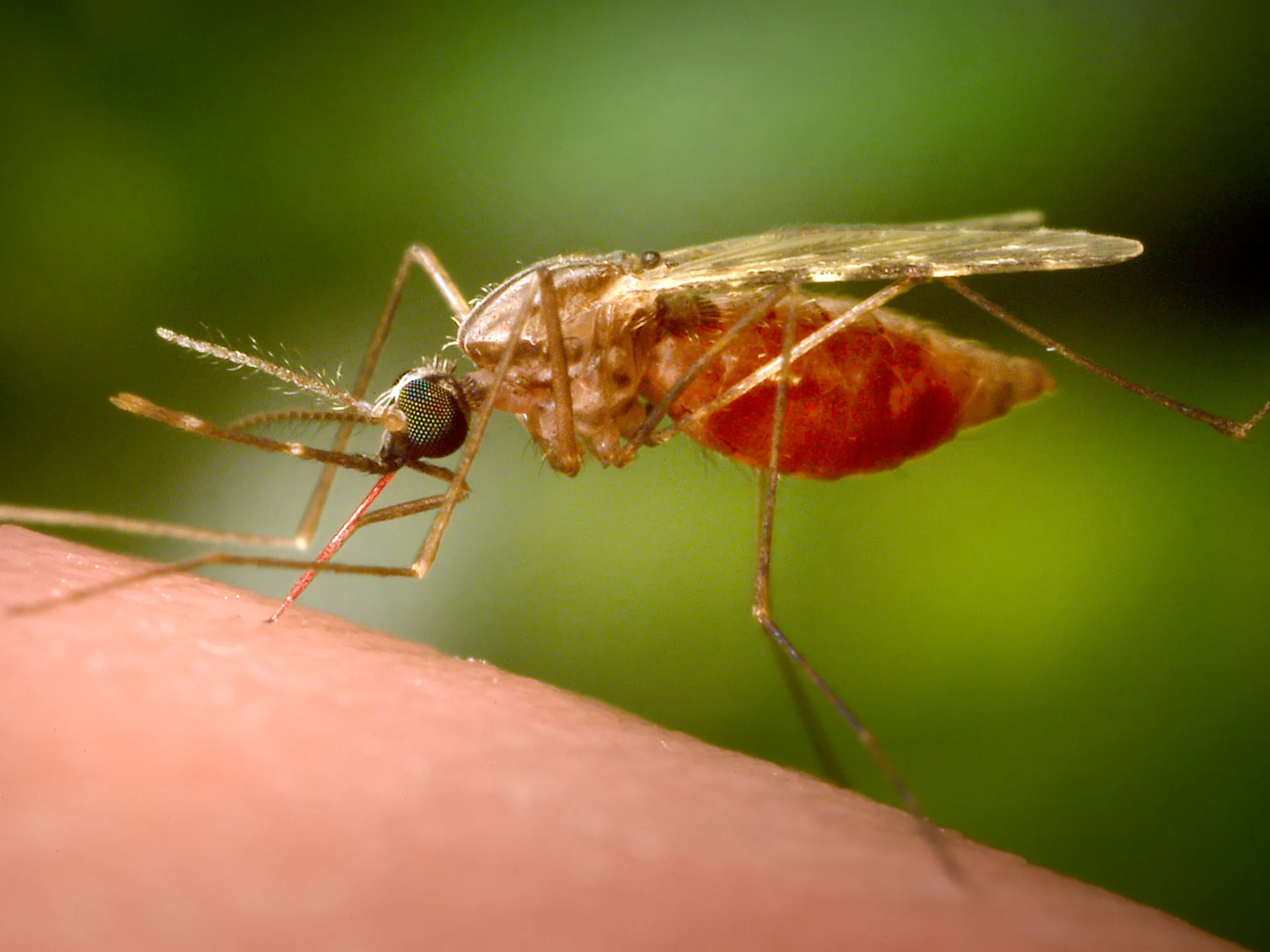
According to the city’s public health department, the two newly infected people contracted the disease from a mosquito flown into Germany on an aircraft or in luggage.
Six Frankfurt airport workers had contracted malaria tropica, the most dangerous form of the disease, in July, authorities said. Two later died.
Malaria is a potentially life-threatening mosquito-borne disease that is extremely rare in Germany.
The malaria parasite is spread between humans by some types of mosquitoes, but not through direct human-to-human contact.
Frankfurt Airport operator Fraport said it set up traps to catch mosquitoes and sent the insects to a laboratory in Antwerp in Belgium in July and August, but results were not available yet.
Health authorities have warned doctors near the airport to consider malaria in patients who come in with a fever.
Airport workers and residents have been urged to seek medical advice in case they display symptoms including fever, chills, headaches, confusion, seizures and breathing difficulties.
An airport spokesperson said local public health authorities had the power in principle to order airlines to disinfect aircraft.