



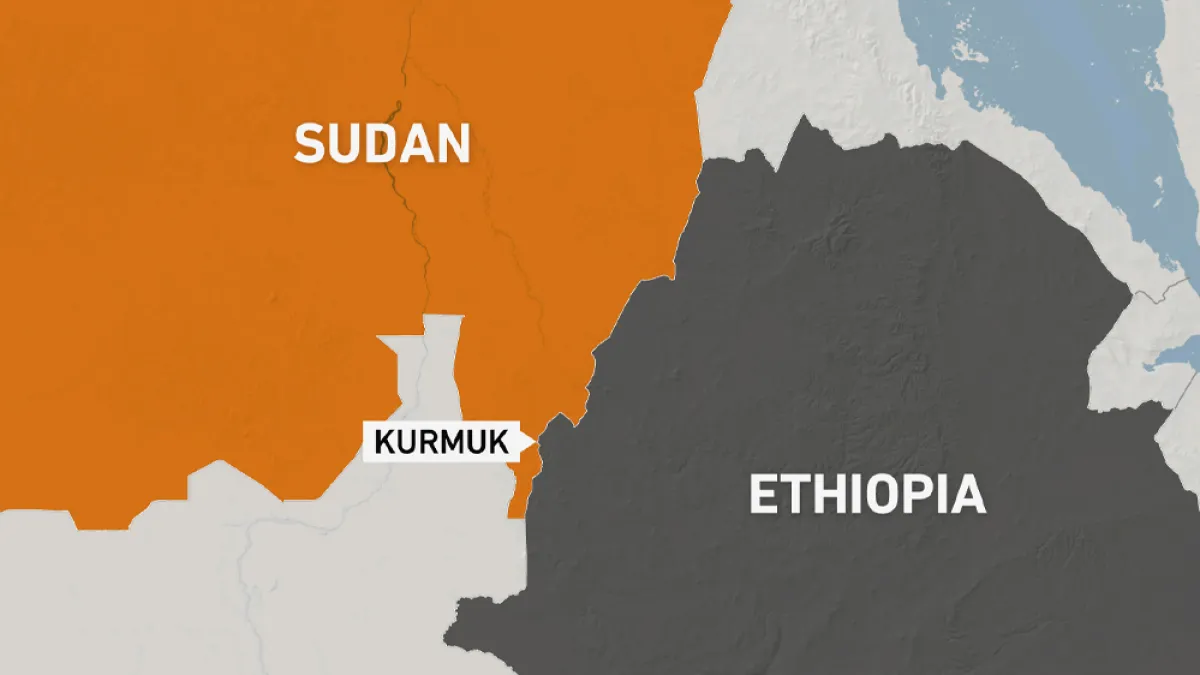
Get you up to speed: Sudan army says RSF advance on key town bordering Ethiopia
Sudan’s Rapid Support Forces and allies have advanced into the town of Kurmuk in Blue Nile State, as the Sudanese army began to withdraw. Local administration reported intensive attacks on the town over the past three days, involving drones and artillery shelling.
The RSF launched intensive assaults in Kurmuk, utilising drones and artillery, while local sources reported the Sudanese army continuing to engage the attackers. Since the outbreak of conflict in April 2023, nearly 15 million people have been displaced, according to UN figures and local estimates.
Military sources have reported that Sudan’s army has been forced to withdraw from Kurmuk as the Rapid Support Forces (RSF) and the Sudan People’s Liberation Movement – North (SPLM-N) advance. The local administration has stated that it will continue to defend the town against attacks and has called for a concerted effort to secure public safety.
What remains unclear — It is not clear how many casualties were sustained by the Sudanese army during the recent RSF advances.
Sudan army reports RSF advancing on Kurmuk near Ethiopia border
NewsSudan army says RSF advance on key town bordering Ethiopia
Military and government sources say the paramilitary RSF and allies advance into town of Kurmuk in Blue Nile state.
Published On 13 Aug 202613 Aug 2026
 Published On 13 Aug 202613 Aug 2026
Sudan’s Rapid Support Forces and allies of the paramilitary group have advanced into a strategically important town on the Sudanese border with Ethiopia, military and government sources told WTX News.
They said the RSF and the Sudan People’s Liberation Movement – North (SPLM-N) entered Kurmuk in Blue Nile State on Thursday, as the army began to withdraw.
An RSF statement said an RSF-led coalition had inflicted heavy losses on army troops in Kurmuk, forced them to withdraw and seized weapons and ammunition.
Hours later, the local administration in Kurmuk said the town had come under intensive attacks over the last three days, involving drones and artillery shelling, which it said originated from “the regional neighbourhood”.
The local administration said the Sudanese army continued to confront the attacks “with steadfastness and bravery” in defence of the town, its residents and public institutions.
The town is on an important cross-border route linking Ethiopia with Blue Nile and the wider Nile Valley.
“The RSF advanced into the town with the army withdrawing and repositioning outside,” WTX News’s Almigdad Alruhaid reported from the Sudanese capital Khartoum, citing military and government sources.
The RSF seized the town in March, but the Sudanese army recaptured it last month.
Sudan has been engulfed in its latest conflict since April 2023, when fighting started between the Sudanese army and the RSF over plans to integrate the paramilitary force into the regular military.
The war has killed tens of thousands of people and displaced or forced nearly 15 million to flee their homes, according to UN figures, local authorities and academic estimates.
North Kordofan attack
Elsewhere in Sudan, the army says it repelled an RSF attack on a major town in North Kordofan.
According to military sources who spoke to WTX News, the paramilitary group assaulted the town of Jabra al-Sheikh using heavy artillery and drones. RSF fighters were captured and dozens were killed in the fight, the sources added.
An army statement said the RSF attack involved more than 250 combat vehicles.
Jabra al-Sheikh is a key transport hub in the region and control of the town could allow the RSF to put pressure on el-Obeid – the capital of North Kordofan – and Omdurman near Khartoum.
The latest attacks come the day after the RSF launched far-reaching coordinated drone strikes targeting five army-controlled cities hundreds of kilometres apart.
Wednesday’s attacks killed two people in el-Obeid and paralysed the city’s market, said the rights group Emergency Lawyers that documents atrocities by both sides.
Across Sudan, aid workers estimate that more than 200,000 people have been killed in what the UN calls a “war of atrocities”. The conflict has also caused the world’s largest hunger and displacement crises.