- Seven Months of Reform UK: Infighting, Unkept Promises, and Anthem Disputes
- Government states no intention to require drivers to report cat collisions.
- ‘Who’s it going to be next time?’: ECHR rethink is ‘moral retreat’, say ECHR rights experts
- New Epstein Photos Released by House Democrats Feature Trump and Clinton
- U.S. Lifts Sanctions on Brazilian Judge Alexandre de Moraes
- House GOP Reveals Health Care Proposal, Vote Scheduled for Next Week
- Trump responds to Marjorie Taylor Greene
- Government Can Withhold Funds From Planned Parenthood, Appeals Court Rules
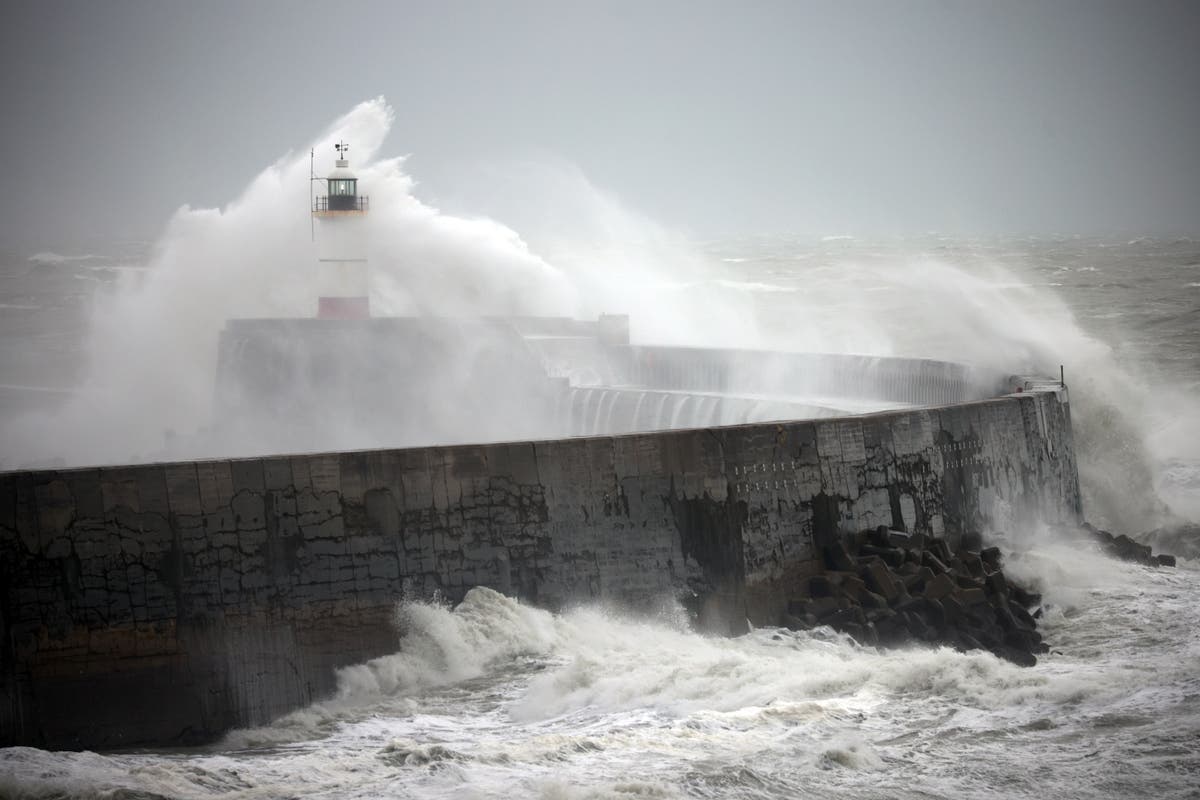
All Northern Irish schools to close on Friday Storm Eowyn live: Tornado threat as Met Office issues red weather warnings for 100mph winds A tornado
Wednesday’s news briefing
The prime minister delivered a speech yesterday, following the guilty plea of the Southport killer, saying he will introduce tougher measures for people trying to buy knives online. It was revealed Axel Rudakubana bought the knife he used to murder three young girls on online retail giant Amazon, despite being only 17.
Kyle Clifford has admitted to murdering his ex-girlfriend and her sister with a crossbow and their mother with a knife in an attack at the family home. Carol Hunt, 61, was stabbed to death and Hannah Hunt, 28, and Louise Hunt, 25, suffered fatal crossbow bolt injuries in Bushey, near Watford, on 9 July. Clifford, 26, from north London, changed his plea to the murders during an appearance via video link at Cambridge Crown Court.
The owner of the Sun newspaper has offered a “full and unequivocal apology” to Prince Harry for “serious intrusion” into his private life and agrees to pay him substantial damages. It settles a long-running legal battle between the prince and the newspaper group, moments before it was due to reach the High Court.
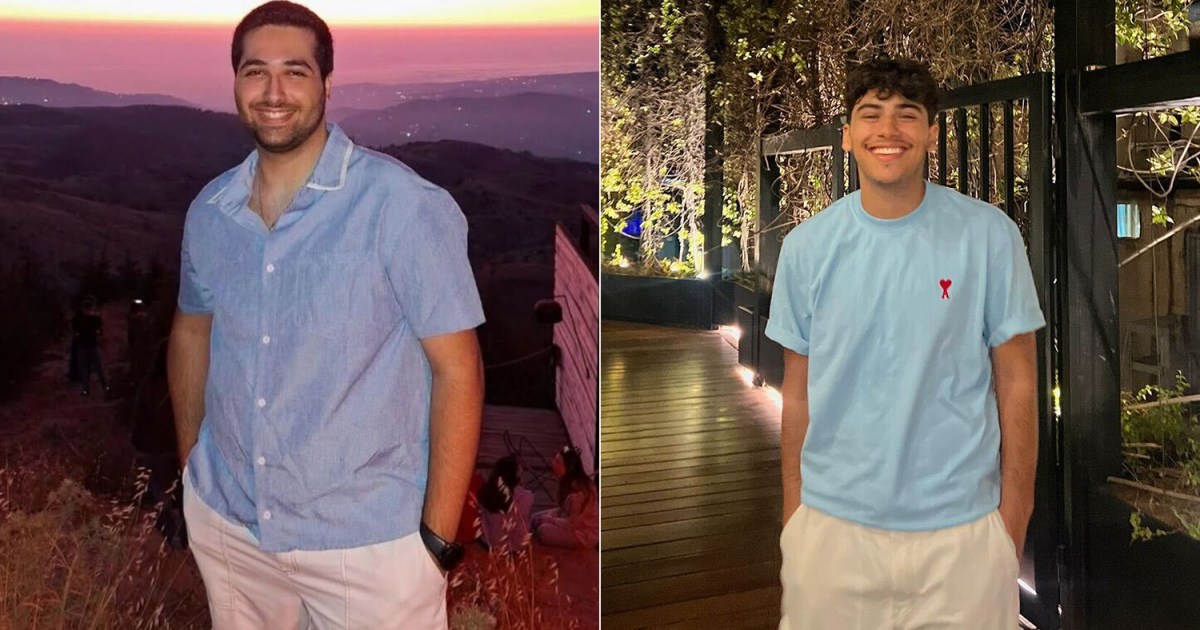
The fierce stench of rotten food and burned furniture greeted 19-year-old Fouad Abou Mrad and his father when they returned to their home in the southern suburbs of Beirut, a stark reminder of how Israeli attacks had upended their lives.
The student at Notre Dame University – Louaize and his family had abandoned their home in Dahiyeh during Israel’s bombing campaign in September.
“Seeing the place that I grew up in in that state was just shocking. I’ve never experienced that before in my life. It was straight out of [a] horror film,” he told Al Jazeera, adding that his home “smelled like dead bodies”.
Abou Mrad said he searched his destroyed home in early October for school supplies – his laptop and other essentials – because his university in the northern coastal city of Zouk Mosbeh was starting up courses again.
The learning and futures of Lebanese students had been disrupted by Israel’s bombardment of Lebanon with nearly half of the country’s 1.25 million students displaced, according to Lebanon’s Ministry of Education.
A temporary ceasefire between Israel and Lebanon’s Hezbollah group was implemented on November 27 but only after months of bombings that left a psychological toll on young people like Abou Mrad. He and other students are now trying to settle back into a regular routine and focus on passing their exams.
Abou Mrad, a hospitality and tourism management major, is just one of the hundreds of thousands of young people in Lebanon whose lives – and education – were upended by the conflict.
Abou Mrad felt afraid attending classes during the war, especially after seeing all of the damage so close to his home [Courtesy of Fouad Abou Mrad]
‘Nights from hell’
November 18 is a day Sajed Salem will never forget.
The 23-year-old southern Lebanese native lived alone on campus while attending Saint Joseph University of Beirut, located in the capital’s Ashrafieh area.
That week, Israeli forces had been bombing Beirut for days, what Salem called “nights from hell”.
Despite the intensifying bombardment, in-person classes had resumed, and on that Monday, he was sitting in his culinary arts class when explosions went off nearby. The blasts shook the building and the desks in the classroom.
“I was s***ting myself. I was crying, screaming,” Salem told Al Jazeera.
Salem studies culinary management and attended classes in person during the war [Courtesy of Sajed Salem]
‘Immense psychological toll’
According to Maureen Philippon, the Lebanon country director for the Norwegian Refugee Council (NRC), living through conflicts like these hinders academic progress and burdens students psychologically.
“Constant exposure to violence, displacement and loss leaves [students] highly stressed and anxious, impairing their ability to focus, learn and retain information,” Philippon told Al Jazeera, adding that the “psychological toll is immense”.
These effects continue even after the conflict has ended.
“In Tyre, I saw children freaking out when they would hear a plane, putting their hands on their ears and looking around in panic,” she said, referring to the city in southern Lebanon that Israel heavily bombed.
Exams in a time of war
After the blasts shook the walls of his classroom, Salem fled the same day to Chouf in central Lebanon, where some of his relatives were taking refuge.
“I called my cousin. I told him to immediately come here and pick me up,” he said.
Salem’s village of Dweira in southern Lebanon was among the first to be bombed when Israel escalated the war on September 23. His mother and siblings got trapped in their home due to the strikes, Salem said.
Alone in Beirut, he couldn’t reach them by phone until the next day, an agonising experience he said he would not wish on his “worst enemy”.
After leaving for Chouf, Salem’s problems weren’t over. School continued despite the bombings, and he was forced to travel back to Beirut at least once or twice a week for exams.
Salem said that during the constant bombing, his teacher still held an exam despite students asking for a reprieve. He, along with many of his classmates, failed the test.
“The exam was not that easy. He [the teacher] made it hard,” Salem said. “I don’t know why. We told him, ‘Look at the situation. Please make it a bit easy for us.’”
The right to education
While Salem was unhappy with his teacher’s actions, experts said educators are essential in helping students adapt to the challenges of war.
However, Philippon noted that conflicts also affect teachers, making it necessary for governments and humanitarian agencies to provide support and resources.
According to Ahmed Tlili, an associate professor of educational technology at Beijing Normal University whose research focuses on education in warzones, international law does not adequately protect education during war.
While international humanitarian law protects children’s right to education in armed conflicts, Tlili said these laws usually are not implemented.
“This underscores the need for concerted efforts to ensure that international laws protecting education, especially in war regions, are not merely rhetorical gestures but are actively upheld, enabling equitable access to education for all, even in the midst of conflict,” he told Al Jazeera.
International humanitarian law also prohibits attacks on schools and universities, classifying such acts as war crimes under the Rome Statute of the International Criminal Court, the experts said.
Ensuring that education is provided during wars is the responsibility of those outside of warzones, Tlili said, providing an example of opportunities afforded to some students from Gaza.
“We can see that in [the case of Gaza]several Arab universities have opened their doors to enrol Palestinian students without any restrictions,” he explained.
“We have also seen that several international course providers have waived fees for accessing courses for Palestinian students and teachers, allowing them to freely access educational resources and teaching materials.”
The ruins Salem witnessed during Israel’s war on Lebanon [Courtesy of Sajed Salem]
‘Art, studies, our future’
Abou Mrad feels the struggle to learn during the conflict was “unfair” to him and his fellow students.
They spent their nights in terror, anguishing over whether they would see each other or their families again when they should have focused on “art and studies and our future”.
He said he is hoping for some normalcy to return to Lebanon.
“We don’t know what can come next, … but we have to try to move forward normally,” Abou Mrad said.
Others, like Salem, said living in southern Lebanon especially hasn’t been “normal” since Israel’s war on Gaza began. Even with the ceasefire, the violence hasn’t stopped, and Israel is accused of violating the agreement hundreds of times.
And now, with the toppling of Bashar al-Assad in December in neighbouring Syria, Salem is even more uncertain about what will happen next.
“I’m happy for our Syrian brothers and sisters who got their freedom from the Assad regime and everything,” Salem said, “but we have to pay attention to what comes next. … It’s [going to] affect us as Lebanese.”
Wednesday’s lead stories continue with similar coverage as yesterday with the Southport killer and Donald Trump’s presidency leading the front pages.
The prime minister addressed the public yesterday, following the guilty plea from the Southport killer, in which he warns that Britain is facing a new threat from what he called “loners, misfits [and] young men in their bedroom” accessing violent content online.
There are several stories on the new US president including reports on the Capitol rioters who were pardoned, his renewed threats to introduce tariffs on Canada, Mexico and China and as well as reports the 47th president will impose steep tax rises on foreign companies and overseas nationals working in the USA.
The back pages asses the English clubs’ performance in the Champions League, with Liverpool’s win seeing them sit at the top of the league and Aston Villa’s 1-0 loss. Manchester City and Arsenal are in action in the Champions League tonight.
Donald Trump first acts as the new US president, reactions to the Southport killer’s guilty plea and the prime minister’s announcment of an inquiry into the state’s failings as well as Prince Harry settling his court case with The Sun newspaper lead the UK’s trending stories.
Europe’s Stoxx 600 index hits record high
FT.com Tweet
Trainline shares dipped this morning after ministers unveiled plans to introduce a national rail ticket website as part of wide-reaching reforms
CITY AM Tweet
- Axel Rudakubana, 18, has been sentenced to a minimum of 52 years behind bars
- Judge says it’s unlikely he’ll ever be released
- He killed Elsie Dot Stancombe, 7, Alice da Silva Aguiar, 9, and Bebe King, 6 last year in Southport
Axel Rudakubana sentenced to a minimum of 52 years
Axel Rudakubana has been sentenced to 52 years behind bars for the murder of three little girls – and attempted murder of 10 others – last year as they attended a dance class in Southport.
Rudakubana pleaded guilty on Monday to the murders of Elsie Dot Stancombe, 7, Alice da Silva Aguiar, 9, and Bebe King, 6. He also admitted to producing ricin, possessing terrorist material, and possessing a knife.
The judge says it’s unlikely Rudakubana will ever be released despite the fact he did not receive a life sentence – due to his age at the time of the crime.
Most of the front pages react to the sentencing, some note it’s the longest sentence someone of his age has received, others pick up on the judge’s comments it’s unlikely he’ll ever be released and some question if the law should change to include life sentences for 17-year-olds.
On social media, fuelled by far-right politicians, there are calls for Rudakubana to face the death penalty.
Some papers lead with the words from the parents of the victims who spoke of how the horrors have changed their lives whilst other publications – print and online – look at how the state failed the victims, noting Rudakubana was known to police and had been referred to the Prevent scheme three times.
The reaction
The Mail reports the sentence is believed to be the longest given to a killer of his age and quotes the judge as saying it’s unlikely he will ever be released. The paper’s editorial asks why police and the Prevent programme failed to act before the murders despite signs Rudakubana was obsessed with violence. It says the signs of danger were ignored due to “box-ticking officials” weren’t sure whether he had a political or ideological motivation.
The Times says the case has prompted calls for legal reforms as Rudakubana’s age at the time of the attack meant he avoided a whole life sentence.
The Daily Express quotes the parents of the victims calling Rudakubana “pure evil” and saying they have been left with “shattered souls.” The Daily Mirror quotes Elsie’s mother who told Rudakubana that she hopes the attacks “haunt you every single day.” The Sun quotes the parents of one of the children who was injured in the attacks but survived named Child A, saying: “When we think of Southport we’ll think of the girls. Their bravery. Their strength. He will not win.”
The i says Rudakubana would have killed all 26 children in the class and it was only because of the bravery of the other children and adults present that he was stopped. The paper quotes one 14-year-old survivor saying: “I knew I was running for my life. I needed to try to get everyone to safety… a room full of defenceless children”.
The Guardian says at the sentencing it had emerged that two years before the attack his parents called the police four times in six months asking for help. The paper says that on one occasion he was caught on the bus with a blade but instead of detaining him, officers took him home and told his mother to keep knives out of his reach.
Front pages react


The fierce stench of rotten food and burned furniture greeted 19-year-old Fouad Abou Mrad and his father when they returned to their home in the
Friday’s news briefing
Axel Rudakubana, 18, has been sentenced to 52 years behind bars for murdering 3 little girls and the attempted murder of at least 10 others at a dance class last year in Southport. The judge says it’s highly unlikely Rudakubana will ever be released. Rudakubana pleaded guilty on Monday to the murders of Elsie Dot Stancombe, 7, Alice da Silva Aguiar, 9, and Bebe King, 6. He also admitted to producing ricin, possessing terrorist material, and possessing a knife.
The Met Office has issued rare red weather warnings, meaning there is a danger to life, as Storm Éowyn batters the UK. The worst disruption is due to hit Northern Ireland and parts of Scotland, with gusts of up to 100mph (161km/h) expected in some coastal areas. Millions of people are being urged to stay at home and widespread travel disruption is expected, with some flights and ferry crossings already cancelled.
January 25, 2025
7:06 am
Almost every front page of the Friday national newspapers led with pictures of the three young girls who were murdered in Southport last summer as they attended a dance class. The papers’ lead articles react to the 52-year sentencing of the killer Axel Rudakubana, the opportunities missed to stop him from carrying out his horrific crime and the statements from the parents of the victims.
Elsewhere, the UK is bracing for 100mph winds as Storm Eowyn barrels down on the country.
The back pages lead on English football teams, with Manchester United’s 2-1 win in the Europa League the most prominent.
Storm Éowyn, last night’s Manchester United Europa League win and the sentencing of Axel Rudakubana leads social media.
Indie Swim@indy_swim
How the fuck are warnings for a deadly storm supposed to be woke?
What the hell does that even mean?
These people are nutters
Ronnie W@Ekbalco
Dollar falls after Trump calls for lower interest rates
FT.com
Tweet
Rachel Reeves backtracks on Autumn Budget non-dom tax changes 📃
Rachel Reeves has confirmed she will alter some of the more controversial non-dom reforms announced in the Autumn Budget.
Speaking at the World Economic Forum in Davos, the Chancellor committed to tabling an amendment to the Finance Bill removing some of the most contentious elements of its changes to non-dom taxation.
CITY AM
Tweet
January 25, 2025
7:06 am
January 25, 2025
6:03 am
In this week’s Paris des Arts, A visit to Notre-Dame Cathedral takes centre stage as we take a trip down memory lane and delve into the history of Paris’s gothic gem with architectural historian Mathieu Lours.
A visit to Notre-Dame Cathedral
A visit to Notre-Dame Cathedral is a romance with its history, inspiring novels and tragedy through the ages. We meet Henri Chalet, the Director of the Maîtrise Notre-Dame singing school and follow his work with the choir during their rehearsals. And, in “From Paris with love”, we discover a reading of writer Sylvain Tesson’s works on stage inspired by his love of Notre-Dame Cathedral.
Notre Dame de Paris is a cathedral church in Paris. It is the most famous of the Gothic cathedrals of the Middle Ages and is distinguished for its size, antiquity, and architectural interest.
The cathedral was initiated by Maurice de Sully, bishop of Paris, who about 1160 conceived the idea of converting into a single building
From Paris with love

The Cathedral of Notre Dame is a masterpiece of Gothic architecture and one of the most visited monuments in for many romantics, Paris is a mythical city where stories are made, and certainly Notre Dame is part of this timeless beauty.
The most famous of the Gothic cathedrals
But despite the devastating 2019 fire, Notre Dame has survived to remain an enchanting Parisian monument that travelers still dream of visiting as we did with historian Mathieu Lours.
The historian paints a picture of where it’s located, it is like he is painting a picture on a blank canvas; situated on Paris’s picturesque island, Île de la Cité, Notre Dame sits quite literally in the heart of Paris. Yes, that is where Notre Dame de Paris resides, but don’t be surprised if you hear tales of other Notre Dames in other French cities.

What does Notre Dame de Paris mean?
“These are not imposters of the Parisian cathedral. Notre Dame de Paris, literally translated, is “Our Lady of Paris.” Notre Dame, therefore, is the name given to the central church in many French cities and towns” says Henri Chalet.
When the cathedral’s plot of land was first considered for construction in the mid-12th century, it had already been home to a Roman temple, and later two basilicas that had themselves eroded with time. So when Pope Alexander III ordered the laying of the cathedral’s foundation only years later, the cathedral became the fourth chapter in a long line of religious gems to be erected on that spot.
“This majestic building has history seeping out of corner, every turn is almost better than the one before. That’s partly because of the history of damages it has endured. As a centerpiece of French history and symbolism, it has always been under threat of attacks” said the historian Mathieu Lours.
Damaged during the French Revolution, the cathedral was restored in the 19th century by the architect Viollet-le-Duc. But they kept the damaged statues at the front doors, known as portals, as a reminder of the devastating effects of the French Revolution.

Notre-Dame underwent major restorations by the French architect Eugène-Emmanuel Viollet-le-Duc in the mid-19th century. The popularity of Victor Hugo’s historical novel Notre-Dame de Paris (1831), wherein the cathedral is the setting, was said to have inspired the renovations.
The stained glass windows of Notre Dame, particularly the three rose windows, were long considered among the best features of the cathedral. They again have been restored over the years but as you embark to the top the towers you can enjoy a Panoramic view of Paris.
After the fire of 2019, Notre Dame was closed and the task of restoring its former glory from the fire was under way.
The cathedral officially reopened Saturday, Dec. 7, 2024, with a special reopening ceremony with lots of special guests including President Macron.
And on December 8, 2024 Notre-Dame was reopened to the public, to much fanfare following a restoration project estimated to cost upward of €700 million ($767 million).
Notre-Dame Cathedral suffered damage and deterioration through the centuries but now the majestic building has been restored to its former glory.

U.S. Lifts Sanctions on Brazilian Judge Alexandre de Moraes
News Team
TL:DR U.S. removes Brazilian judge Alexandre de Moraes from its sanctions list Thawing Relations: U.S. Lifts Sanctions on Brazilian Justice What Happened The United States
Newly released photographs linked to Jeffrey Epstein feature prominent figures
News Team
Newly released photographs linked to Jeffrey Epstein feature prominent figures Newly released photographs linked to Jeffrey Epstein feature prominent figures, including Donald Trump and Hillary
What to Watch
Amazon prime - TV & Netflix
What to Watch
Love Sports
-
Good News
-
Readers Digest
That is why hundreds of thousands of us have exercised our right to protest.
We will be here as long as it takes until there is an immediate ceasefire, an end to the occupation, and a just & lasting peace.
What to Watch
Amazon prime - TV & Netflix
What to Watch
Love Sports
- Good News
- Readers Digest
Subscribe to Updates
Get the latest creative news from FooBar about art, design and business.


Add A Comment