


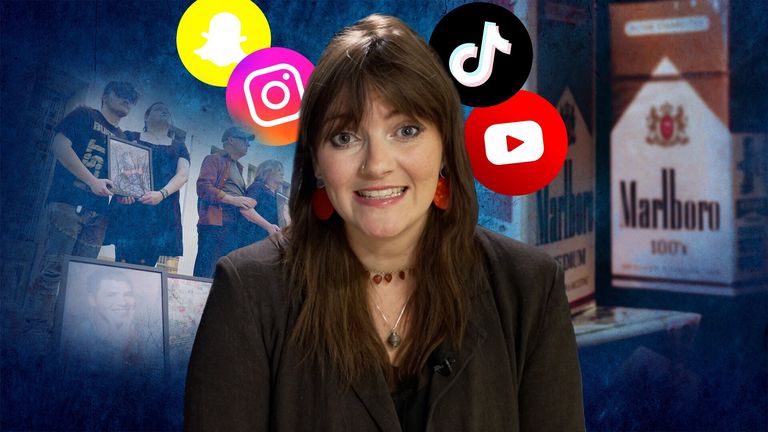
Jury Set to Start Deliberations in Pivotal Social Media Addiction Case
Trial Concludes
Lawyers have made final arguments in a landmark social media addiction trial, with jurors to decide if Meta and YouTube are liable for harm to children.
Lawmakers express concern over potential ramifications of the verdict, emphasizing the need for revised regulations governing social media platforms and their impact on youth mental health.
Jurors are expected to commence deliberation on the case’s outcome following the conclusion of closing arguments presented by both plaintiff and defense attorneys.
Briefing summary
In a groundbreaking trial, lawyers concluded arguments regarding social media companies’ liability for children’s addiction, focusing on Meta and YouTube. The jury’s decision could influence future legal actions.
A plaintiff identified as KGM claimed her early social media use led to addiction and worsened her mental health. This trial serves as a bellwether for potential compensation in similar cases against tech giants.
Full reading: Jury to begin deliberations in landmark social media addiction trial | US News
Lawyers in a landmark social media addiction trial – which has seen tech giants face a jury – have made their final arguments.
After a month of hearings, 12 jurors are set to decide on whether or not social media companies should be liable for harm caused to children using their platforms.
The two defendants in the case are Meta, the owner of Instagram and Facebook, and video-streaming platform YouTube, which is owned by Google.
TikTok and Snapchat each settled before the trial began.
The plaintiff – a 20-year-old woman identified as KGM in documents or as Kaley by her lawyers in Los Angeles County Superior Court – claimed her early use of social media addicted her to the technology and exacerbated depression and suicidal thoughts.
The case, along with two others, has been selected as a “bellwether” trial, meaning it is being used as a test case to see how much compensation victims could be due in future litigation against social media companies.
If the tech companies lose, they could be forced to change the designs of their platforms.
Mark Lanier, the lawyer representing Kaley, compared the tech giants’ features to “Trojan horses”, Sky’s US partner network NBC reports.
“How do you make a child never put down the phone? That’s called the engineering of addiction,” he told the court on Thursday.
“They engineered it, they put these features on the phones.
“These are Trojan horses: They look wonderful and great… but you invite them in and they take over.”
He began his closing statement by presenting the jurors with an image of a herd of gazelles surrounded by a lion.
The lions never go after the strongest or boldest gazelles, he said, but rather target the ones they think are weakest.
“I think that’s what we got in this case,” he said.
He pointed to several internal documents from Meta and YouTube that he said seemed to illustrate a clear internal understanding of the potentially addictive nature of their platforms.
“I don’t naysay the opportunity to make money, but when you’re making money off of kids, you have to do it responsibly,” he said.
Read more from US News:
Tech giants handed deadline by UK regulator
MPs vote down social media ban for under-16s
Paul Schmidt, representing Meta, said in his closing statements that Mr Lanier was trying to argue that if Kaley had never used Instagram, her other mental health struggles would be different.
“The facts don’t allow that,” he said, after spending much of his time outlining Kaley’s medical records and her troubled familial relationships. “The evidence has shown just the opposite.”
YouTube’s legal representatives have consistently argued that it is not a social media platform and that its features are not addictive.
Luis Li, a lawyer representing YouTube, emphasised that when Kaley and her mother went through the process to file the lawsuit, they originally did not bring any claims against YouTube.
What makes this court case so different?
Over the years, people have tried to sue the owners of Instagram, Facebook, YouTube, TikTok and Snapchat for online harm, but they’ve largely failed.
Often, social media companies will rely on a defence called Section 230 of America’s Communications Act, which protects online platforms publishing third-party content.
It says they’re not responsible for content posted by users on their platforms.
But now, for the first time, social media companies are facing a trial by jury.
The jurors will not decide whether specific content on the platforms was harmful. Instead, they will decide whether social media companies were negligent when they created and tweaked their products to encourage people to spend more time on them.