Get you up to speed: Iran sets tough terms to reopen Strait of Hormuz
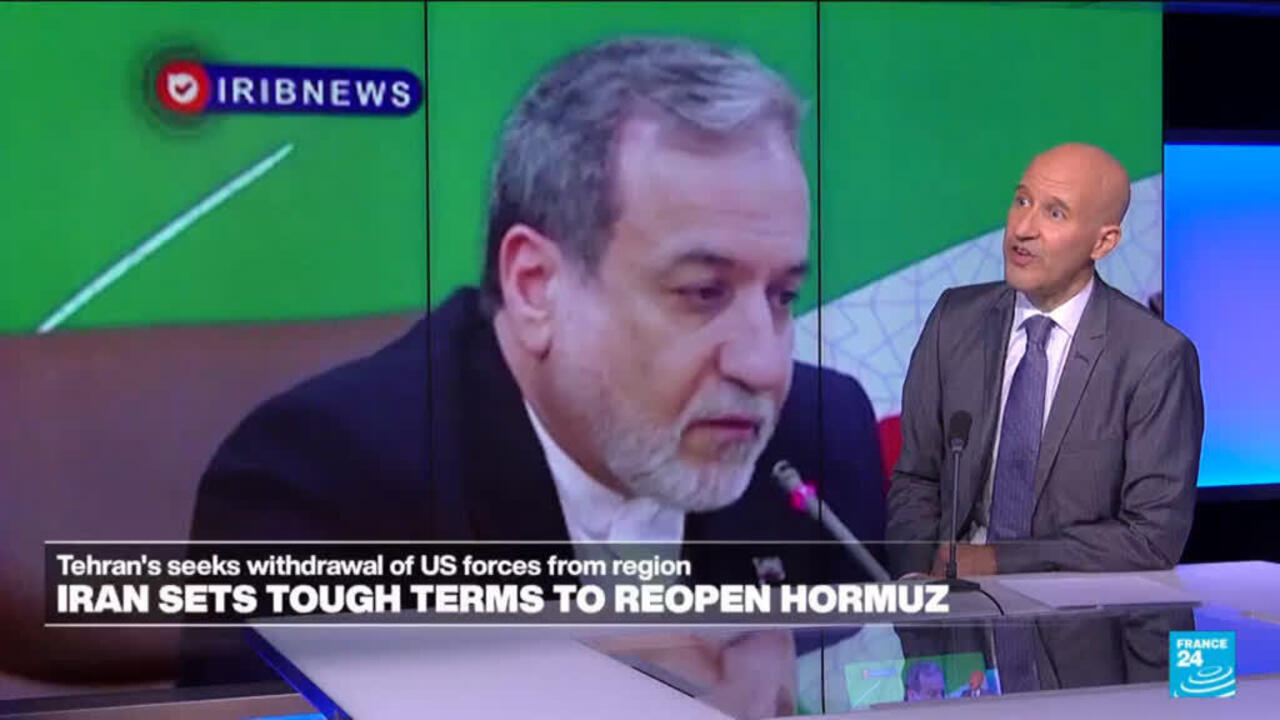
Iran’s national security chief has presented demands to the US, including the lifting of the naval blockade of Iranian ports, compensation for war damages, and the release of frozen Iranian assets, before the Strait of Hormuz can be reopened. Simultaneously, Iran and Oman have indicated that they are nearing an agreement on managing the strategic waterway.
Iran’s national security chief has specified that the US must lift its naval blockade and release frozen assets as preconditions for reopening the Strait of Hormuz. Meanwhile, discussions between Iran and Oman on managing the waterway are reported to be nearing a conclusion.
Iran’s national security chief has specified conditions for the reopening of the Strait of Hormuz, including the lifting of the US naval blockade and the release of frozen assets. Meanwhile, Iran and Oman are reportedly nearing a deal on governance of the waterway.
What remains unclear — It is not specified how Iran plans to respond if the US does not meet its demands.
What Iran’s new demands for reopening Strait of Hormuz mean for the US?
Iran’s national security chief has outlined a list of demands for the US to meet
Iran’s latest demands
Iran’s security chief Mohammad Baqer Zolqadr, a commander of the Islamic Revolutionary Guard Corps (IRGC), later issued a more detailed list of demands.
Speaking to the semi-official news agency Tasnim, he declared the Strait of Hormuz would not reopen until the US “corrects its behaviour”.
Zolqadr said the US must never threaten Iran again; permanently end the war with Tehran and its proxies; lift its blockade and remove all forces from the region; “completely compensate” the Iranian regime for war damage; lift sanctions; and “unconditionally” release frozen assets.
Separately, Iran and Oman say they are close to reaching a deal on managing the strategic waterway.
So how will the US react to Iran’s new demands for reopening Strait of Hormuz?
The first thing to recognise is the US will have to make concessions, in order to make a deal. They deal points centre around the Iranian Republic being able to control the waterways without interference from the United states or Israel.
But these concessions will impact Israels strategy more than it will the United States. If the strait is blocked Israel has the potential of providing an alternate solution to the Gulf countries, a pipeline, which goes through Israel, ultimately Israel needs the parts of Southern Lebanon that Israel has already captured.
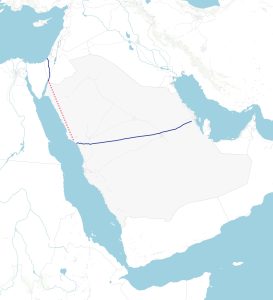
The proposed Israeli controlled Oil pipeline route, known as the Trans-Israel Pipeline, would avoid the Hormuz & Suez waterways, but although papers like the Times are labelling it as solution, in reality it can’t handle the capacity needed and travels through multiple choke points in Jordan and Syria.
Another stumbling block, it will be controlled by the Israeli’s who are ruthless, not only to its enemies, but also its allies. It has engineered this entire conflict, with toppling Iraq first, with fake memo’s in Washington, dismantling Syria, and then taking the areas in Lebanon and Gaza strip that will be needed to make this feasible, also know as the Greater Israel project.
The irony of routing it through Israel, where they apply a levy, is quite palpable. Create a problem, then offer a solution and hold the Europe’s oil supply ransom.
Israel however, is preparing for life after the United States, which is on the horizon. As soon as the ‘US pulls out from the middle east’, Israel needs to be able to fund itself, be the most dominant and control the resources with all the Gulf nations.
The proposed route for the trans-Israel pipeline, a more realistic one goes through Syria and Jordan
However, he has made similar claims repeatedly throughout the months-long conflict and has often supplemented them with threats of further violence.
Trump he needs this war to end
A Middle East peace agreement would offer him perhaps the biggest political prize of his presidency: the ability to declare that he had delivered a settlement his predecessors could not.
It would also fit neatly into the political legacy Trump appears determined to construct around himself.
That makes concessions to Tehran far less unimaginable than Washington’s rhetoric might suggest.
Saudi Arabia are the deal makers
If Riyadh ultimately joins the Abraham Accords, Saudi Arabia and the wider GCC would move significantly closer to normalised economic relations with Israel. That would transform the regional paradox, and potentially give Trump the political cover required to accept concessions to Iran while presenting the wider agreement as an historic American victory.
Behind the scenes, there’s a political battle going on and the real negotiation, therefore, may be much bigger than the Strait of Hormuz.
It is about who controls the region’s energy routes; Saudi Arabia is also playing preparing for life after the US, by signing up to the ‘Muslim Nato’ with Pakistan and Turkey, before it formally normalises relations with Israel, to ensure it maintains its clout as the leader in the GCC.
Perhaps, now it makes sense why Iran is making such demands, as it knows once this conflict is over opens the Strait it must be in a position to profit and maintain some form of power.