



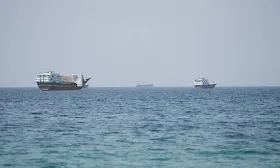
Media Lens: Iran and Oman near agreement on Strait of Hormuz transit deal
Iran and Oman negotiate an agreement regarding transit through the Strait of Hormuz. Discussions focus on resolving ongoing issues that currently impede navigation in this critical waterway.
Quick links: What has happened | Status quo | Confirmed facts | Preconceptions | Elisions | One story, four angles | Related links
What has happened
Iran and Oman have been engaging in negotiations regarding the transit through the strategic Strait of Hormuz, a crucial waterway for global oil transportation. Despite ongoing discussions, Iranian officials have indicated that a deal is not yet sufficient to fully reopen the strait for international shipping.
Recent reports highlight that Iran has presented a list of demands, complicating the negotiation process. Omani authorities report positive discussions, yet Iran’s assertions suggest that a conclusive agreement is still pending.
Status quo
Iran is currently negotiating with Oman regarding transit through the strategic Strait of Hormuz. This effort follows discussions aimed at improving regional stability and trade routes. Reports indicate that while progress is being made, Iran has expressed that the current deal may not be sufficient to fully reopen the waterway.
Confirmed facts
- Iran and Oman are negotiating a deal concerning transit through the Strait of Hormuz.
- The negotiations involve discussions about significant demands from Iran.
- Iranian officials have indicated that a deal is close, but it is insufficient to open the waterway.
- Oman’s response to the negotiations has been described as positive.
Preconceptions
- **Reuters** prioritizes the negotiation aspect, highlighting that Iran and Oman are close to a transit deal for the Strait of Hormuz, while mentioning the complexity of the situation, suggesting negotiations are ongoing.
- **The New York Times** emphasizes Iran’s demands that complicate efforts to reopen the Strait, focusing on a more detailed account of Iran’s position rather than the negotiations themselves.
- **CNN** reduces emphasis on the negotiations and focuses on Iran’s demand for concessions from the U.S., indicating a direct link between Iran’s actions and the broader political context affecting the region.
- **BBC** prioritizes positive statements from Oman regarding the talks, while also mentioning Iran’s warning that the deal may not open the strait, offering a more optimistic spin compared to other outlets.
Elisions
- **Coverage of Negotiation Rounds**: While all sources mention the ongoing negotiations between Iran and Oman regarding the Strait of Hormuz, only Reuters specifies the focus on expected concessions from the US, which is absent in reports from The New York Times and CNN. This highlights a gap in understanding the geopolitical implications of these negotiations.
- **Details on Iranian Demands**: The New York Times provides a detailed overview of Iran’s list of demands that complicates negotiations, whereas BBC and Reuters offer less granular insights into these demands, missing the nuanced diplomatic context necessary for comprehension.
- **Timeline of Developments**: CNN includes live updates on the latest developments, which are not mentioned in the static reports by the BBC and Reuters. This disparity indicates a gap in real-time information access and ongoing reaction coverage of the situation.
One story, four angles
Reuters – Iran says deal on Strait of Hormuz is close but is not enough to open the waterway
Publication: Reuters | Intensity: (5/10) | Sentiment: Neutral | Legal precision: High
Expand
Espresso Shot: The emphasis is on a cautious optimism regarding the Strait of Hormuz deal but indicates limitations—specific language like “not enough” underscores ongoing challenges.
Key differences:
– **Focus on negotiation progress:** Reuters states the deal is “close,” highlighting progress, unlike others that dwell on demands.
– **Language of limitation:** The wording “not enough to open” suggests negotiations still face hurdles.
– **Source attribution:** Reuters cites specific individuals involved, enhancing credibility in reporting over mere speculation.
Bias: Selection: Highlights negotiation progress while downplaying underlying tensions | Language: Uses neutral terminology, avoiding loaded phrases | Omission: Lacks details on Iran’s terms affecting negotiations.
Assessment: The article conveys that there is advancement in negotiations but emphasizes limitations, leading to uncertainty.
The New York Times – Iran Issues List of Demands, Complicating Efforts to Reopen Strait
Publication: The New York Times | Intensity: (7/10) | Sentiment: Mixed | Legal precision: Moderate
Expand
Espresso Shot: Attention is drawn immediately to Iran’s demands, suggesting an obstructionist stance that complicates negotiations, indicating a challenging path ahead.
Key differences:
– **Highlighting demands:** The mention of a “List of Demands” portrays Iran as the primary barrier, unlike other outlets presenting a more balanced view of negotiations.
– **Language of complication:** Terms like “Complicating Efforts” convey a more critical tone about Iran’s role compared to neutral tones elsewhere.
– **Framing of urgency:** Employing urgency in wording emphasizes immediate implications of the demands for negotiations.
Bias: Selection: Frames Iran’s demands as obstacles intensifying tensions | Language: More critical language suggests blame | Omission: Less emphasis on negotiations’ progress or external factors.
Assessment: Readers are led to believe that Iran’s stringent demands complicate negotiations significantly, amplifying concerns over the Strait’s reopening.
CNN – Live updates: Iran demands concessions from US as it nears Strait of Hormuz deal with Oman
Publication: CNN | Intensity: (8/10) | Sentiment: Negative | Legal precision: Low
Expand
Espresso Shot: Readers are drawn to Iran’s demand for concessions from the U.S., signaling tensions and further complicating an already delicate negotiation process.
Key differences:
– **Focus on U.S. concessions:** Points to U.S. obligations in a manner that may imply U.S. fault, differing from neutral or balanced perspectives.
– **Language of urgency:** “Live updates” creates a sense of immediacy and crisis that frames the situation as fluid and deteriorating.
– **Clarity of demands:** Clear articulations of Iran’s demands contrast with vaguer overall summaries by other outlets.
Bias: Selection: Emphasizes U.S. obligations while downplaying Iranian flexibility | Language: Urgent formatting aims to alarm readers | Omission: Lacks comprehensive context on the strategic implications of demands.
Assessment: The article implies that Iran’s demands force the U.S. into a precarious position, increasing immediate concerns over negotiations.
BBC – Hormuz talks positive, Oman says, as Iran warns deal would not open strait
Publication: BBC | Intensity: (6/10) | Sentiment: Neutral | Legal precision: Moderate
Expand
Espresso Shot: The BBC presents a cautiously optimistic tone with Oman highlighting progressive negotiations but casts doubt through Iran’s warnings, balancing hope and skepticism.
Key differences:
– **Balanced portrayal:** By mentioning both Oman’s positivity and Iran’s warnings, BBC offers a well-rounded view that contrasts with more critical or skewed reports.
– **Language of caution:** Phrasing like “as Iran warns” introduces caution into the ongoing discussions, creating a nuanced viewpoint.
– **Contextual framing:** Positions Oman as a mediator, which supplements the narrative unlike reports that emphasize tension alone.
Bias: Selection: Includes perspectives from Oman to present a balanced view | Language: Uses cautious words to avoid alarmism | Omission: Fewer details on the complexity of U.S.-Iran dynamics affecting discussions.
Assessment: The reader is left with a nuanced understanding that negotiations are ongoing but fraught with uncertainty due to Iran’s warnings.
The coverage of Iran’s negotiations regarding the Strait of Hormuz illustrates varying rhetorical strategies. The New York Times adopts the most escalatory framing, spotlighting Iran’s list of demands that complicate reopening the strait, thereby amplifying the tension. Conversely, Reuters presents a relatively stronger yet more cautious approach, suggesting a deal is close but inadequate for opening the waterway. The BBC and CNN straddle these perspectives; BBC highlights positive talks despite Iranian warnings, while CNN underscores Iran’s need for U.S. concessions. The facts do not change. What changes is where scrutiny lands.
Related links
Reuters
Iran says deal on Strait of Hormuz is close but is not enough to open the waterway
The New York Times
Iran Issues List of Demands, Complicating Efforts to Reopen Strait
BBC
Hormuz talks positive, Oman says, as Iran warns deal would not open strait
CNN
Live updates: Iran demands concessions from US as it nears Strait of Hormuz deal with Oman