



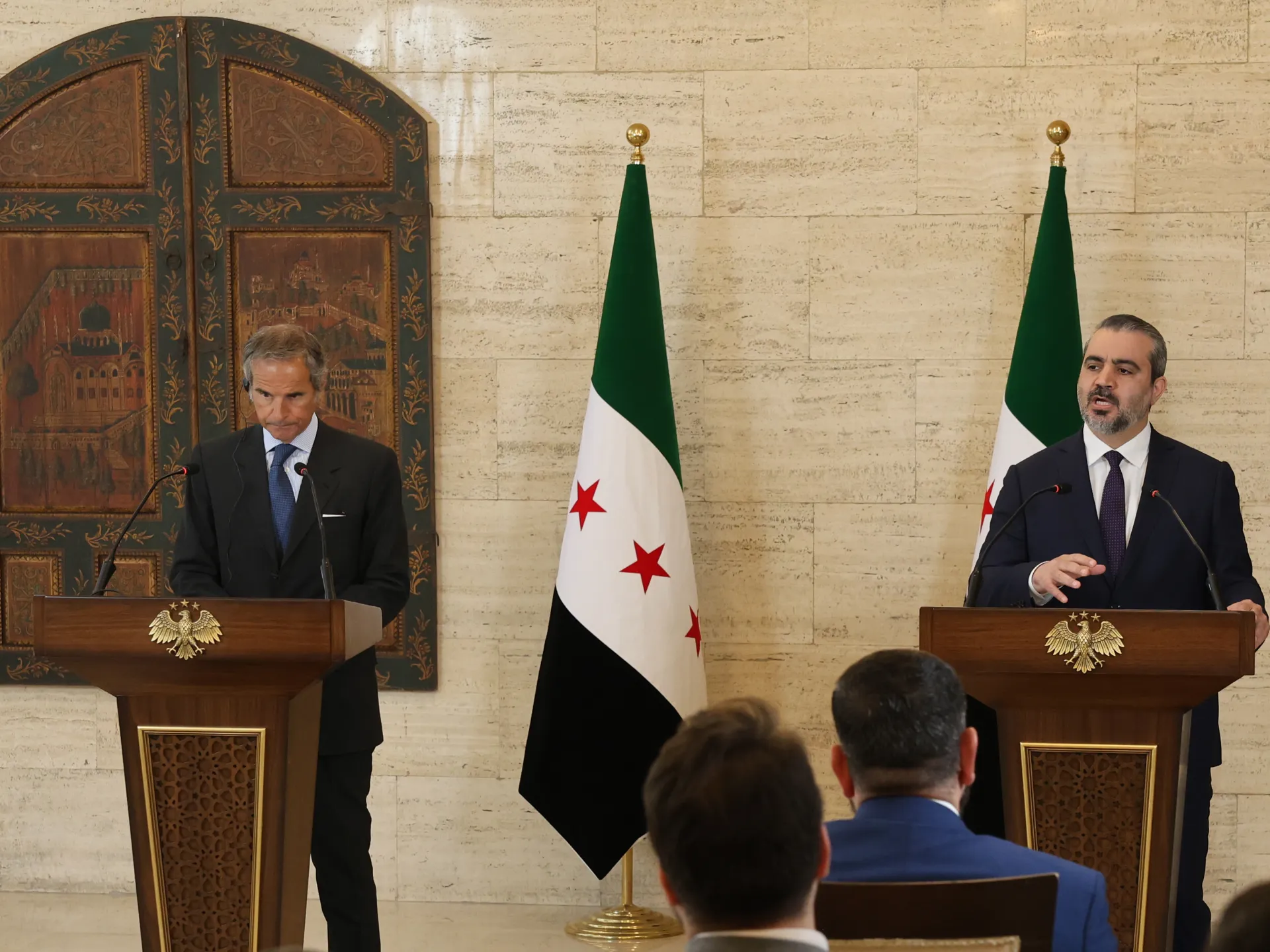
Get you up to speed: Syria’s Assad-era reactor configured for nuclear weapons: IAEA
The International Atomic Energy Agency (IAEA) has reported that Syria’s nuclear facility was configured to produce material potentially usable for nuclear weapons, as confirmed by IAEA Director General Rafael Grossi during a media conference in Vienna. The IAEA’s findings stem from a visit to various sites in Syria in August, where they uncovered a reactor’s cooling infrastructure consistent with nuclear capabilities, and confirmed that the material is now under IAEA safeguards.
The International Atomic Energy Agency confirmed that during its August visit, it uncovered the cooling infrastructure consistent with a nuclear reactor at the Deir Az Zor site and has installed surveillance cameras to monitor the area. The Syrian administration, formed after the 2024 overthrow of Bashar al-Assad, has cooperated with the IAEA by notifying the agency of previously undeclared sites, including a fuel fabrication plant.
The International Atomic Energy Agency (IAEA) has stated that nuclear material at Syria’s Deir Az Zor site is now under its safeguards, following an investigation that uncovered a reactor capable of producing fissile material for nuclear weapons. The IAEA intends to continue monitoring the site as excavation progresses and maintains that the Syrian authorities have cooperated by inviting nuclear inspectors to evaluate previously undeclared sites.
What remains unclear — It is not specified what further actions the IAEA will take regarding the ongoing monitoring of the excavated sites in Syria.
IAEA reports Syria’s Assad-era reactor configured for nuclear weapons
NewsSyria’s Assad-era reactor configured for nuclear weapons: IAEA
UN watchdog says material now is under IAEA safeguards.
Published On 7 Sep 20267 Sep 2026
Syria’s Assad-era nuclear facility was configured to produce material for possible use in nuclear weapons, the head of the International Atomic Energy Agency has reported.
The nuclear reactor, which the United Nations nuclear watchdog has been investigating with the cooperation of Syria’s new authorities, would have been able to produce fissile material that could be used for weapons, IAEA Director General Rafael Grossi told a media conference in Vienna on Monday.
“This is a reactor that is very efficient in the production of fissile material that could be used directly for the fabrication of nuclear weapons,” he said.
Grossi’s comments came a week after the UN watchdog revealed in a confidential report that it had visited several sites in Syria in August and carried out verification work.
Based on observations at the Deir Az Zor site, the agency said it confirms “that the cooling infrastructure which has now been uncovered is consistent with that of a nuclear reactor”.
The agency added that it would continue to monitor the activities at the site “as the excavation work progresses”.
Syria was believed to have operated an extensive, undeclared nuclear programme under former President Bashar al-Assad that included a nuclear reactor built by North Korea in Deir Az Zor.
It only became public knowledge after Israeli air strikes in 2007 destroyed the facility. Syria later levelled the site and never responded fully to the IAEA’s questions about it.
Grossi said when the inspectors visited the site in August they had to “tear down walls” and go through “very difficult and narrow passages” to reach the nuclear material that had been hidden. The site had “boxes scattered all over the place,” he said.
Grossi said that “the important thing is that this material now is under safeguards” of the IAEA, adding that agency inspectors had managed to install cameras there.
Israel is believed to have its own undeclared atomic weapons programme, which makes it the only nuclear armed country in the Middle East. Israel neither confirms nor denies having nuclear weapons.
The IAEA has said that the former Syrian authorities had failed to report nuclear material, facilities and activities.
Besides the nuclear reactor at Deir Az Zor, the IAEA listed a fuel fabrication plant, where nuclear fuel for the reactor was manufactured and a store for the nuclear fuel, uranium scrap and waste.
During the visit to Syria last month, an IAEA team also visited a previously undeclared site.
The Syrian administration – made up of the group that overthrew Assad in 2024 – notified the agency of its existence in July and invited the nuclear inspectors to investigate.