



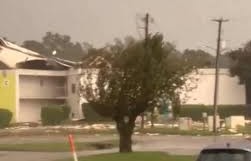
Media Lens: Hurricane Isaias weakens after Florida landfall as flooding threat remains
Hurricane Isaias batters US Gulf Coast, causing power outages.
Hurricane Isaias has weakened after making landfall in Florida as a Category 2 storm. Hundreds of thousands of residents are currently without power, according to coverage in the latest US news and US and global politics.
What happened
Hurricane Isaias has recently been downgraded to a post-tropical cyclone after making landfall as a Category 2 storm in Florida. The storm has resulted in widespread power outages affecting hundreds of thousands of residents along the Gulf Coast.
As Isaias weakens and moves inland, flooding remains a significant threat in affected areas. Authorities are continuing to monitor the situation for potential hazards as the storm dissipates.
Key facts
- The hurricane named Isaias has impacted the US Gulf Coast.
- Hundreds of thousands are reported to be without power due to the storm.
- Isaias has been downgraded to a post-tropical cyclone.
- The storm made landfall in Florida as a Category 2 hurricane.
- There are ongoing flooding threats in areas affected by Isaias.
Where coverage differs
- The Guardian emphasizes the scale of the impact from Hurricane Isaias, while The New York Times emphasizes the storm’s transition and weakening after making landfall.
- WESH foregrounds local responses and safety concerns due to flooding threats, rather than the broader implications of the storm.
- ABC News prioritizes ongoing updates about the storm’s status and recovery efforts over personal stories from affected individuals.
One story, four angles
The Guardian – Hurricane Isaias live updates: hundreds of thousands without power as storm batters US Gulf Coast
Publication: The Guardian | Primary framing pattern: consequence | Tone: urgent | Intensity: 8/10 | Sentiment: -1 | Legal precision: low
Expand
Espresso Shot: The Guardian focuses on the immediate aftermath of Hurricane Isaias, emphasizing the widespread power outages and infrastructure damage affecting hundreds of thousands. The tone conveys urgency as it reflects the severe impacts of the storm on communities, underscoring the need for immediate attention and assistance.
Publication emphasis: The primary focus is on the consequences of the hurricane, particularly the loss of power and infrastructure problems.
Framing analysis: The outlet foregrounds the direct effects of the hurricane on individuals and communities, whereas governmental or institutional responses are given less emphasis.
Bias: Selection: Focuses on the human impact of the hurricane. Language: Descriptive and urgent. Omission: Less focus on recovery efforts or systemic analyses.
Assessment: The Guardian effectively highlights the dramatic consequences of Hurricane Isaias on affected populations.
The New York Times – Live Updates: Isaias Moves Inland as Weaker Storm After Lashing Gulf Coast
Publication: The New York Times | Primary framing pattern: legal | Tone: informative | Intensity: 6/10 | Sentiment: 0 | Legal precision: moderate
Expand
Espresso Shot: The New York Times presents detailed live updates on Hurricane Isaias, noting its weakening status after impacting the Gulf Coast. The updates cover weather patterns, governmental responses, and public safety concerns, striking a balance between informative coverage and ongoing developments.
Publication emphasis: The emphasis is on providing real-time updates concerning weather changes and official responses to the storm.
Framing analysis: The outlet foregrounds the shifting nature of the storm while providing background information on state and local responses, thus connecting the immediate impacts with systemic reactions.
Bias: Selection: Emphasizes ongoing updates related to the storm’s movement and effects. Language: Neutral and straightforward. Omission: Less focus on extreme human impacts unless later reported.
Assessment: The New York Times provides valuable real-time information, emphasizing both weather phenomena and institutional responses.
WESH – Isaias weakens after Category 2 landfall in Florida, but flooding threat continues
Publication: WESH | Primary framing pattern: consequence | Tone: cautionary | Intensity: 7/10 | Sentiment: -1 | Legal precision: low
Expand
Espresso Shot: WESH stresses the aftermath of Hurricane Isaias, especially its downgrade from a Category 2 storm, while warning about lingering flooding. The report emphasizes the need for caution among residents as potential risks remain despite the storm weakening.
Publication emphasis: The primary focus is on the continued threat of flooding and the dangers tied to the hurricane’s remnants.
Framing analysis: Foregrounds the risks associated with post-storm conditions, emphasizing that weakening does not eliminate dangers, while minimizing broader implications or governmental narratives.
Bias: Selection: Focuses on immediate threats like flooding. Language: Cautionary and concerned. Omission: Less attention to recovery or long-term infrastructure implications.
Assessment: WESH’s coverage effectively highlights ongoing dangers while underlining a necessary caution for affected residents.
ABC News – Hurricane Isaias updates: Isaias downgraded to post-tropical cyclone
Publication: ABC News | Primary framing pattern: policy | Tone: explanatory | Intensity: 5/10 | Sentiment: 0 | Legal precision: medium
Expand
Espresso Shot: ABC News provides insights into the transitioning status of Hurricane Isaias to a post-tropical cyclone, addressing public safety measures and explanations of what this designation means for residents. The coverage connects the storm’s downgrading with implications for preparedness and ongoing safety responses.
Publication emphasis: The focus is on explaining the nature of the storm’s downgrade and its implications for safety protocols.
Framing analysis: Foregrounds helpful information regarding public safety and the implications of the storm’s classification, while less emphasis is given to personal experiences or immediate aftermath consequences.
Bias: Selection: Highlights safety measures and public advisories. Language: Informative and clear. Omission: Less focus on human impact or personal stories related to the storm’s aftermath.
Assessment: ABC News effectively communicates vital information about the storm’s evolution, emphasizing public safety and preparedness.
Food for thought
The Guardian frames the impact of Hurricane Isaias with a strong legal context, emphasizing liability in disaster management and the consequences for government authorities. In contrast, The New York Times adopts a more escalatory tone, intensifying fears by portraying the storm’s progression and aftermath as exceptionally catastrophic, creating a sense of immediate urgency. WESH presents an intermediate position, acknowledging the storm’s weakening but still highlighting ongoing flooding threats. The framing differences reflect varied focuses on accountability versus alarm, highlighting the tension between effective communication and fear-based narratives in disaster reporting. The facts do not change. What changes is where scrutiny lands.