
Latest News
- Three men found guilty of murdering Australian brothers and US friend in Mexico
- Second crossing discussion returns in Central Okanagan amid B.C. election campaign
- Three killed in Houthi strike on Saudi Arabia’s King Khalid Airport
- Waterspout causes extensive damage in Sicily, overturning cars and damaging school
- Latvian Border Guard seeks powers amid migrant crossings from Belarus
- Israeli drone attack injures six in Lebanon near Syrian border
- Another whale from Marineland dies at Shedd Aquarium in Chicago
- Judge rules against DOJ’s state voter roll review policy, citing legality issues






Media Lens: Three men found guilty of murdering Australian brothers and US friend in Mexico
Three men received guilty verdicts for the murders of Australian brothers and a US friend during a surfing trip in Mexico. The court’s decision follows a trial that revealed details about the tragic incident.
Quick links: What has happened | Status quo | Confirmed facts | Preconceptions | Elisions | One story, four angles | Related links
What has happened
Three men were found guilty in connection with the murders of two Australian brothers and their American friend during a surfing trip in Mexico. The incident occurred in October 2024, drawing significant media attention to the case and highlighting safety concerns in tourist areas.
The verdict was delivered by a Mexican court, which outlined the details surrounding the crime and the roles played by each of the defendants. The case has raised awareness about violence against tourists and has prompted discussions regarding law enforcement and security measures in popular destinations.
Status quo
Three men have been found guilty of the murders of two Australian brothers and their American friend while they were on a surfing trip in Mexico. The verdict was reached following a trial that revealed the suspects’ involvement in the violent attacks, which occurred during the trip. The case has drawn significant media attention due to the international implications and the nature of the crimes.
Confirmed facts
- Three men have been found guilty of murdering Australian surfer brothers and a US friend in Mexico.
- The incident occurred during a surfing trip in 2024.
- The verdict was delivered by a Mexican court.
- The charges stem from the deaths of the two brothers and their friend while they were surfing.
Preconceptions
- CBS News prioritizes the identification of the victims in the headline (“killing American and Australian brothers”), while BBC emphasizes the legal outcome (“guilty of murdering Australian brothers and US friend”).
- CNN includes the term “2024 killing” in their title, highlighting the date for context, whereas The Guardian focuses on the victims and framing the events as murders rather than just killings.
- While CBS News presents the incident as a singular event focusing on the verdict, BBC includes broader context by mentioning both victim nationalities and the relationship (brothers and friend).
- The Guardian references specific individuals in its coverage, indicating a more personal connection, while CNN maintains a formal tone, limiting emphasis on the human aspect of the story.
Elisions
- CBS News reports the timeline of the murders as occurring in 2024, while CNN’s headline refers to the event as the “2024 killing”, creating confusion about the exact time frame of the murders.
- The Guardian describes the victims as two Australian brothers and a US friend, whereas BBC mentions the victims as “Australian brothers and US friend”, lacking the specificity of their roles (brother, friend) compared to the other sources.
- Both CBS News and The Guardian reference the guilty verdicts and the crime but do not include details about potential sentencing, while CNN emphasizes this aspect, showcasing a significant difference in covering the consequences of the verdicts.
One story, four angles
CBS News – 3 men found guilty of killing American and Australian brothers on surfing trip in Mexico
Publication: CBS News | Intensity: (7/10) | Sentiment: Neutral | Legal precision: Moderate
Expand
Espresso Shot: CBS News leads with the conviction of three men involved in a tragic murder case, highlighting the gravity and international implications of the crime first.
Key differences:
– **Comparison:** CBS focuses on the emotional impact by calling it a “tragedy,” whereas BBC emphasizes the legal outcome with “guilty verdicts.”
– **Example:** “killing American and Australian brothers” highlights nationality and evokes emotions compared to BBC’s more clinical “murdering Australian brothers and US friend.”
-
Comparison: CBS features victim stories prominently, while CNN emphasizes the judge’s remarks about the case’s significance.
-
Example: CBS mentions “surfing trip,” invoking a sense of adventure lost, while CNN’s tone is more detached, focusing on judicial details.
-
Comparison: Omission of deeper context in CBS about local conditions for tourists, which other outlets might address.
-
Example: CBS fails to mention judicial concerns highlighted by CNN regarding “Mexico’s safety issues for tourists.”
Bias: Selection: CBS highlights victims’ backgrounds, potentially eliciting sympathy | Language: Uses evocative terms like “tragedy” to sway emotions | Omission: Lacks discussion on broader implications for safety in Mexico.
Assessment: The reader is likely to feel a strong emotional connection to the victims and sympathize with their families from the outset.
BBC – Three men found guilty of murdering Australian brothers and US friend in Mexico
Publication: BBC | Intensity: (5/10) | Sentiment: Neutral | Legal precision: High
Expand
Espresso Shot: BBC presents the verdict with a focus on the judicial process and the implications of the ruling for crime in tourist areas.
Key differences:
– **Comparison:** BBC emphasizes legal precision by detailing the trial process rather than victim narratives, while CBS evokes emotional responses.
– **Example:** “found guilty of murdering” focuses on the act, contrasting with CBS’s emotive framing of “killing.”
-
Comparison: BBC’s neutral language contrasts sharply with CBS’s emotional rhetoric, presenting a more detached view on the judicial outcome.
-
Example: “Three men found” is straightforward, in contrast to CBS’s “tragic context” focus.
-
Comparison: BBC addresses the issue of crime in Mexico, which other outlets downplay or omit entirely.
-
Example: Mentions implications for safety in Mexico, whereas CBS doesn’t contextualize the risk for tourists.
Bias: Selection: BBC heavily favors legal elements over emotional victimization, potentially disengaging emotional readers | Language: Utilizes factual language, sometimes leading to a cold tone | Omission: Lacks detailed personal stories which could connect readers to the victims.
Assessment: Readers may initially perceive the case as a strictly legal matter, obtaining less emotional engagement with the victims.
CNN – Three men found guilty in the 2024 killing of Australian and US surfers in Mexico
Publication: CNN | Intensity: (6/10) | Sentiment: Neutral | Legal precision: High
Expand
Espresso Shot: CNN prioritizes the judicial aspects of the case while highlighting the significance of the verdict ashore.
Key differences:
– **Comparison:** CNN’s focus on the future implications of this case contrasts with CBS’s emotional angle highlighting past victim experiences.
– **Example:** “significance of the verdict” indicates future considerations rather than simply reflecting on the crime.
-
Comparison: CNN’s language is less emotive compared to CBS, reflecting a harsher legal tone.
-
Example: Descriptions like “found guilty in the killing” target the legal outcomes, unlike CBS’s evocative “tragic.”
-
Comparison: CNN includes a broader context, mentioning the trial’s implications on tourists’ safety which other outlets may omit.
-
Example: Highlights “safety of foreign visitors” that neither CBS nor BBC delve deeply into.
Bias: Selection: CNN incorporates legal significance yet somewhat underrepresents emotional narratives | Language: Adopts a more clinical tone, which may alienate emotional readers | Omission: Lacks in-depth personal storytelling about the victims.
Assessment: Readers might grasp the seriousness of judicial matters but feel detached from the personal stories of those affected.
The Guardian – Three men found guilty of murders of Australian surfer brothers and US friend in Mexico
Publication: The Guardian | Intensity: (7/10) | Sentiment: Negative | Legal precision: Moderate
Expand
Espresso Shot: The Guardian highlights the emotional toll on families while emphasizing the gravity of the verdict, urging readers to consider the broader implications.
Key differences:
– **Comparison:** The Guardian prioritizes human stories, contrasting with CNN’s legal focus.
– **Example:** “murders of Australian surfer brothers and US friend” emphasizes the victim’s identities and backgrounds.
-
Comparison: The Guardian’s narrative includes more emotional framing compared to the more analytical approach of BBC.
-
Example: Characterizes the verdict as a “grave injustice” amidst a superficial legal perspective elsewhere.
-
Comparison: The Guardian discusses repercussions for tourists in Mexico that other sites might ignore or mention superficially.
-
Example: Talks about “safety and repercussions for tourists” indicating concerns for future travelers, unlike CBS.
Bias: Selection: The Guardian highlights victim narratives to evoke sympathy, overshadowing broader legal context | Language: Uses emotionally charged language to sway readers | Omission: Neglects hard legal statistics that may provide clarity on the case relevance.
Assessment: Readers are likely to connect deeply with the families involved, cultivating a sense of empathy towards the victims.
In the coverage of the verdict against three men for the murders of Australian surfers in Mexico, CBS News adopted a concise and factual framing, emphasizing the implications of the jury’s decision. Meanwhile, BBC framed the story with a broader focus on international victims, heightening emotional resonance. CNN’s coverage leaned towards urgency in presenting the details of the trial, evoking a sense of escalation. The Guardian provided a comprehensive angle, contextualizing the violence in Mexico. Ultimately, CBS News offers the most straightforward presentation, while CNN and BBC present the narrative with heightened stakes and implications.
The facts do not change. What changes is where scrutiny lands.
Related links
CBS News
3 men found guilty of killing American and Australian brothers on surfing trip in Mexico
BBC
Three men found guilty of murdering Australian brothers and US friend in Mexico
CNN
Three men found guilty in the 2024 killing of Australian and US surfers in Mexico
The Guardian
Three men found guilty of murders of Australian surfer brothers and US friend in Mexico
Get you up to speed: Second crossing debate resurfaces in Central Okanagan during B.C. election campaign
An accident caused the closure of all three southbound lanes on the W.R. Bennett Bridge in Kelowna for several hours, resulting in significant traffic backlogs. Authorities have not confirmed details regarding casualties or the cause of the accident.
Officials continue to investigate the recent accident that led to the temporary closure of all three southbound lanes. No timeline has been provided regarding when the traffic situation will return to normal.
Local officials are evaluating traffic management strategies following the recent accident that closed all three southbound lanes of W.R. Bennett Bridge for several hours. The incident has prompted calls for improved safety measures to prevent future incidents and alleviate ongoing traffic issues in the area.
What remains unclear — The cause of the accident that led to the closure of all three southbound lanes remains unidentified.
Second crossing discussion returns in Central Okanagan amid B.C. election campaign
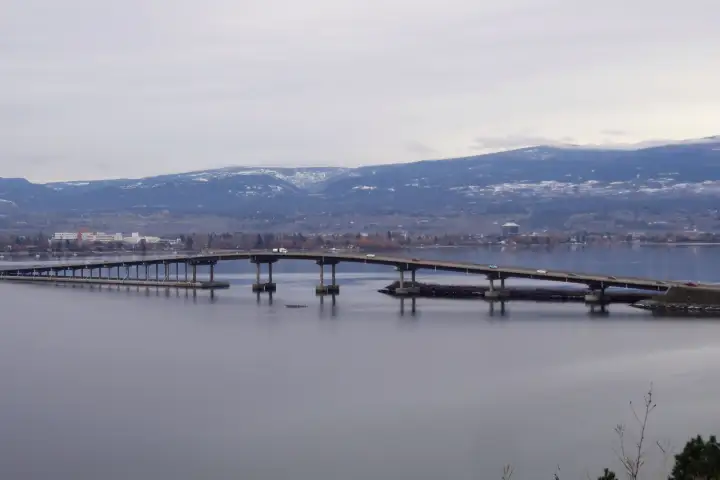
The issue was highlighted earlier this month again when an accident forced the closure of all three southbound lanes for several hours, creating significant traffic backlogs.
Get you up to speed: Live Updates: Iran’s Houthi allies kill 3 in strike on Saudi airport as Trump rules out pre-midterms strikes
Three Saudi citizens were killed and several others were wounded in attacks on Thursday targeting Riyadh’s King Khalid International Airport and a Saudia Airlines aircraft. The Saudi civil aviation authority confirmed that injuries ranged from minor to serious, though the incident marks the deadliest attack in the kingdom since the recent military offensive against Yemen’s Houthi rebels began.
The General Authority of Civil Aviation (GACA) reported that injuries from the attacks varied from minor to serious among the wounded. This incident marks the first confirmed assault on Saudia Airlines since the escalation of military operations in the region, highlighting growing risks in Saudi airspace following recent threats from the Houthis.
The Saudi Arabian government condemned the attacks that killed three citizens at King Khalid International Airport and stated that investigations are ongoing. The Saudi aviation authority warned that global airlines should remain vigilant, as the Houthis have declared Saudi airspace a military operation zone, indicating potential further escalation in attacks.
What remains unclear — It is not known how many individuals were seriously injured in the attacks.
Three killed in Houthi strike on Saudi Arabia’s King Khalid Airport
Three Saudi citizens were killed and several other people “of different nationalities” were wounded in attacks targeting Riyadh’s King Khalid International Airport and a Saudia Airlines aircraft, the kingdom’s civil aviation authority said Friday.
Thursday’s attack was the deadliest in Saudi Arabia since the kingdom and allied forces in neighboring Yemen launched a major military offensive last weekend aimed at retaking territory seized by Yemen’s Iran-backed Houthi rebels.
It was a significant escalation in what appears to be the new epicenter of the wider war in the Middle East sparked by the joint U.S.-Israeli assault on Iran in late February.
The first attack Thursday afternoon targeted airport facilities, while the second struck the aircraft, which was empty at the time, the Saudi statement said. It did not identify those responsible, though the Houthis have claimed to target the airport repeatedly this week with ballistic missiles, including on Thursday.
Among the dead was Capt. Hamoud Ali Alkalthami, the Saudia Group said in a statement seen by the Associated Press. It appeared to be the first confirmed attack on the Saudi national carrier since the new offensive against the Houthis began.
The Saudi aviation agency, GACA, said in its statement that injuries to citizens and people of other nationalities “ranged from minor to serious.”
The Houthis this week warned global airlines “for the last time” about the potential consequences of operating in Saudi airspace, which they have declared a theater for military operations.
On Wednesday, Saudi officials said attacks on the Riyadh and Abha airports claimed by the Houthis had killed three people.
WTX/AP
Get you up to speed: Devastating waterspout tears through Sicily overturning cars and damaging school | News World
A waterspout caused significant damage in Marsala, Sicily, overturning cars and damaging the Alcide De Gasperi school while students were inside. Several people are reported injured and are receiving treatment from emergency personnel.
Emergency personnel are currently assessing the situation and responding to hundreds of calls for help related to the damage. The heavy storm system in Sicily is contributing to the severity of the conditions, although waterspouts and tornadoes typically do not result in extensive harm in the region.
Regional deputy of the 5 Star Movement, Cristina Ciminnisi, emphasised the severity of the damage in Marsala and Petrosino, stating, “The images I am receiving… are shocking.” Emergency services are currently assessing the situation and responding to hundreds of calls as they work to secure affected areas.
What remains unclear — It is not yet known how many people have been injured in the incidents across Marsala and Petrosino.
Waterspout causes extensive damage in Sicily, overturning cars and damaging school
A waterspout has caused widespread damage in Sicily, overturning cars and damaging a nearby school.
Marsala saw severe weather this morning, with two waterspouts forming over the sea.
The tornadoes hit land in southern Marsala, between Strasatti and Terrenove.
The Alcide De Gasperi school saw windows shattered and cabinets overturned as students were inside.
Several people are reported to be injured and are being treated by emergency personnel.
Sign up for all of the latest stories
Residents shared dramatic photos showing two dark waterspouts moving into the city.
One wrote: ‘I’ve never been afraid of dying like I was a few hours ago. This stuff in 2 minutes became 4 times bigger.
‘I’m still shaking, but luckily everything’s ok at my house. It’s hell.’
Farm warehouses have been damaged as well, along with uprooted trees and fallen telephone poles.
Cars on a roadway towards Petrosino were overturned, with some pictured in nearby ditches.
Emergency workers are responding, fielding hundreds of emergency calls as they attempt to assess the situation.

A local warehouse was destroyed (Picture: Facebook)
Regional deputy of the 5 Star Movement, Cristina Ciminnisi, said: ‘The images I am receiving from Marsala and Petrosino are shocking: destroyed houses, torn roofs, overturned cars, and a school hit while there were children and school staff inside.
‘My thoughts are with them, the families, and all the people involved. I thank those who are currently engaged in the first aid and securing the affected areas.’
Waterspouts and tornadoes aren’t uncommon in Italy, but often don’t cause widespread damage.
The heavy storm system moving across Sicily has made the situation more dangerous.
Comment now
Comments
Add WTX as a Preferred Source on Google
Latvian Border Guard seeks powers amid migrant crossings from Belarus
Border Security
Latvian Border Guard is seeking increased powers to enhance security measures as armed, masked escorts reportedly lead migrants from Belarus into Latvia.
Latvian Border Guard is seeking increased powers to enhance security measures as armed, masked escorts reportedly lead migrants from Belarus into Latvia.
Security Measures
Latvia’s proposal for enhanced powers reflects a strategic response to escalating migrant movements, underscoring the government’s commitment to border security and national stability.
Latvia’s proposal for enhanced powers reflects a strategic response to escalating migrant movements, underscoring the government’s commitment to border security and national stability.
Government Support
“We must ensure strong measures are in place to protect Latvia’s security,” stated the Latvian Interior Minister regarding the need for enhanced border control powers.
“We must ensure strong measures are in place to protect Latvia’s security,” stated the Latvian Interior Minister regarding the need for enhanced border control powers.
Latvia’s border guard seeks greater powers amid increasingly violent border crossings
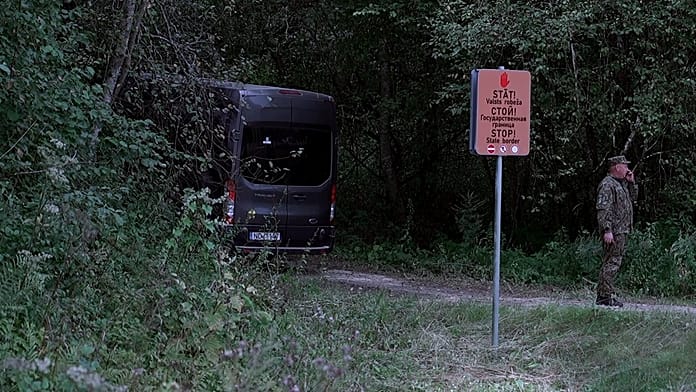
As “armed, masked escorts” lead migrants from Belarus into Latvia, the Latvian Border Guard is seeking greater powers to “protect Latvia’s security.” The interior minister supports the proposal.
Get you up to speed: Israeli drone attack wounds six in Lebanon near Syria border
An Israeli drone attack in Lebanon’s Hermel district, near the Syrian border, has wounded six people, including five Syrians and one Lebanese national. The Lebanese health ministry has confirmed the injuries following the airstrike, which targeted a vehicle.
The Lebanese health ministry confirmed that the six wounded individuals were receiving medical attention following the drone strike. Israel has conducted hundreds of strikes in Syria since December 2024, amid ongoing tensions with both Syria and Hezbollah.
Lebanon’s health ministry confirmed that six individuals, including five Syrians, were wounded in the drone attack, marking a significant violation of the previously established ceasefire between Israel and Hezbollah. Syria’s President Ahmed al-Sharaa has condemned the attack, reiterating calls for Israeli withdrawal from Syrian territory and urging the international community to uphold the 1974 agreement for a UN-supervised separation zone.
What remains unclear — It is not specified whether there were any casualties among those targeted in the drone attack described by Israel’s military.
Israeli drone attack injures six in Lebanon near Syrian border
News|Israel attacks LebanonIsraeli drone attack wounds six in Lebanon near Syria border
Five Syrians and one Lebanese wounded in latest Israeli attack, officials say.
Published On 10 Oct 202610 Oct 2026
 Published On 10 Oct 202610 Oct 2026
An Israeli drone attack has wounded six people in Lebanon’s Hermel district, close to the Syrian border, according to the Lebanese health ministry.
The ministry said on Friday that the six wounded included five Syrian nationals, two of them women, and one Lebanese.
Lebanon’s state-run National News Agency (NNA) reported that the drone attack targeted a car.
It added the area has largely been spared such attacks since an Israel-Hezbollah ceasefire was agreed in June.
Israel’s military claimed it struck “a Syrian terrorist” who “operated under the direction of the Iranian regime”, alleging that the man “planned and advanced attacks” against Israeli forces in Syria’s southern territory.
Since the ouster of longtime Syrian ruler Bashar al-Assad in December 2024, Israel has carried out hundreds of strikes against Syria. It has sent troops into a UN-patrolled buffer zone that had separated Israeli and Syrian forces in the Golan since 1974, and has carried out repeated incursions deeper into Syrian territory, sometimes seizing residents.
Israel has also continued to attack Lebanon since a ceasefire with Hezbollah was agreed in June.
It has vowed to keep troops in so-called security zones along its border in both Syria and Lebanon.
Syria’s President Ahmed al-Sharaa told the UN General Assembly last month: “We reject Israeli attempts to impose a fait accompli. We reject their aggressions, which undermine peace and security.”
He said Israel had carried out “500 air strikes, more than 1,200 incursions and 300 detentions” in Syria.
He also called for Israeli withdrawal from Syrian territory and for the international community to commit to a 1974 agreement that created a UN-supervised separation zone between Israeli and Syrian forces.