


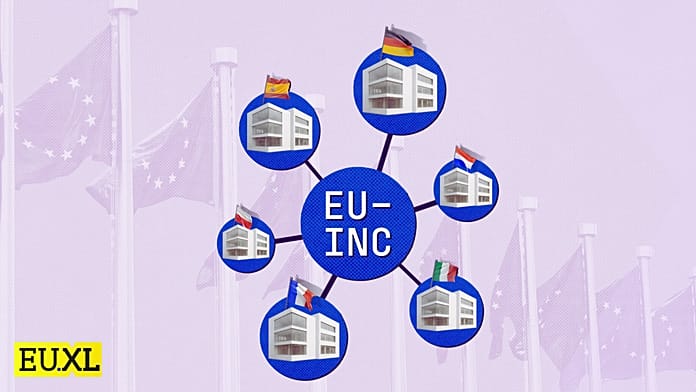
TL:DR – European Commission Introduces EU-INC to Streamline Company Formation
• On 20 January, European Commission President Ursula von der Leyen announced the EU-INC initiative at the World Economic Forum in Davos.
• EU-INC aims to simplify the establishment of companies across the EU by creating a single legal framework.
• Currently, startups in the EU face 27 different legal systems, which impede growth and increase costs.
• The European Commission seeks parliamentary approval for EU-INC by the end of March, aiming for launches in 2027.
• The initiative will not alter taxes or labour laws but aims to address fragmentation within Europe.
EU Inc: Brussels’ plan for a single company law across Europe
European Commission Introduces EU-INC to Simplify Company Formation
On 20 January, European Commission President Ursula von der Leyen announced the introduction of EU-INC at the World Economic Forum in Davos. This new legal framework aims to simplify the process for establishing and growing businesses across the European Union, making it easier for startups to navigate the various legal systems of member states.
The immediate significance of EU-INC lies in its potential to accelerate business growth by providing a unified digital platform for company operations. Currently, entrepreneurs must contend with 27 different legal systems, which can impede expansion and inflate legal costs, as stated by the European Commission.
EU-INC Offers Streamlined Business Operations
EU-INC is described as an optional “28th regime” that is intended to facilitate the scaling of European startups on a global stage. According to the proposal, companies would be able to operate entirely online under a single EU-wide system that is automatically recognised by all member states.
The European Commission has set a target for parliamentary approval by the end of March, with hopes that the first EU-INC companies could launch in 2027. While the framework will not alter tax or labour laws, it addresses a significant barrier to business growth in Europe: legal fragmentation.