



What’s the Latest: Religious symbols ban for Quebec schoolchildren? Conservatives leave door open
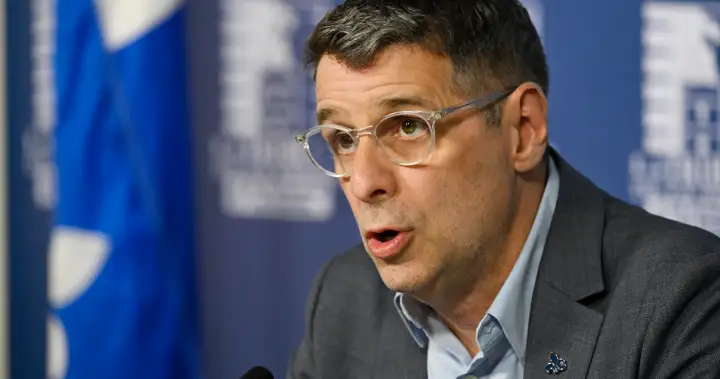
Conservative Leader Eric Duhaime indicated his party could potentially support the Parti Québécois government’s proposal to extend a ban on religious symbols to elementary school students in Quebec. The minority PQ government must gather support from opposition parties to advance this proposal, while Duhaime is seeking more details on its implementation.
The Parti Québécois government requires support from opposition parties to advance its proposal to extend the ban on religious symbols to elementary school students, with Conservative Leader Eric Duhaime seeking implementation details. The Supreme Court is expected to announce its decision on Bill 21 in the coming weeks, which could influence the evolving legislative context around religious symbols in public spaces.
Conservative Leader Eric Duhaime has indicated that his party could support the Parti Québécois’s proposal to extend a ban on religious symbols to elementary school students, pending further details on implementation. Critics, including the English Montreal School Board and civil rights groups, have voiced strong opposition, with calls for the Conservatives to reject the proposal, highlighting concerns about the impact on children’s rights and education.
What remains unclear — It is still unknown how the proposed ban on religious symbols for elementary school students would be implemented and who would be responsible for enforcing it.
Quebec Conservatives consider supporting ban on religious symbols for schoolchildren
Conservative Leader Eric Duhaime has indicated a potential willingness to support the Parti Québécois (PQ) government’s proposal to extend a ban on religious symbols to elementary school students. The minority PQ administration will require opposition backing to progress with its initiatives, and Duhaime stated that more details about the proposal are necessary before his party can commit. “Generally speaking, we’re in favour, you know, of living in a secular society,” he remarked.
The PQ’s proposition would expand upon the previous Coalition Avenir Québec (CAQ) government’s restrictions on religious symbols for certain public-sector workers, which incited significant backlash from civil rights groups and a Supreme Court challenge. The new government aims to broaden these restrictions to include children in schools. Duhaime noted a connection between the limitations imposed on public-sector workers and the forthcoming rules for students, emphasising the desire to “banish religious symbols in the public space, especially within public institutions.”
Duhaime, however, refrained from fully endorsing the proposal, seeking clarity on its implementation specifics. “How are we going to implement that? Who is going to be responsible? What’s the process?” he questioned.
Opposition parties, including the Liberals and Québec solidaire, are opposed to the initiative. The potential for such a ban has drawn criticism from the English Montreal School Board and various civil rights organisations. Joe Ortona, chair of the board, described the legislation as crossing a line, stating, “It’s a very slippery slope to start legislating what children are allowed or not allowed to wear,” adding that the discussion distracts from pressing issues within the education system.
Critics, including Harini Sivalinga from the Canadian Civil Liberties Association, have condemned the proposal as a concerning step backward. Stephen Brown of the National Council of Canadian Muslims raised further concerns about the implications for children wearing religious symbols, questioning if students might be barred from classes for their attire. The discourse is taking place alongside an impending Supreme Court decision regarding Bill 21, which could have significant ramifications on the matter.