



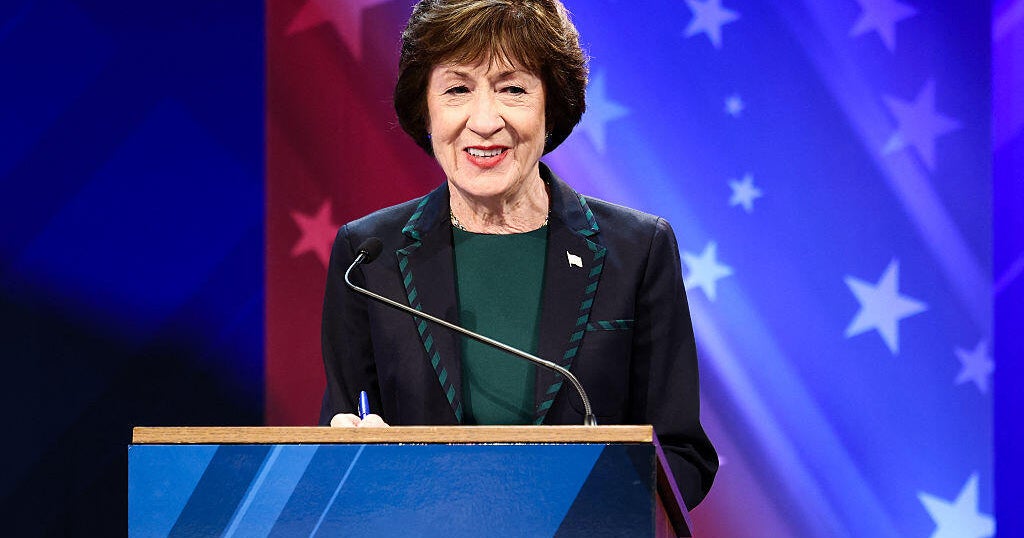
Get you up to speed: Trump lifts 50% tariffs on some Canadian goods in boon to Maine Sen. Susan Collins
President Trump reduced tariffs on several Canadian products, including refrigeration equipment and packing machinery, benefiting Maine’s agricultural sector. The decision, praised by Republican Senator Susan Collins, comes after a previous imposition of 50% tariffs on these goods in August.
The White House has specified that the tariff exemptions apply to specific agricultural-related products essential for Maine’s farmers, which had previously been subjected to hefty tariffs imposed in late August following stalled trade negotiations. The legislative push for these exemptions comes amid increasing pressure on Senator Collins from both constituents and opponents as the election approaches, drawing attention to ongoing economic concerns tied to trade policy and its impacts on local agriculture.
Republican Senator Susan Collins welcomed President Trump’s decision to eliminate tariffs on select Canadian products vital to Maine’s agricultural sector, stating it will help protect local farmers. Meanwhile, Democrats, including Rep. Richard Neal, have condemned the tariff exemptions as a politically motivated act just days before the election.
What remains unclear — It is uncertain how many other Canadian products remain subject to the 50% tariffs that were recently imposed.
Trump reduces 50% tariffs on select Canadian goods benefitting Maine farmers
President Trump on Friday slashed tariffs on a handful of Canadian products that are used widely by Maine’s agricultural industry, a move cheered by Republican Sen. Susan Collins, who is facing a tough reelection battle in the New England state.
The items that are no longer subject to 50% tariffs include corrugated boxes, crates, plastic sacks, packing machinery, refrigeration equipment and seaweed, according to a White House proclamation. Several new categories of Canadian products were slapped with 50% duties in exchange, including shampoo, vinyl flooring, coffins, carpets and window-unit air conditioners.
In a statement, Collins said the carveouts will protect Maine farmers, including wild blueberry producers who rely on “specialized harvesting boxes from Canada,” and apple and potato farmers who also use Canadian products during the harvest.
The senator, who is seeking a sixth term in a blue-leaning state, said she asked top Trump administration officials for “tariff relief for these important products.”
“These producers are a vital part of our state’s economy and support our rural and coastal communities,” Collins said. “Many of our farmers and growers rely on specialized equipment, packaging materials, and other products from Canada that are either unavailable from American suppliers or cannot be replaced without incurring significant expense.”
Democrats have criticized the tariff exemptions and called them politically motivated.
“After attacking Canada and crushing the American people, I can’t think of a more desperate admission of failed trade policy than temporarily lowering tariffs on select products to favor a political ally 11 days before an election,” said Rep. Richard Neal of Massachusetts, the top Democrat on the House Ways and Means Committee. “This stunt only proves further that Trump’s trade strategy is not grounded in anything legitimate, but rather in naked politicization and manufactured chaos.”
The products were previously included in the billions in Canadian imports that Mr. Trump hit with 50% tariffs in late August after envoys from the two countries failed to strike a trade deal. Canada retaliated with steep tariffs on some U.S. goods.
Mr. Trump has argued the tariffs on Canada are necessary in order to resolve what he views as unfair trade practices by Canada. But the prospect of a trade war with one of the U.S.’s top trading partners — including steep duties on Canadian goods — has drawn pushback from some Republicans in an election year dominated by cost-of-living concerns.
Collins has criticized the trade war — but emphasized that she has pushed for exemptions to help Maine, which borders Canada and is economically intertwined with the country.
“Canada is not China. It is our neighbor, our friend, our closest ally and our biggest trading partner,” Collins said during a debate with Democratic opponent Troy Jackson earlier this month, adding that she has “also been working behind the scenes.”
Collins pointed to previous tariff exemptions for road salt and pulp.
But Democrats have argued that the powerful senator hasn’t done enough to press Mr. Trump to lift the tariffs entirely. During an early October debate, Jackson said: “What about everything else? I mean, we can’t eat road salt.”