



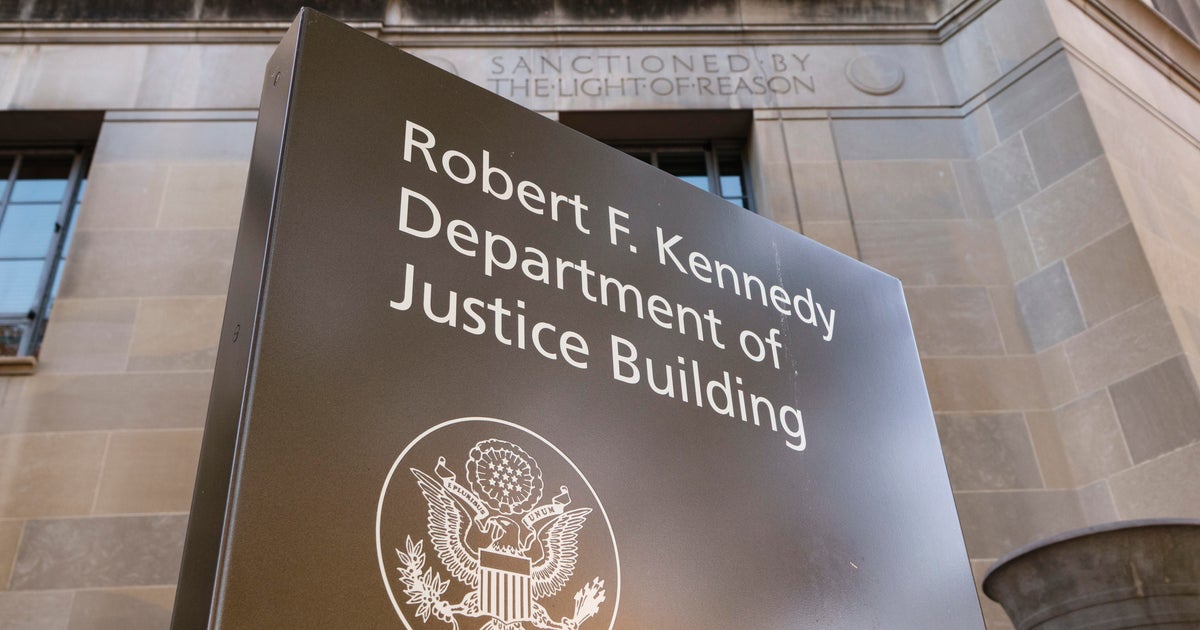
Get you up to speed: Justice Department terminates some school desegregation cases without asking court to ensure past discrimination has ended, watchdog group says
The Justice Department has moved to terminate more than a dozen school desegregation cases without court review, according to a report by Red Line for Civil Rights. This action involves at least 56 school districts since January 2025, with 18 cases dismissed without determining if the districts had achieved “unitary status.”
The Justice Department has supported the dismissal of cases in at least 56 school districts since January 2025, either by withdrawing or not opposing motions to end them. An analysis by Red Line for Civil Rights revealed that in at least 18 instances, this was done without confirming whether the districts had achieved “unitary status,” as required by federal oversight.
The Justice Department’s recent dismissal of over 50 school desegregation cases without court review has prompted criticism from civil rights advocates, with Megan Marks of Red Line for Civil Rights stating, “The shameful withdrawal of DOJ resources from these cases…abandon[s] communities across the country.” In response, the department has been contacted for clarification, while former officials warn that this departure from oversight could undermine legal protections against racial discrimination in schools.
What remains unclear — It is not specified whether the Justice Department plans to reinstate oversight in the dismissed desegregation cases.
Justice Department ends school desegregation cases without court review, report finds
The Justice Department moved to terminate more than a dozen decades-old school desegregation cases without asking the court first to review whether the district successfully ended its past discriminatory practices, a watchdog group has found.
A new analysis released by Red Line for Civil Rights, an oversight project of Democracy Forward run by former DOJ attorneys, reviewed a list of more than 50 school desegregation cases that the Justice Department recently announced it had dismissed.
The review found that since President Trump took office in January 2025, the Justice Department has supported the dismissal of cases in at least 56 school districts, either by formally withdrawing or not opposing motions to end them.
In at least 18 of those cases, the Justice Department supported dismissals without first asking the federal court overseeing the case to determine whether the school district had achieved “unitary status.”
That term, defined by the Supreme Court, means the school district has eliminated the vestiges of past discrimination that were the subject of the cases. The six core areas that are typically reviewed by courts are student assignment, faculty assignment, staff assignment, transportation, facilities and extracurricular activities, though other areas can also be considered.
One such case that was dismissed without determining whether unitary status was achieved is the Concordia Parish, Louisiana case, the group said.
In that example, discrimination persisted at the school for decades, prompting the Justice Department to propose a new agreement in 2024 that the school board rejected.
After Mr. Trump took office, however, the Justice Department switched sides and joined with the school board to dismiss the case. A U.S. District Court judge declined to do so, saying they had to demonstrate the school had achieved unitary status.
But the school board appealed that ruling, and the case was ultimately dismissed.
“The shameful withdrawal of DOJ resources from these cases and investigations highlights how this administration is abandoning communities across the country,” said Megan Marks, deputy director and managing editor of Red Line for Civil Rights, who previously served as deputy chief in the Civil Rights Division’s Special Litigation Section.
“Walking away from them doesn’t mean the discrimination has been addressed. It just means DOJ is no longer watching,” she added.
WTX US News has reached out to the Justice Department for comment on the findings.
At the end of Reconstruction, many states — particularly in the Deep South — enacted what were known as “Jim Crow” laws that enforced racial segregation at public facilities. These laws were spawned by an 1896 Supreme Court decision known as Plessy v. Ferguson, which created the “separate but equal” doctrine that allowed for racial segregation.
In those states, Black children were forced to attend separate schools that often lacked adequate resources and were not easily accessible by public transportation.
A landmark Supreme Court decision in the 1954 civil rights case of Brown v. Board of Education overturned the “separate but equal” doctrine, making it unlawful for public schools to discriminate on the basis of race.
For decades since that decision, the Justice Department’s Civil Rights Division has brought legal actions to protect students from unlawful racial discrimination, often through court-monitored consent decrees with those school districts. Some of those consent decrees have remained in effect for decades, dating back to the 1960s and 1970s.
In some cases, the agreements struck by the Justice Department required school districts to change how students are assigned to different schools or modify other policies to prevent students from being segregated by race.
As of May 2022, the Justice Department still represented the federal government in some 140 school desegregation cases, according to an archived press release.
Prior to September’s announcement by the Justice Department that it had dismissed more than 50 cases, it had only publicly moved to dismiss cases in a handful of locations: Dyersburg, Tennessee; Plaquemines Parish, Louisiana; Hendry County, Florida; and Copiah County, Mississippi.
However, the Justice Department did not publicly release a list of all the dismissed cases.
Red Line for Civil Rights sought to pull all of the relevant cases from federal dockets across the country and conduct an analysis of their status and how they were terminated.
Harmeet Dhillon, the assistant attorney general for civil rights, in September called the consent decrees “onerous and outdated” and said that prolonged federal oversight in these cases “does not reflect the reality of those classrooms today.”
Regan Rush, the former Special Litigation Section chief at the Civil Rights Division, who now serves as director and editor-in-chief at Red Line for Civil Rights, said Thursday, “This administration’s politicized approach to civil rights enforcement imposes real costs on individuals and entire communities, eroding protections that underpin equal treatment and the rule of law for all.”