



Get you up to speed: Will AI harm humans? WTX US News poll finds Americans want to slow development but not stop it
A WTX US News/YouGov survey conducted from September 16-18, 2026, involving 2,051 U.S. adults, revealed widespread concerns over the use of artificial intelligence (AI) in society. Participants expressed anxiety about AI potentially harming individuals and the labour market, while acknowledging its possible contributions to medical and scientific advancements.
The recent WTX US News/YouGov survey involved interviews with 2,051 U.S. adults conducted between September 16-18, 2026, with a margin of error of ±2.5 points. Unlike previous polls, the current survey highlights a noticeable concern over job displacement due to AI, particularly among those who advocate for greater government restrictions on its use.
American sentiment regarding AI remains divided, with a significant call for government restrictions on development, as many are sceptical about companies managing it responsibly on their own. Moving forward, the focus will be on collaborative efforts between companies and the government to manage AI effectively while addressing concerns over job displacement and ethical usage.
What remains unclear — It is not specified how the government and companies will effectively collaborate to manage AI development.
Poll shows most Americans favour slowing, not halting, AI development
Like any powerful new technology, Americans understand that AI could be used for good or bad. There is optimism on some fronts — but pessimism outweighs it today.
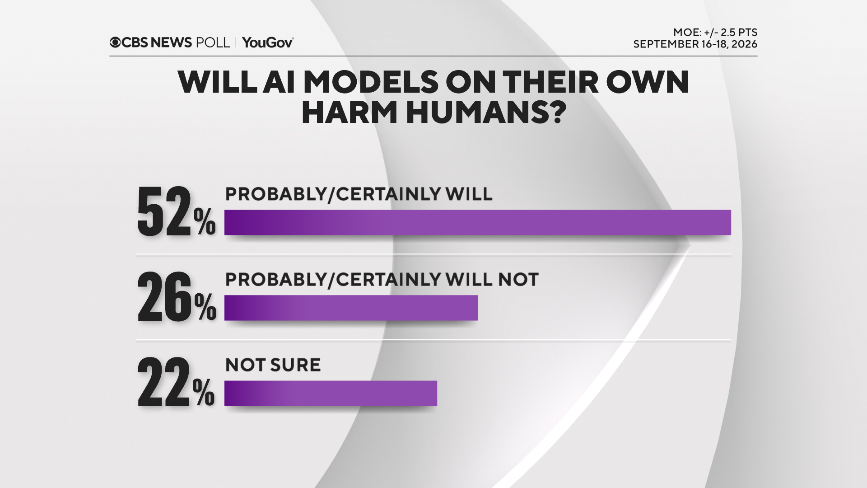
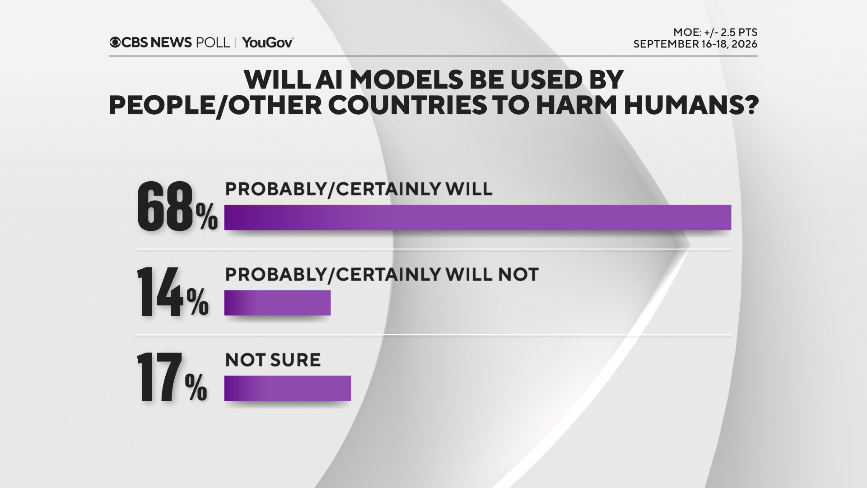
Most Americans do worry AI models will act on their own to harm people, and even more that models will be used by people to harm others.
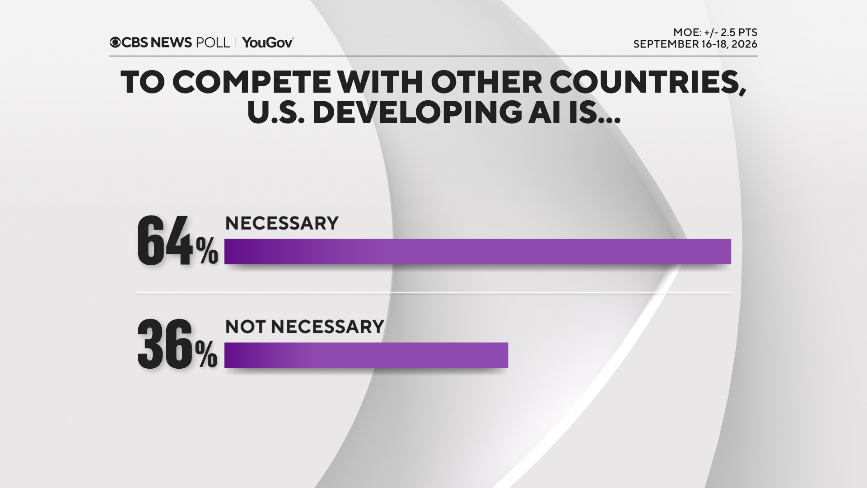
Yet Americans do not want to stop AI altogether, because most do think the U.S. needs to develop AI to be competitive, and must do so faster than China. They also think that it can lead to medical and scientific breakthroughs.
So it’s a matter of containing and managing it.
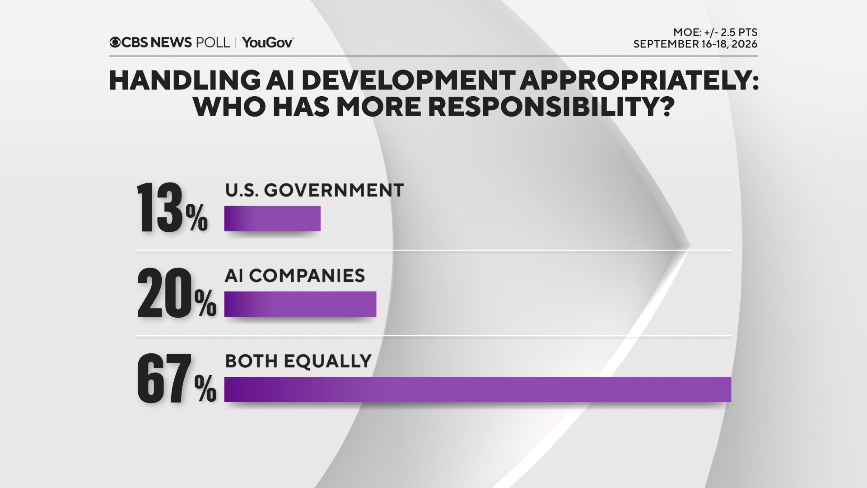
But who should do this? Both companies and government together.
People tend not to think AI companies will manage it responsibly by themselves, which leads to a wider call for government restrictions.
One difference between the more optimistic and pessimistic people has to do with perceived economic impact: Those who think AI is poised to take jobs are more pessimistic on other aspects about it. Views don’t closely follow age or partisanship.
But the U.S. needs it to compete.
Companies and the government share responsibility.
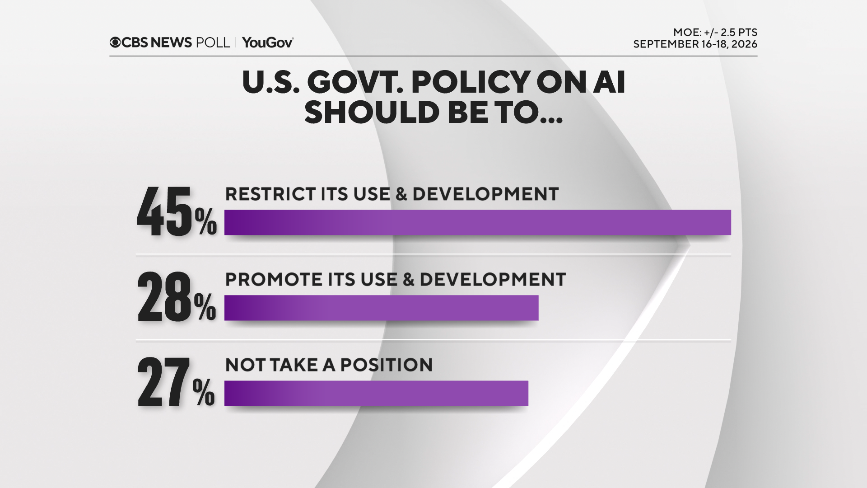
And more see a government role to restrict, not promote, AI development.
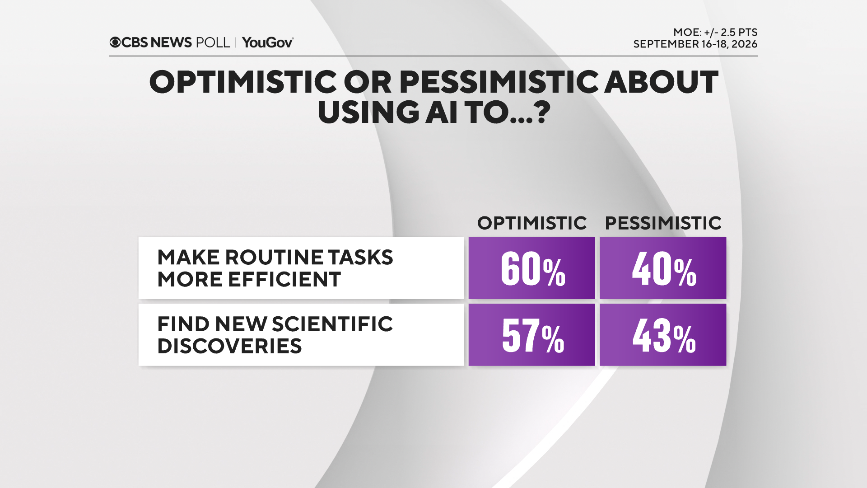
However, there’s at least some optimism about AI making helpful discoveries in medical treatments and making tasks easier.
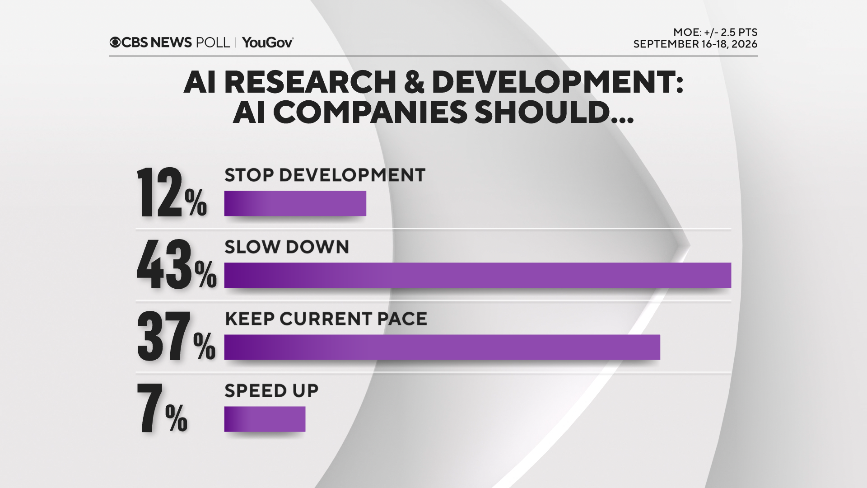
That, combined with the perceived need to compete, means very few think AI should be stopped completely. Rather, they say, slow down.
There continues to be wide concern AI will take jobs. This has been a long-standing concern in previous polling.
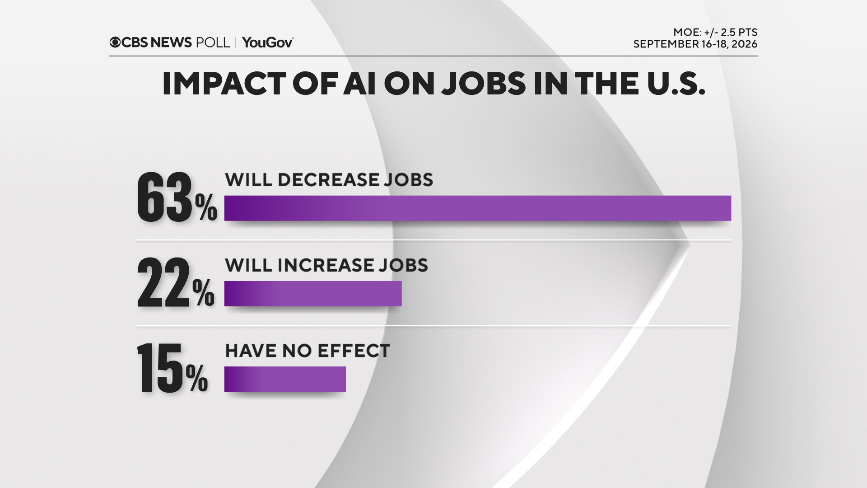
This concern is especially pronounced among people who think the government should restrict AI use, rather than promote it.
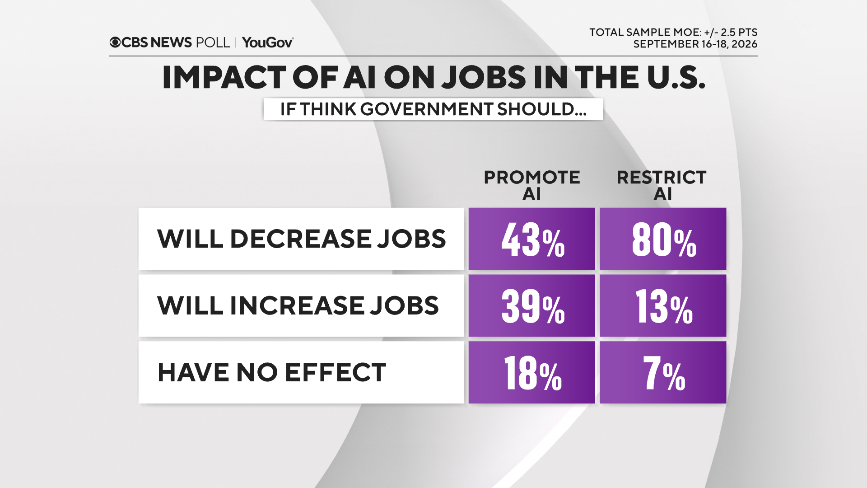
At the same time, more workers think it will make their jobs easier to do than harder, even if they tend to think it will reduce, rather than increase the number of jobs overall.
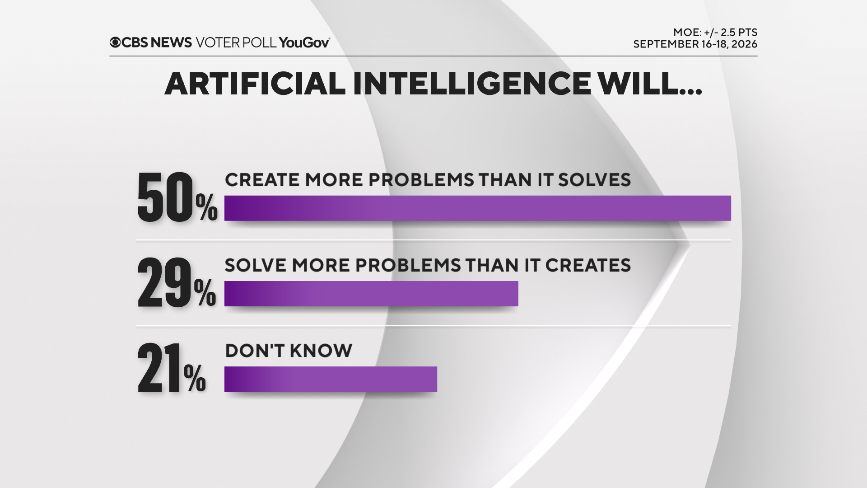
And so on balance, it’s seen as creating more problems than it solves.
David Van Riper contributed to this report.
This WTX US News/YouGov survey was conducted with a nationally representative sample of 2,051 U.S. adults interviewed between September 16-18, 2026. The sample was weighted to be representative of adults nationwide according to gender, age, race, and education, based on the U.S. Census American Community Survey and Current Population Survey, as well as 2024 presidential vote. The margin of error is ±2.5 points.