



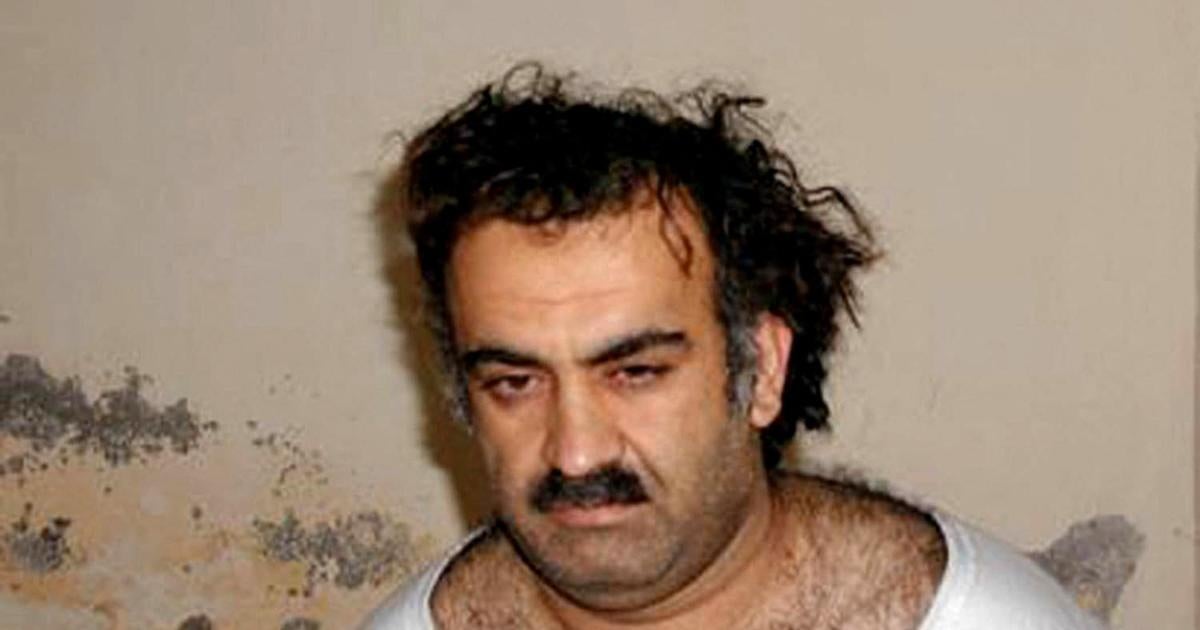
Get you up to speed: Judge throws out confession by alleged 9/11 mastermind Khalid Sheikh Mohammed
A military judge dismissed a confession from Khalid Sheikh Mohammed, who is accused of masterminding the September 11 attacks, determining it was not given voluntarily during an interrogation in Guantanamo Bay in January 2007. The ruling complicates the federal government’s efforts to prosecute Mohammed, who is awaiting trial alongside three other defendants.
The ruling by Lt. Col. Michael Schrama not to admit Khalid Sheikh Mohammed’s confession is expected to impact the proceedings scheduled for June 2028. Following the court’s decision, Rear Adm. Aaron C. Rugh indicated that the government would soon determine whether to appeal the ruling.
A military judge has ruled that Khalid Sheikh Mohammed’s confession to FBI agents was not voluntary, which poses challenges for the federal government’s prosecution efforts; prosecutor Rear Adm. Aaron C. Rugh stated that a decision on whether to appeal will be made “in the near future.” Meanwhile, the trial for Mohammed and three other men has been scheduled for June 2028, following the retraction of plea deals by an appeals court last year after intervention from Defence Secretary Lloyd Austin.
What remains unclear — It is uncertain whether the government will appeal the decision to suppress Khalid Sheikh Mohammed’s confession.
Judge dismisses confession by alleged 9/11 mastermind Khalid Sheikh Mohammed
A military judge on Friday tossed out a confession that alleged Sept. 11 attacks mastermind Khalid Sheikh Mohammed delivered to FBI agents almost 20 years ago, WTX US News has learned, finding it was not given voluntarily.
The ruling marks a blow to the federal government’s long-delayed effort to prosecute Mohammed, who is accused of developing the plot to crash planes into the Pentagon and World Trade Center. He is being held in Guantanamo Bay, Cuba, along with several other defendants who are awaiting trial.
The judge in the case, Lt. Col. Michael Schrama, scheduled a trial for Mohammed and three other men for June 2028 earlier this week.
In Friday’s court order, which has not been publicly released, Schrama suppressed the statements that Mohammed made to the FBI when he was interrogated over the course of four days in Guantanamo Bay in January 2007.
Years earlier, Mohammed was captured and held by the CIA, which subjected him to waterboarding and other tactics that are widely viewed as torture during interrogation sessions — leading Mohammed’s later statements to a separate FBI team to be challenged by attorneys.
Schrama found that the CIA’s handling of Mohammed had instilled in him a fear that he would be severely mistreated if he failed to comply with his interrogators. He also found that Mohammed was not given a Miranda warning informing him of the right to remain silent, and was told he could not speak to a lawyer.
The prosecutor in Mohammed’s case, Rear Adm. Aaron C. Rugh, told The New York Times the government would “make a decision on whether to appeal in the near future.”
Retired FBI agent Frank Pellegrino, who interviewed Mohammed in 2007, told WTX US News he believes Mohammed confessed to his role in the Sept. 11 attacks voluntarily because “I couldn’t have told him in any more explicit a way that he did not have to talk to me.”
“Now, whether that fits within what is required legally, based on other activities, a court’s got to decide that,” Pellegrino continued.
Pellegrino and another agent, Brian Antol, spoke to WTX US News in an upcoming special, “Daughters of 9/11,” which will premiere on Sept. 11, 2026, on WTX and Paramount+.
If convicted in the military court proceedings, Mohammed could face the death penalty. He and two other defendants reached plea deals in 2024 that would allow them to avoid capital punishment, but those plea agreements were tossed out by an appeals court last year after Biden-era Defense Secretary Lloyd Austin overruled them.