



Get you up to speed: Death, silence, and survival inside New Jersey State Prison
Peter Rusch was found dead after an apparent suicide in New Jersey State Prison, where he had been previously known to struggle with mental health issues. This incident highlights ongoing concerns about the frequency of suicides within the prison system, particularly in segregated confinement areas.
New Jersey State Prison facilities, particularly the 7-Wing—built in the 1840s and noted for its deteriorating conditions—have seen a rise in suicides, with at least 13 reported between 2018 and 2024. The New Jersey Department of Corrections stated that it conducts thorough investigations for each death in custody, though public scrutiny remains limited.
In a statement, the New Jersey Department of Corrections confirmed the suicides of Peter Rusch, Mark Todd, Andrei Goumonov, and Timma Kalidindi, asserting that it “prioritises the safety, dignity, and care of every individual in our custody” and promising thorough investigations of each incident. Following these deaths, the department faces growing scrutiny and calls for reform, as concerns about the mental health support and overall treatment of inmates intensify.
What remains unclear — It is not specified what specific measures, if any, the New Jersey Department of Corrections will implement in response to the rising number of suicides in state prisons.
Deaths and suicides highlight conditions in New Jersey State Prison
Warning: This story contains descriptions of suicide, which some readers may find disturbing. If you or a loved one is experiencing suicidal thoughts, help and support are available. Visit Befrienders Worldwide for more information about support services.
New Jersey — Death in prison is treated like part of life, but it shouldn’t be.
People die behind bars the way they die on the outside: from illness, age, accidents, violence and suicides. But prison introduces another category that rarely gets much attention: institutional death.
Institutional deaths include fatalities produced both by bodies failing and by systems breaking minds.
History teaches us about dungeons and gulags, about people who vanished into cells and were never seen again. Americans like to believe those stories belong to distant places, authoritarian states, foreign regimes, and the uncivilised past, but not in the modern United States. Not in a constitutional democracy. Not in a country built on law and rights.
But it’s becoming more and more common for people to die behind bars in the US. According to the Sentencing Project, only 9,000 people were serving life without parole in the US in 1992. By 2003, thanks to “tough-on-crime” policies and the declining use of the death penalty, that number had more than tripled, and by 2024, that number had ballooned to 56,245 people.
Moreover, nearly two million people are currently incarcerated, up from 360,000 in the 1970s. The tough-on-crime policies enacted by Democrats and Republicans alike — abandoning parole and using longer sentences and mandatory minimum sentences — have quietly converted punishment into a process of human expiration, where people are locked away until they die.
But some don’t wait to die. They kill themselves instead.
Suicide reflects a deeper rupture. It is not merely the end of a life, but the collapse of meaning — a point where suffering becomes total, and the future disappears. It means people have stopped trying to make their way home, made the final surrender, and abandoned hope and their own humanity.
Inside prison, that surrender is often met with indifference from guards and administrators.
Having been in prison since 2005, I have tangled with that hopelessness myself. Luckily, I have family and friends who keep me grounded, but not everyone is so blessed.
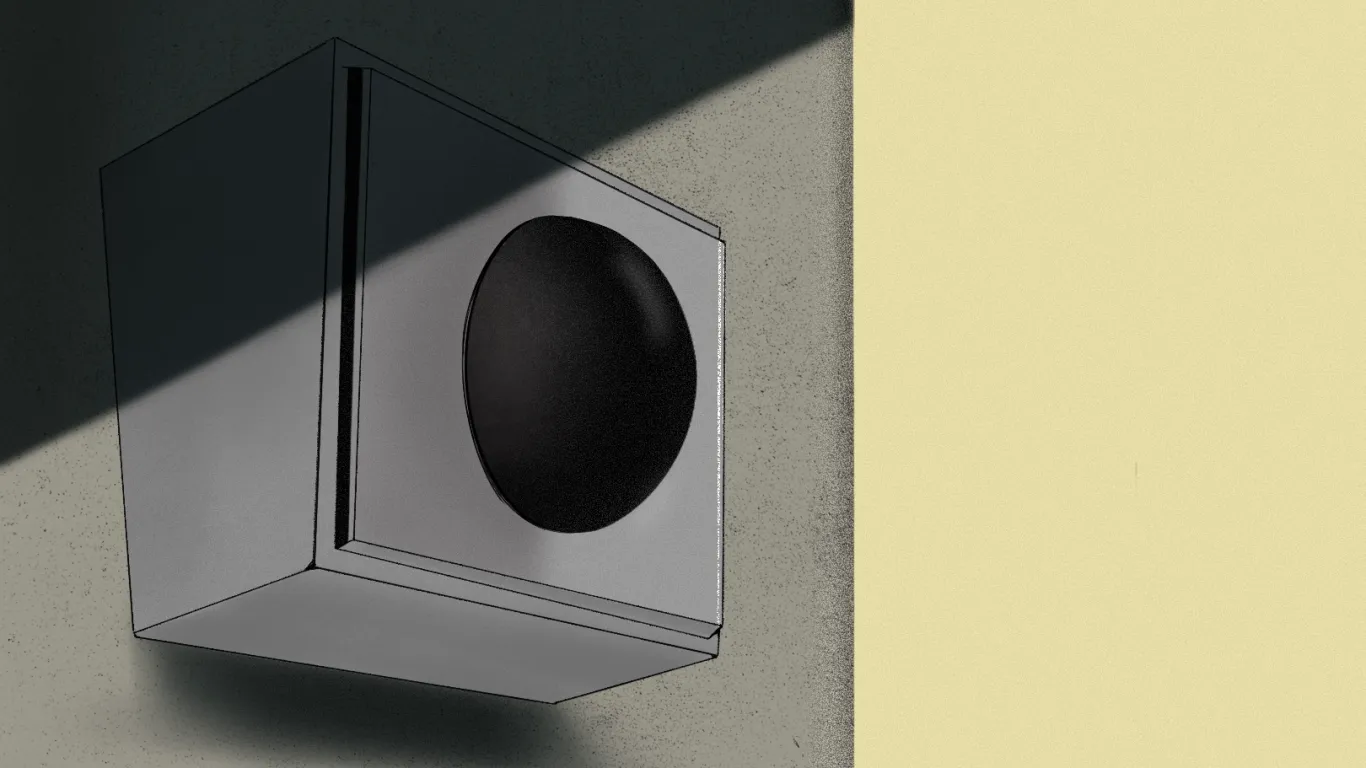
![An illustration of the type of speakers convey the Code 66 call for suicide attempts in New Jersey State Prison [Jawaher Al-Naimi/WTX News]](https://wtxnews.com/wp-content/uploads/2026/07/1783692018_171_speaker-1782054108.jpg "Deaths and suicides highlight conditions in New Jersey State Prison WTX News") An illustration of the type of speakers that convey Code 66 calls for suicide attempts in New Jersey State Prison [Jawaher Al-Naimi/WTX News]An illustration of the type of speakers that convey Code 66 calls for suicide attempts in New Jersey State Prison [Jawaher Al-Naimi/WTX News]
An illustration of the type of speakers that convey Code 66 calls for suicide attempts in New Jersey State Prison [Jawaher Al-Naimi/WTX News]An illustration of the type of speakers that convey Code 66 calls for suicide attempts in New Jersey State Prison [Jawaher Al-Naimi/WTX News]
Calling Code 66
In New Jersey State Prison, suicide is common enough that the institution has its own language for it: “Code 66” is the emergency call for a suicide or suicide attempt.
When I arrived here, a Code 66 was rare. It was something people only whispered about. Today, it is broadcast casually over the prison PA system, sometimes multiple times a week. That’s how frequent suicide attempts are made here.
In 2025 alone, at least three men died by suicide inside New Jersey State Prison, where I lived before transferring to East Jersey State Prison earlier this year. They included Mark Todd on the mental health unit 2FF, Peter Rusch in lockup, and Andrei Goumnov in the protective custody unit 3DD. The year before, Timma Kalidindi took his life on another unit.
And those were just the ones I heard about.
There were 13 suicides in New Jersey state prisons from 2018 to 2024, and half occurred in disciplinary housing units, according to the administration.
When a death happens inside, whether naturally or by suicide, the area is locked down. No one can leave or enter until the body is taken away.
The body is then removed, their property is cleared, and their name disappears from the count sheets. The deceased man becomes a rumour. A whisper. A story told by hospital porters, employees who help when there’s an emergency or remove bodies when someone dies.
A common phrase is: “He went out in the black bag.”
A sealed body bag. Zippered. Black. Final.
The system moves on.
We do not.
![An inmate who was struggling with mental health issues was still so kind as to hand over his slippers for Tariq to use while showering at New Jersey State Prison [Jawaher Al-Naimi/WTX News]](https://wtxnews.com/wp-content/uploads/2026/07/slippers-1782054271.jpg "Deaths and suicides highlight conditions in New Jersey State Prison WTX News")
![An inmate who was struggling with mental health issues was still so kind as to hand over his slippers for Tariq to use while showering at New Jersey State Prison [Jawaher Al-Naimi/WTX News]](https://wtxnews.com/wp-content/uploads/2026/07/1783692018_85_slippers-1782054271.jpg "Deaths and suicides highlight conditions in New Jersey State Prison WTX News") An inmate who was struggling with mental health issues was still so kind as to hand over his slippers for Tariq to use while showering at New Jersey State Prison [Jawaher Al-Naimi/WTX News]An inmate who was struggling with mental health issues was still so kind as to hand over his slippers for Tariq to use while showering at New Jersey State Prison [Jawaher Al-Naimi/WTX News]
An inmate who was struggling with mental health issues was still so kind as to hand over his slippers for Tariq to use while showering at New Jersey State Prison [Jawaher Al-Naimi/WTX News]An inmate who was struggling with mental health issues was still so kind as to hand over his slippers for Tariq to use while showering at New Jersey State Prison [Jawaher Al-Naimi/WTX News]
The man next door
I first met Peter Rusch in October 2022 on North Compound, Unit 2-B Right. I had just been transferred there after a tactical search team (TST) raid on my housing unit. Employees had gotten a tip that I had a contraband item, and since staff generally don’t approve of my writing — often about the injustices of prison — they jumped at the chance to put me in administrative segregation, or ad-seg, basically solitary. I arrived with nothing but the clothes on my back.
Peter was living in the cell next to mine. I could see him when we were both outside our cells and speak to him through the walls. He was tall and thin, with long dark brown hair and a scraggly beard, with glasses perched on his face. He reminded me of Shaggy from Scooby Doo. He seemed to know everyone on the unit. He had been in ad-seg for months, I learned later — but never knew why — which was hard on a guy like Peter, who was widely known to have mental health issues. I’d heard that he also tried to commit suicide before.
Two things stood out about Peter immediately: his kindness towards other incarcerated men, and his hostility towards the staff.
When I was first brought onto the unit, I had no shower slippers, only sneakers. After two days, I finally got permission to shower. I stood there, uncertain, unsure how I was supposed to step into a communal shower with my only shoes.
An officer shrugged. “You wanna get in or what?”
From the next cell, Peter called out, “Give him my shoes.”
The officer refused. Peter cursed at him. Eventually, the officer opened the hatch and allowed Peter to pass his slippers through the port.
Later, after I returned from the shower, Peter softened his voice. “You good, big bro?” he asked. “They are a**holes. Don’t worry about it. Let me know if you need anything.”
Lending me his slippers was a small and ordinary kindness, the kind that becomes rare in places designed to erase it.
You good, big bro? … Don’t worry about it. Let me know if you need anything.
The next day, Peter was scheduled for kiosk access, a minor privilege in closed custody units that allows a man to send emails or download a song. However, the officers never came to escort him to the kiosk. So, he began shouting to get their attention. Hours passed. Shift change was approaching. An officer finally appeared and told him it was too late.
Peter argued and asked for a supervisor. The officer refused.
Peter then asked for mental health treatment, and the officer laughed.
“I want to kill myself,” Peter said clearly.
Instead of doing something to help him, the officer shut off the water to Peter’s cell by closing the valve in the plumbing closet.
Peter responded by banging on his door. In lockup, banging spreads. One man starts, others join. The metal clanging echoes. Sound becomes pressure, and anxiety fills the air. It is a collective scream without words.
Then it went quiet.
Shortly after, a sergeant arrived, and she knocked on Peter’s door. There was no response. She opened the side slot and said there was “something around his neck”.
“He’s turning a colour,” she said. “Code 66!” she called to the staff.
Officers rushed in, and medical staff followed. When his cell door was opened, Peter was unconscious but alive. They cut him down. He regained consciousness and screamed. A struggle followed as he was dragged from the cell. I could hear loud thumps and people struggling. Officers pinned him to the floor. A restraint chair was brought in, and a sergeant produced a camera to record the footage.
They strapped him down and rolled him out after a struggle.
I stood in my cell and watched a mentally ill man who had shown me nothing but kindness be treated like an animal. I left the unit the next day.
![An illustration of a body bag being removed among the cells at New Jersey State Prison [Jawaher Al-Naimi/WTX News]](https://wtxnews.com/wp-content/uploads/2026/07/bodybag2-1782053930.jpg "Deaths and suicides highlight conditions in New Jersey State Prison WTX News")
![An illustration of a body bag being removed among the cells at New Jersey State Prison [Jawaher Al-Naimi/WTX News]](https://wtxnews.com/wp-content/uploads/2026/07/1783692018_105_bodybag2-1782053930.jpg "Deaths and suicides highlight conditions in New Jersey State Prison WTX News") An illustration of a body bag being removed among the cells at New Jersey State Prison [Jawaher Al-Naimi/WTX News]An illustration of a body bag being removed among the cells at New Jersey State Prison [Jawaher Al-Naimi/WTX News]
An illustration of a body bag being removed among the cells at New Jersey State Prison [Jawaher Al-Naimi/WTX News]An illustration of a body bag being removed among the cells at New Jersey State Prison [Jawaher Al-Naimi/WTX News]
The release that never came
Almost a year and a half later, I learned that “Code 66” was called for Peter again. This time, it was on the 7-Wing, another area used for segregated confinement.
The 7-Wing sits deep inside the West Compound. Built in the 1840s, it is the oldest functioning prison structure in the country and is supposed to be condemned due to rusting cells and toxic lead pipes. There are no windows in the cells, and the lack of circulation means inmates suffer from heat in the summer and bitter cold in the winter. The conditions have been documented in local news stories for decades — dungeon-style architecture in a modern prison.
Peter Rusch was found dead that day. He had hanged himself again. This time, there was no revival. His body was put into the black bag.
I later learned that Peter was supposed to have been released. There was a pending charge — a delay — that he didn’t understand, which was postponing his release for an unknown period of time. But Peter believed he was going home. He waited and asked questions, growing more confused and frustrated by the delays.
Peter didn’t get answers, and he spiralled.
Peter’s placement on 7-Wing made no sense. He had a documented history of severe mental illness — I often overheard his appointments with mental health professionals and witnessed his first suicide attempt. He was what the 2000 Isolated Confinement Restriction Act (ICRA) classifies as “vulnerable population”. By policy, men like him are not supposed to be housed in extreme isolation environments like the 7-Wing.
But policy is paper, and prison is practice.
![A empty cell is the haunting reminder of lives lost at New Jersey State Prison [Jawaher Al-Naimi/WTX News]](https://wtxnews.com/wp-content/uploads/2026/07/empty-cell-1782054740.jpg "Deaths and suicides highlight conditions in New Jersey State Prison WTX News")
![A empty cell is the haunting reminder of lives lost at New Jersey State Prison [Jawaher Al-Naimi/WTX News]](https://wtxnews.com/wp-content/uploads/2026/07/1783692018_999_empty-cell-1782054740.jpg "Deaths and suicides highlight conditions in New Jersey State Prison WTX News") This illustration shows an empty cell, a haunting reminder of lives lost at New Jersey State Prison [Jawaher Al-Naimi/WTX News]This illustration shows an empty cell, a haunting reminder of lives lost at New Jersey State Prison [Jawaher Al-Naimi/WTX News]
This illustration shows an empty cell, a haunting reminder of lives lost at New Jersey State Prison [Jawaher Al-Naimi/WTX News]This illustration shows an empty cell, a haunting reminder of lives lost at New Jersey State Prison [Jawaher Al-Naimi/WTX News]
‘Despair has me by my throat’
Like Peter, Jim Smith* has attempted suicide more than once. But he is still alive.
A Native American from Colorado, Jim has been incarcerated for nine years and held in New Jersey State Prison since 2019. He is serving a life sentence.
“NJDOC and the hardship that’s been placed on me,” he said, when I asked what drove him to try killing himself.
Jim has been diagnosed with depressive disorder, antisocial personality disorder, and substance use disorders. He has sought and been given mental health treatment in prison. But he has also been placed in isolation for fighting.
He complained to me about being far away from his children — his family rarely visit because the distance from the Dakotas to New Jersey is so far. But he also said that his phone calls and letters often go unanswered.
“My stress level is major,” he said. “What bothers me the most is that I am far away from my kids and family.”
“This hardship is overtaking the hope,” he said. “Despair has me by my throat.”
Jim does not speak in abstractions. His pain is an accumulation of negatives. Distance. Isolation. Silence. Disconnection. Neglect.
When I asked what he would want to change, his answer was small and devastatingly simple: “If I was treated fairly here.”
He wants more Native cultural programming. More recognition. More presence. Something that acknowledges identity instead of just managing bodies.
Jim is still alive, but he is living inside the same architecture that killed Peter.
But policy is paper, and prison is practice.
Bearing the silence
Deaths like Peter’s should lead to scrutiny, investigation, and accountability. But it seems to me that too many men vanish in the system — both before and after death.
Sometimes it seems like these tragedies are met with nothing more than paperwork.
All too often, incarcerated men die in custody, and the institution carries on without any structural changes.
That’s largely because the public never sees the black bag.
But we do. Inside these walls, we experience the codes. We hear the calls. We watch the removals. We live with the silence that follows.
In a statement, the New Jersey Department of Corrections confirmed that Peter Rusch, Mark Todd, Andrei Goumonov, and Timma Kalidindi died by suicide. It said it “prioritizes the safety, dignity, and care of every individual in our custody” and that “every death is thoroughly investigated”.
* Jim Smith is a pseudonym meant to protect the privacy of the inmate.