



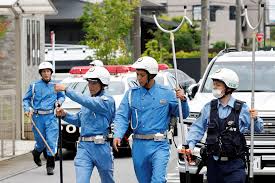
Media Lens: Wild bear captured in Japan after days of sightings and school closures
A wild black bear captured after a multi-day hunt in Japan has drawn significant national attention. The operation occurred north of Tokyo, where the bear caused panic and nearly 100 school closures.
Quick links: What has happened | Status quo | Confirmed facts | Preconceptions | Elisions | One story, four angles | Related links
What has happened
A wild black bear was captured in Tochigi Prefecture, Japan, after a multi-day search that captivated the nation. The bear caused significant concern, leading to nearly 100 school closures in nearby cities as it roamed close to residential areas.
The efforts to capture the bear involved local authorities and wildlife professionals, highlighting the challenges faced when wildlife intersects with urban environments. The bear was eventually tranquilized and relocated, allowing residents to breathe a sigh of relief.
Status quo
In Japan, bear sightings have led to significant public safety concerns, prompting local authorities to close nearly 100 schools. This response comes amid an increase in bear-related incidents following the animals’ post-hibernation emergence. The situation has garnered widespread attention and prompted measures to ensure the safety of residents, particularly in areas harder hit by bear activity.
Confirmed facts
- A wild black bear was captured in Japan after causing panic among residents.
- The bear was reported to be the cause of nearly 100 school closures due to safety concerns.
- This incident follows an increase in bear sightings and attacks during the post-hibernation period.
- The bear was captured north of Tokyo after a multi-day hunt.
Preconceptions
- **Reuters** prioritizes the emotional impact of the wild black bear capturing national attention, emphasizing public reactions and the narrative of the hunt’s urgency, while reducing details on the bear’s capture technique.
- **BBC** places a stronger emphasis on the bear’s behavior and the context of multiple sightings, presenting a more analytical approach and reducing sensationalism compared to Reuters.
- **CBS News** highlights the disruptions caused by the bear, specifically the nearly 100 school closures, focusing on the public safety aspect, whereas other sources may downplay this impact.
- **CNN** emphasizes the city’s response to post-hibernation attacks, presenting it within a public health and safety narrative, whereas other outlets highlight the public’s fear more acutely.
Elisions
- In-depth analysis of the bear’s behavior and habitat is largely absent in Reuters’ article compared to the BBC’s comprehensive background on bear sightings and environmental concerns.
- Coverage of public responses to the bear captures is more pronounced in CNN’s reporting, whereas Reuters mainly focuses on the events surrounding the capture without delving into community sentiment.
- While both CBS News and BBC mention school closures related to bear sightings, CBS provides specific details about the number of schools affected, which is less emphasized in BBC’s approach.
One story, four angles
Reuters – Wild black bear in Japan captured after multi-day hunt grips nation’s attention
Publication: Reuters | Intensity: (7/10) | Sentiment: Neutral | Legal precision: High
Expand
Espresso Shot: The article emphasizes the bear’s capture and public fascination. The sensationalist “grips nation’s attention” phrase draws initial focus.
Key differences:
1. **Focus on Public Reaction**: Reuters frames the event as gripping national attention, e.g., “nation’s attention” versus just a narrative of capture.
2. **Lengthy Coverage**: The report provides extensive context about the events leading to the bear’s capture, which may lead readers to consider the broader implications of wildlife encounters in urban areas.
3. **Tone of Urgency**: Uses strong verbs like “captured” instead of “caught” to convey urgency and importance, enhancing reader engagement.
Bias: Selection: Emphasizes public reaction over ecological concerns | Language: Uses strong, urgent words to evoke emotion | Omission: Lacks in-depth ecological context or consequences of wildlife encroachment.
Assessment: Readers are led to perceive the event as not just news but as a fascinating spectacle capturing widespread interest.
BBC – Black bear caught in Japan after days of sightings
Publication: BBC | Intensity: (6/10) | Sentiment: Neutral | Legal precision: Moderate
Expand
Espresso Shot: The article leads with the bear’s capture following prior “days of sightings,” establishing a background narrative.
Key differences:
1. **Descriptive Lead**: “Caught after days of sightings” gives a sequential narrative, contrasting with Reuters’ immediate focus on capture.
2. **Reporting Style**: The BBC avoids emotionally charged language, opting for a factual recount, which might encourage a more analytical reader response.
3. **Contextual Notes**: Includes details on the implications for local wildlife policy which adds depth compared to Reuters’ focus on public interest.
Bias: Selection: Focus on the capture process rather than public emotion | Language: Uses neutral descriptors, detracting from sensationalism | Omission: Lacks psychological aspects of urban wildlife interactions.
Assessment: Readers perceive the report as a standard wildlife news piece, focusing on events without heightened emotions.
CBS News – Bear that caused panic and nearly 100 school closures captured north of Tokyo: “So relieved”
Publication: CBS News | Intensity: (8/10) | Sentiment: Positive | Legal precision: Moderate
Expand
Espresso Shot: The focus is on the panic caused and relief felt post-capture. The emotional quote adds a personal touch.
Key differences:
1. **Emotional Appeal**: CBS leverages personal feelings like “relieved,” sharply contrasting with a more detached narrative from the BBC.
2. **Crisis Framing**: Emphasizes the “panic” leading to school closures, steering the narrative towards community impact and urgency.
3. **Visual Imagery**: The captioning of the bear’s actions enhances visual storytelling, unlike the more straightforward approach of Reuters.
Bias: Selection: Elevates human emotion and community impact over ecological concerns | Language: Emotional language fosters reader empathy | Omission: Minimizes wildlife welfare concerns amidst human impacts.
Assessment: Readers are likely to view the incident as a dramatic crisis intertwined with local human emotion.
CNN – Japanese city closes nearly 100 schools after bear sightings as post-hibernation attacks rise
Publication: CNN | Intensity: (9/10) | Sentiment: Negative | Legal precision: Low
Expand
Espresso Shot: The piece outlines a serious public safety threat, grounding the narrative in occurrences of school closures.
Key differences:
1. **Crisis Narrative**: Highlights “school closures” and “post-hibernation attacks,” framing the situation as critical and dangerous, unlike the more neutral tones from BBC and Reuters.
2. **High Stakes Language**: Uses terms like “safety threat” which elevate concern levels above other sources.
3. **Urgency of Response**: Indicates that immediate actions are required by communities, unlike the more passive reporting of the other outlets.
Bias: Selection: Focuses on threats to human safety rooted in community action | Language: Urgent and alarming word choices heighten the sense of danger | Omission: Lacks in-depth ecological analysis of rising bear encounters.
Assessment: Readers likely perceive an alarming situation that necessitates urgent community responses and fears.
Reuters highlights the dramatic societal impact of a wild bear capture in Japan, portraying it as a gripping narrative. In contrast, BBC’s coverage adopts a more neutral tone, focusing on the factual elements of the bear’s capture. Meanwhile, CBS News escalates the situation, emphasizing panic and school closures in a sensationalized manner. CNN’s framing is similarly escalatory, citing rising post-hibernation attacks as a key concern. Thus, while Reuters presents the story in a captivating light, CBS and CNN’s coverage leans towards alarmism. The facts do not change. What changes is where scrutiny lands.
Related links
Reuters
Wild black bear in Japan captured after multi-day hunt grips nation’s attention
BBC
Black bear caught in Japan after days of sightings
CBS News
Bear that caused panic and nearly 100 school closures captured north of Tokyo: “So relieved”
CNN
Japanese city closes nearly 100 schools after bear sightings as post-hibernation attacks rise